News Headline
Subhash Chandra to adopt ‘glocal’ strategy for second innings in cricket

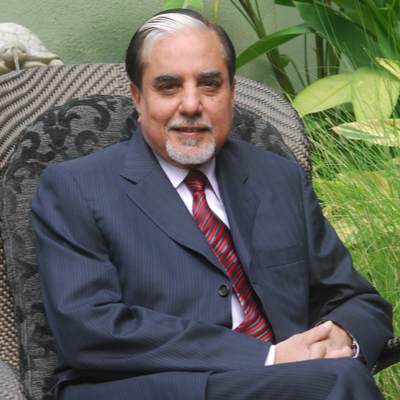
MUMBAI: For every Sachin Tendulkar there are more than a 1000 deserving cricketers who were denied an opportunity due to various reasons, for every MS Dhoni there is a Amol Muzumdar, for every Ishant Sharma there is a Ranadeb Bose. Indian cricket is not a story full of fortunes, there are many such unfortunate incidences, which cannot have a cricketing justification. Targeting such unfortunates, Essel Group chairman Subhash Chandra is all set to start his second innings in the field.
Pertinent to note here is that Chandra was viciously defeated in his first stint against the Board of Control for Cricket in India (BCCI) and his rebel cricket venture Indian Cricket League (ICL) was abruptly shut. Players were accused of being under-paid, various match fixing allegations cropped up against teams and the ICL was wiped out. BCCI suspended all the players associated with ICL, Kapil Dev was sacked as chief of National Cricket Academy and no ground was allowed to host a ICL match with a notice that grounds hosting ICL matches will never get an international or Ranji match. However, Essel Group’s effort aroused BCCI’s thoughts of expanding cricket and a similar cricket league was launched eight years back, which is today known as the Indian Premier League (IPL) – BCCI’s biggest revenue generating entity.
Years later Dr. Chandra rose from the ashes like a phoenix and became a nightmare for cricket boards across the world as he made his interest to venture into cricket official. Various meetings were held across boards to figure out his strategy. “India is a country where youth are passionate about three things Cricket, Sachin Tendulkar and television. Well one who loves cricket and is passionate about it will play domestic cricket, then IPL and eventually make his way through to the Indian cricket team. But again the number that successfully manage to do that is very less compared to the number of youth who play cricket passionately. So if you can start a platform where you give money for playing cricket and feature them on television, you will obviously get huge representatives besides the presence of IPL and other BCCI organised tournament,” says a renowned cricket historian and writer.
Reportedly the Essel Group has registered various cricket leagues in India and has aspirations of holding inter-city cricket leagues, a Times of India report quoted Essel Group head of finance and strategy Himanshu Modi as saying, “The format we are building will be a T20 format, home and away games, across 10 – 12 cities, we are not looking at a short time frame. It could be a year away or even a little more. We know the timing is right but we are equally aware of the pitfalls where BCCI can hit us and are much wiser today. We had four grounds in India during ICL and we got players even from Pakistan, so I do not see both as a problem at all. On the grounds front, during ICL, we fell short with just four grounds in four cities. Also, we learned we needed eight to 10 teams. So, this time round, we will have to ensure we have more grounds.”
Commenting on Essel Group’s vision, the cricket historian said, “To drive Indian crowds to cricket, you need quality players, idols and close finishes. On the grounds front, being one of the richest group if Essel is not allowed, they can create a ground but the problem will be with players. BCCI pays a hefty amount to retired players too and hence having idols playing will be a concern and if they can manage that they will have a good future and the avenue will help many families financially too.”
A marketing expert, who manages many on-ground and television sponsorship, added, “Broadcasters creating leagues in India is becoming a trend. We saw Star and Sony doing it in the recent past and there is nothing surprising about Essel also venturing into something similar. There are many sponsors who fail to use the IPL or World Cup as a platform for promotion due to premium rates. They will use the new league. So sponsorship won’t be a problem for them provided they organize when team India is actively playing.”
Essel has already registered entities in Australia, New Zealand, Scotland and with this revelation of inter-city cricket league, the group made it clear that while they are thinking global they are acting local too. It remains to be seen if the ‘glocal’ strategy becomes a substantial challenge to rattle BCCI and reduce the pitch of the IPL.