Connect with us

DTH

Biggest threat to Indonesia’s DTH & Pay TV market is piracy: Tanoesoedibjo

Published

on

MUMBAI: While there may have been disruptive pricing and piracy issues that haunt the Indonesian pay TV market, the potential in the country is enormous.


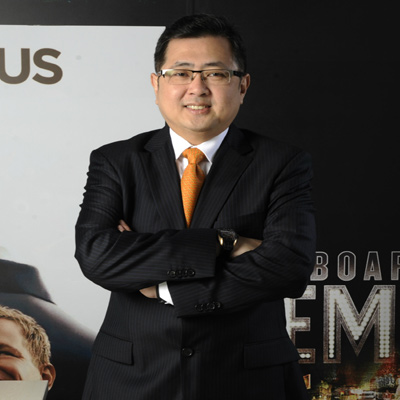
According to Indonesian satellite Pay TV company MNC Sky Vision’s president and director Rudy Tanoesoedibjo, the industry faces three key hurdles, which are stagnating growth. Outlining the three key points he says that piracy has been the biggest threat to the pay TV and Direct to Home (DTH) market.

Advertisement


“We work very hard to fight piracy and we get very good support from the channels to stop piracy,” Tanoesoedibjo says. He was speaking at the recently held Asia Pacific Operators Summit (APOS) 2015 in Bali.


Advertisement

Tanoesoedibjo further adds that the other two reasons are inter related to the content of the channels in Indonesia. “We are experiencing what India was experiencing in the past. In India, it was called call rotational subscribers while we call it recycle subscribers. The same set of new subscribers come in once again every three to four months, as new subscribers like a rotational churn thanks to an ‘unhealthy’ free offering for new subscribers. A single subscriber jumps from one operator to another,” he says.


The third reason behind the stagnant growth, according to Tanoesoedibjo, is severe because of a new practice adopted by some operators in the country. “Operators do not shut off non-paying subscribers. We have had instances where people only pay one time and continue with the service. This threatens the growth,” he laments before adding, “this is a structural problem and we can only solve it with the participation of the channels.”

Advertisement


To battle the menace of piracy, MNC Sky Vision is currently fighting approximately 36 cases in court. The company has three brands namely Indovision, Top TV and Oke Vision under its umbrella. The good news here is that MNC Sky Vision has managed to crack one the biggest player, which had 75,000 subscribers.


Advertisement

Talking about the scale of opportunity for DTH players in Indonesia, Tanoesoedibjo opines that the opportunity is large enough with a market size of 40-50 million subscribers and the pipe can grow further. “Currently the pipe is stagnant,” he informs.


Going forward, MNC Sky Vision is planning to offer more High Definition (HD) channels in the country and will also be moving soon to MPEG-5.

Advertisement


“It doesn’t matter if the Set Top Box (STB) is MPEG2, MPEG 3, MPEG 5, HD or even Standard Definition (SD), as the price difference is only one or two dollars. We will be move to MPEG 5 by the end of the year,” he says.


Advertisement

Throwing light on the dilemma of whether Over the Top (OTT) and DTH players can co-exist peacefully, Tanoesoedibjo says that DTH operators need to evolve in order to survive. “DTH operators think with a traditional mindset that they just provide access to content via their technology for customers. We should not forget that at the end of the day, we do not have control of content. We are only a pipe,” he informs.


Calling new technology that can deliver content faster, efficiently and cheaper than a DTH operator, a threat, Tanoesoedibjo says that in that scenario operators will have to expand, introduce better technology and new means of delivery such as OTT platforms.

Advertisement


“We have already launched our alternate OTT, and are also preparing our stand alone OTT services next. But maybe in the next five months there will bea new means of delivery,” he mulls.


Advertisement

On a concluding note Tanoesoedibjo says that operators need to pay attention in creating their own content. “We now have our own content for 20 channels. At the end of the day we deliver content. But if someone else finds an easier way to deliver it, then DTH needs to watch and be more effective,” he cautions. 

Click to comment

Leave a Reply

Your email address will not be published. Required fields are marked *

DTH

DD Free Dish e-auction revenue dips to Rs 642 crore as slot sales fall

Revenue dips as revised norms reshape bidding in 94th round

Published

on

NEW DELHI: Prasar Bharati’s DD Free Dish has closed its 8th annual, and 94th overall, e-auction for MPEG-2 slots with total collections of Rs 642 crore for the period April 1, 2026 to March 31, 2027.

That is lower than last year’s Rs 780 crore haul, with 55 slots sold compared with 61 in FY25–26. The softer topline reflects both a slimmer inventory and a recalibrated auction framework.

This was the first auction conducted after amendments to the e-auction methodology, including tighter eligibility norms and a revised reserve price structure for MPEG-2 slots. The stated aim was greater transparency and more serious participation. The immediate outcome appears to be more measured bidding in certain categories.

Advertisement

Day one set the tone. Eight slots were sold, six in the premium Bucket A+ and two in Bucket A. The strong early action in A+, which typically houses Hindi GECs and movie channels, reaffirmed the enduring appeal of mass Hindi programming on the platform.

Among the broadcasters securing slots in the initial rounds were Zee Entertainment Enterprises, Sony Pictures Networks India, Viacom18’s Colors network, Sun Network and Shemaroo Entertainment. Their continued presence signals that, despite the pull of digital platforms, Free Dish remains a strategic must have for legacy networks chasing scale in price sensitive markets.

The final bouquet of 55 channels leans heavily towards Hindi news, movies, devotional fare, Bhojpuri and regional programming.

Advertisement

In Hindi news, familiar heavyweights such as Aaj Tak, ABP News, India TV, News18 India, Republic Bharat and Zee News made the cut. Entertainment and movie offerings include Colors Rishtey, Star Utsav, Dangal TV, Sony Pal, Shemaroo TV, Goldmines, B4U Movies and Zee Biskope. Devotional viewers will find Aastha, Sanskar and Sadhna Gold among the selected channels.

Regional representation includes Sun Marathi, Fakt Marathi, PTC Punjabi and GTC Punjabi.

Equally telling were the absences. Broadcasters such as Big Magic, Filamchi Bhojpuri, India News, Bharat Express, Movieplex Maithili, TV9 Marathi, Shemaroo Marathibana, Zee Chitra Mandir and Satsang did not participate. The pullback is particularly visible across Marathi, Bhojpuri, Maithili and spiritual programming. Industry observers point to the revised reserve prices, tighter eligibility norms and a reassessment of commercial viability as possible factors.

Advertisement

DD Free Dish continues to beam into over 40 million homes, largely in rural and semi urban India. For advertisers and broadcasters alike, it offers efficient access to Bharat markets where pay TV penetration remains uneven and OTT subscriptions are limited.

The moderation in revenue this year may be read as a pause rather than a retreat. Fewer slots, a reworked auction playbook and evolving broadcaster strategies have clearly shaped outcomes. Yet premium Hindi entertainment retains its pull, and the platform’s mass reach remains hard to ignore.

As the FY26–27 line-up settles in, the mix of winners and walkaways will define the private satellite channel landscape on DD Free Dish for the year ahead.

Advertisement
Continue Reading

Advertisement News18
Advertisement All three Media
Advertisement Whtasapp
Advertisement Year Enders

Copyright © 2026 Indian Television Dot Com PVT LTD

This will close in 10 seconds