Cable TV
DAS Phase III: Status report


MUMBAI: It was in September 2014 when the then Information and Broadcasting Minister Prakash Javadekar extended the deadline for completion of phase III of cable TV digitization. Not only did Javadekar extend the deadline, but also set separate deadlines for phase III and IV, which initially were supposed to be completed in the same time frame.
So, while the deadline for phase III was set to be December 2015, phase IV could be completed by December 2016.

Notwithstanding these developments, it should be noted that interconnect agreements between multi system operators (MSOs) and last mile owners (LMOs) are not in place for phase I and II cities even now. Moreover, close to 700 MSOs interested in phase III areas have not yet been given the license to operate.
With no announcement about the new Telecom Regulatory Authority of India (TRAI) chairman, the huge number of litigations between broadcasters, MSOs and LMOs pending in several High Courts and with the Telecom Disputes Settlement and Arbitration Tribunal (TDSAT), there looms a big question mark on the timely completion of Digital Addressable System (DAS) for phase III.
Maharashtra Cable Operators Federation president Arvind Prabhoo says that not more than five per cent of the cable TV homes falling in the phase III universe would have been digitized.
“The government will have to step in if they want the deadline to be met. The government needs to incentivize cable operators by coming up with a cable modernization fund, which could be set at Rs 500 per subscriber. This can be recovered by the government in the next two years through GST,” he said.
Prabhoo also points out that close to nine crore cable TV households in the phase III areas need to be digitized. “If the government sets incentive of Rs 500 per subscriber, we are looking at a modernization fund of only Rs 4500 crore for the whole ‘Digital India’ campaign. I am sure it is not asking for much,” he added.
MSO Hathway Cable & Datacom along with its various subsidiaries has already seeded 50 per cent of its universe. Speaking toIndiantelevision.com on the issues affecting the smooth rollout of digitization in phase III, Hathway MD & CEO Jagdish Kumar Pillai said, “The biggest issue is getting content agreements executed at reasonable costs. The government is doing excellent work in facilitating this process.”
The government on its part has been taking steps like holding not just task force meetings, but also consumer outreach programmes to ensure that the deadline for phase III is met. “We should be thankful to the government for taking a pro-active role in organising task force meetings and also meeting with and between stakeholders. Now it is up to the industry to step up and make it happen,” added Pillai.
A source in TRAI tells this website that there will be no extension in the deadline for phase III. “The government may help facilitate the process, but there is no question of any more extension,” the source said adding that the consumer today is prepared to pay, and the broadcaster is going all out to publicise its digitised platforms. “So if there is any delay from LCOs or MSOs, the consumer will find other ways of going digital, which could be moving to HITS or DTH platform,” the source said.
Speaking about signing off interconnect agreements, the TRAI official informed, “In the last task force meeting, stakeholders were asked to enter into interconnection agreements by June, and if they do not do so, they will be the one to lose. However, if requested, the government may give some more time.”
Concurring with the TRAI official, a broadcaster, on condition of anonymity said, “I agree that there has been a slow start, but it is now picking up pace. There is some amount of progress in signing of contracts.”
The broadcaster is also of the opinion that while 100 per cent of the phase III universe will not be digitized in the given deadline, it doesn’t call for any extension. “Both MIB and the TRAI are closely monitoring the stakeholders through the task force meetings,” he said.
According to the broadcaster, close to 20 million set top boxes (STB) in phase III would have been seeded so far. “Digitisation has been happening for long. Even in phase III, the MSOs were giving digital but non-addressable boxes and now they are switching to addressable boxes and simultaneously activating the addressable feature of the earlier boxes. So, in terms of seeding of addressable boxes, it could be only five – six per cent, but the actual number is much higher,” he added.
With only six months left for completion of digitization of phase III, the MIB has decided to give provisional registration to those MSOs who had applied for the license for phase III. For the same, the Ministry asked applicants to file their applications in an affidavit, which wants MSOs to commit that they have no criminal cases pending against them, and that they will shut down if they are refused security clearance by the Ministry of Home Affairs.
MIB additional secretary JS Mathur said, “There is no reason for any extension of dates for completion of phase III. Work is proceeding as per schedule.”
While the regulators have been taking all steps possible to ensure timely completion of phase III, the stakeholders do not seem to have learnt their lesson from phase I and II. Now how much of the DAS phase III area will be digitized till December 2015, only time will tell.






Cable TV
Hathway Cable appoints Gurjeev Singh Kapoor as CEO
Leadership change comes as cable TV faces shrinking subscriber base and modest earnings pressure
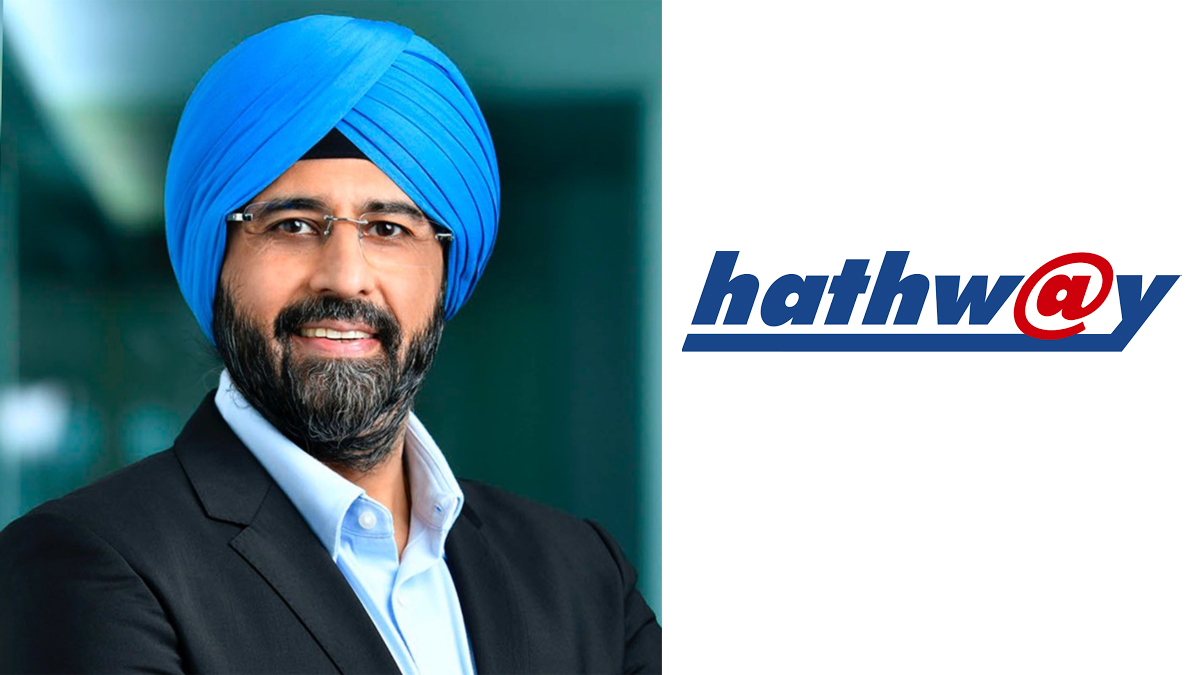
MUMBAI: Hathway Cable and Datacom has tapped industry veteran Gurjeev Singh Kapoor as chief executive officer, marking a leadership pivot at a time when India’s cable television business is under mounting strain.
Kapoor will take over from Tavinderjit Singh Panesar, who is set to retire in August after a long innings with the company. Panesar, chief executive since 2023, has held multiple leadership roles at Hathway, including his latest stint beginning in 2022.
Kapoor brings more than three decades of experience in media and entertainment. He most recently led distribution at The Walt Disney Company’s Star India business, now part of JioStar. His career spans television distribution and affiliate partnerships, with stints at Sony Pictures Networks India, Discovery Communications and Zee Entertainment.
Panesar, with over three decades in the industry, has worked across strategic planning, distribution and business development in media, broadcasting and manufacturing. His past associations include ESPN Star Sports, Star India, Apollo Tyres and JK Industries.
The transition lands as the cable sector grapples with structural disruption. Traditional operators are losing ground to streaming platforms, while telecom and broadband players tighten the squeeze with bundled offerings.
An EY report estimates India’s pay-TV base could shrink by a further 30 to 40 million households by 2030, taking the total down to 71 to 81 million. The slide follows a loss of nearly 40 million homes between 2018 and 2024, a contraction that has already wiped out more than 37,000 jobs in the local cable operator ecosystem.
Hathway’s numbers reflect the strain. The company reported a consolidated net profit of Rs 93 crore for FY25, down from Rs 99 crore a year earlier. Revenue inched up to Rs 2,040 crore from Rs 1,981 crore. As of December 2025, it had about 4.7 million cable TV subscribers and roughly 1.02 million broadband users.
Kapoor steps in with a familiar brief but a shrinking playbook. In a market where viewers are cutting cords faster than companies can reinvent them, the new chief executive inherits a business fighting to stay plugged in.