Hindi
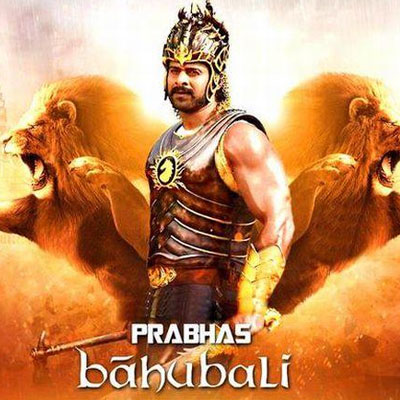
‘Bahubali’ being prepared for global release; creates box office records
NEW DELHI: Vincent Tabaillon, who is renowned for having edited many major Hollywood productions, has begun work on editing Bahubali: The Beginning to make it suitable for international release.
Tabaillon’s earlier credits include Now You See Me, Taken 2 and The Incredible Hulk.
The edited version will be completed by the end of August and will be shown to film festivals, sales agents and distributors with a view to a wide international release. It will be different from the version released on 10 July in India and Diaspora markets.
Arguably India’s most expensive film, Bahubali cost $40 million to make together with its 2016 sequel Bahubali: The Conclusion, according to a report in Variety.com.
Since release, Bahubali has set new Indian box office records, setting new opening day and opening weekend numbers. The five-day gross worldwide now stands at $33.8 million. It had grossed $25.6 million in its opening weekend, smashing records in the process.
Shobu Yarlagadda and Prasad Devineni’s Arka Media produced the film, directed by S.S. Rajamouli (Eega, Magadheera), and released it worldwide on some 4,650 screens in Telugu, Tamil, Hindi and Malayalam-language versions.
The website said the film is also the biggest Indian opener in the US, where it was released across 250 screens and took $4.4 million over the weekend. The film’s per screen average of $17,000 is second only to the mighty $27,000 achieved by Minions.
The report said the opening day record for Shah Rukh Khan’s 2014 release Happy New Year had been $7.1 million, which Bahubali surpassed with $7.8 million.
The record for Indian opening weekend was also held by Happy New Year with $17 million but Bahubali collected $22.8 million.
The Aamir Khan starrer PK retains its record of $120 million for 2014 including strong China, South Korea and US numbers.
Bahubali will eventually see release in East Asian markets. The vfx-heavy story of brothers in medieval India in conflict over a rich kingdom is of a piece with Tsui Hark, John Woo and Zhang Yimou extravaganzas and should resonate with those audiences.

Hindi
Kridhan Infra enters film production with AI-led feature film
Infra firm debuts AI-powered film marking RSS centenary
MUMBAI: Kridhan Infra Limited is swapping hard hats for headsets. The infrastructure company has announced its entry into film production and media technology through its subsidiary, Kridhan Mediatech Private Limited, with the nationwide theatrical release of Shatak: Sangh Ke 100 Varsh, an AI-led feature film.
With Shatak, the company is not just stepping into cinema but staking a claim in what it describes as one of the world’s early full-length AI-driven feature films. Artificial Intelligence has been embedded across the creative and production process, from script visualisation and environment creation to modelling and production design.
The film commemorates 100 years of the Rashtriya Swayamsevak Sangh, tracing defining moments, personalities and historical phases that shaped its journey. By combining archival storytelling with algorithm-powered creativity, the project attempts to blend heritage with high technology.
For Kridhan Mediatech, this is only the opening scene. The subsidiary’s broader ambition spans AI, CGI, virtual production systems and scalable content models for both theatres and digital platforms. The move signals a strategic diversification for Kridhan Infra, traditionally rooted in engineering and construction.
The timing aligns with India’s growing push to become a global AI powerhouse. At the 2026 AI Impact Summit, prime minister Narendra Modi urged innovators to design in India and deliver to the world. Kridhan Mediatech’s initiative positions itself squarely within that narrative, aiming to export technology-enabled storytelling beyond domestic audiences.
India’s media and entertainment industry, valued at over Rs 2.5 lakh crore, alongside a rapidly expanding AI economy projected to cross Rs 1.4 lakh crore in the coming years, offers fertile ground at the intersection of cinema and code.
“With Shatak, we proudly present one of the world’s first AI-led full-length feature films while marking our strategic entry into film production and media technology through our subsidiary,” the company said in a statement. “Our vision is to combine India’s rich narrative heritage with forward-looking innovation. This is just the beginning of building globally competitive, technology-enabled cinematic experiences.”
From infrastructure to imagination, Kridhan’s latest venture suggests that in today’s India, even storytelling can be engineered.