MAM
Alchemist launches specialist agency Clay to cater to real estate sector
MUMBAI: Marketing solutions company Alchemist has launched a specialist agency called Clay to solely cater to brands in the booming real estate sector.
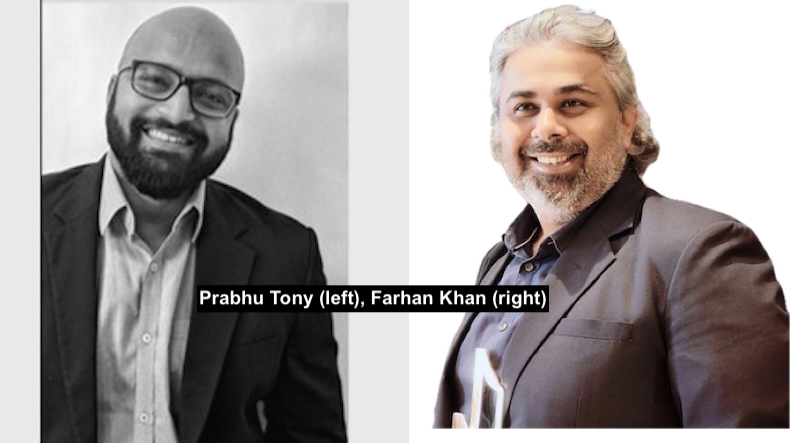
Clay will be helmed by Farhan Khan as business head and COO, who was previously with Xeco Marketing as COO.
Along with Khan, Clay has also roped in communication specialists and associate managing consultants Anushree Murkute and Amy Mathew with their respective teams. Both Murkute and Mathew come from an advertising background.
With offices in Mumbai and Gurgaon, Clay started out with five retainer and three project based clients. The retainer clients include Disha Direct and Nirvana Reality, Rajasthan based ARG Group, Delhi basd Novell and real estate technology start-up Realty Redefined.
The Clay division will report in to Alchemist CEO Anujita Jain. “Clay is providing genuine strategic advice and execution together, a never before complete solution from under one roof. It will be giving through the line services to the currently pressured Real Estate segment. These include brand and communication strategy, advertising, direct marketing, CRM, events and activations, lead generation and management, digital and social activation, velebrity endorsements and more.”
Alchemist director and magicbricks.com founding member Rajkumar Remalli added, “Clay is about creating brands in the real estate world, which was hitherto ruled just by project launches, successes and failures. No more will investments made in one product be non-cumulative to others by the same corporate brand.”
Clay also has its own creative, digital, CRM and events and activation support teams. The agency will draw on Alchemist’s strengths in outdoor advertising and celebrity management combined with new skills and ideas.
Khan said, “I have seen clients yearning for true strategic advice and the commitment of the same advisors to walk the talk and talk. Clay is meant to do exactly that. We have already done invaluable value addition and created IPs for our clients in this little time we have been operational. Establishment of World Broker’s Day is one such proud achievement.”
The company has also initiated the celebration of World Broker’s Day on 9 June every year. This is an insight driven strategy for the real estate brokers, for recognising their thankless services they provide to the customers. The campaign climaxed with a packed audience convention on WBD in Mumbai. Apart from benchmark ideas, Clay is navigating clients through the current challenges and pressures and has several projects line up like Wollywood, City of Music, ARG One, Maple Leaf, Reso’villa, R Square, Agent Search, etc.
Disha Direct MD Santosh Naik said, “In Alchemist and Clay we find partners who do what they say. They walk towards results and go beyond the brief. They provide business strategy and not just marketing. They execute for results, not applauses. I am glad we connected and are working together.”
Alchemist MD Manish Porwal added, “Brand Clay is the first of many specialized communication solutions that you will now hear from Alchemist. The next quarter for Alchemist is full of preparations for future that will change a bit of the communication landscape. We are excited and so are our clients.”

Digital
Content India 2026 opens with a copro pitch, a spice evangelist and a £10,000 prize for Indian storytelling
Dish TV and C21Media’s three-day summit puts seven ambitious projects before an international jury, and two walk away with serious development money
MUMBAI: India’s content industry gathered in Mumbai this March for Content India 2026, a three-day summit organised by Dish TV in partnership with C21Media, and it wasted no time making a statement. The event opened with a Copro Pitch that put seven scripted and unscripted television concepts before an international panel of judges, and by the end of it, two projects had walked away with £10,000 each in marketing prize money from C21Media to support development and international promotion.
The jury, comprising Frank Spotnitz, Fiona Campbell, Rashmi Bajpai, Bal Samra and Rachel Glaister, evaluated a shortlist that ranged from a dark Mumbai comedy-drama about mental health (Dirty Minds, created by Sundar Aaron) to a Delhi coming-of-age mystery (Djinn Patrol, by Neha Sharma and Kilian Irwin), a techno-thriller about a teenage gaming prodigy (Kanpur X Satori, by Suchita Bhatia), an investigative crime drama blending mythology and modern thriller (The Age of Kali, by Shivani Bhatija), a documentary on India’s spice heritage (The Masala Quest, hosted by Sarina Kamini), a documentary on competitive gaming (Respawn: India’s Esports Revolution, by George Mangala Thomas and Sangram Mawari), and a reality-horror competition merging gaming and immersive fear (Scary Goose, by Samar Iqbal).
The session was hosted by Mayank Shekhar.
The two winners were Djinn Patrol, backed by Miura Kite, formerly of Participant Media and known for Chinatown and Keep Sweet: Pray & Obey, with Jaya Entertainment, producers of Real Kashmir Football Club, also attached; and The Masala Quest, created and hosted by Sarina Kamini, an Indian-Australian cook, author and self-described “spice evangelist.”
The summit also unveiled the Content India Trends Report, whose findings made for bracing reading. Daoud Jackson, senior analyst at OMDIA, set the tone: “By 2030, online video in India will nearly double the revenue of traditional TV, becoming the main driver of growth.” He noted that in 2025, India produced a quarter of all YouTube videos globally, overtaking the United States, while Indians collectively spend 117 years daily on YouTube and 72 years on Instagram. Traditional subscription TV is declining as free TV and connected TV gain ground, forcing broadcasters to innovate. “AI-generated content is just 2 per cent of engagement,” Jackson added, “highlighting the dominance of high-quality human content. The key for Indian media companies is scaling while monetising effectively from day one.”
Hannah Walsh, principal analyst at Ampere Analysis, added hard numbers to the picture. India produced over 24,000 titles in January 2026 alone, with 19,000 available internationally. The country now accounts for 12 per cent of Asia-Pacific content spend, up from 8 per cent in 2021, outpacing both Japan and China. Key exporters include JioStar, Zee Entertainment, Sony India, Amazon and Netflix, delivering over 7,500 Indian-produced titles abroad each year. The top importing markets are Saudi Arabia, the UAE, Egypt, the United States and the Philippines. Scripted content dominates globally at 88 per cent, with crime dramas and children’s and family titles performing particularly strongly.
Manoj Dobhal, chief executive and executive director of Dish TV India, framed the summit’s ambition squarely. “Stories don’t need translation. They need a platform, discovery, and reach, local or global,” he said. “India produces more movies than any country, our streaming platforms compete globally, and our tech and creators win international awards. Yet fragmentation slows growth. Producers, platforms, and tech move in different lanes. We need shared spaces, collaboration, and an ecosystem where ideas, technology, and people meet. That is why we built Content India.”
The data, the pitches and the prize money all pointed to the same conclusion: India is not waiting for the world to discover its stories. It is building the infrastructure to sell them.