MAM
L&K Saatchi & Saatchi appoints Ekta Relan as chief strategy officer

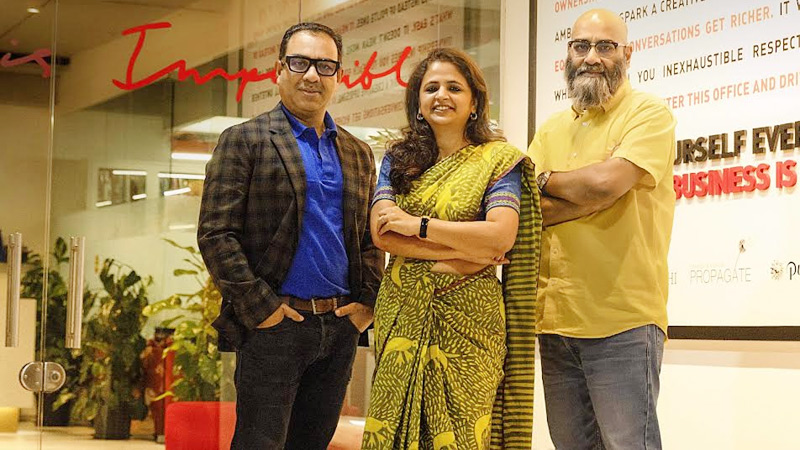
Mumbai: L&K Saatchi & Saatchi, a part of Publicis Groupe India, has strengthened its strategy leadership by elevating Snehasis Bose, its chief strategy officer (CSO), to the role of group chief strategy officer. With this, Snehasis will now oversee strategy across L&K Saatchi & Saatchi, Publicis India, and Saatchi & Saatchi Propagate. Additionally, Ekta Relan takes over the reins as the new chief strategy officer (CSO) for L&K Saatchi & Saatchi. Together, Snehasis and Ekta will collaborate to enhance the agency’s strategic initiatives.
Commenting on the appointments, L&K Saatchi & Saatchi and Publicis India CEO Paritosh Srivastava said, “Given the disproportionate growth all three agency brands have seen in client results, creative respect and revenue over the last few years, and the significant role the strategic function has played, it is the right time for us to introduce a force multiplier. Snehasis is a proven war horse who has been a great asset and the most dependable partner to the agency. It’s a natural progression for him to bring his influence and impact across the other agencies. Ekta is a rare talent, with her wealth of experience and strategic acumen, she is the perfect strategic leader and cultural fit to take L&K Saatchi & Saatchi’s spirit of ‘Our Client’s Business Is Our Business’ to the next level.”
With over 25 years of experience, Snehasis has been associated with agencies like McCann Erickson, Publicis Ambience, IMRB International, and Contract Advertising. He joined L&K Saatchi & Saatchi in 2015 and was elevated to CSO in 2020. Over the past nine years, Snehasis has demonstrated exceptional leadership and innovative approach that have driven growth for brands like Hero MotoCorp, ITC, Renault, JioMart, Audi, Reliance Digital, Zepto, Akasa Air, Nivea, Relaxo, Dabur, Groupo Bimbo, AU Bank among others, leading to his elevation to Group CSO with additional mandate for Publicis India and Saatchi & Saatchi Propagate. He will continue reporting to Paritosh.

Ekta boasts a career spanning 23 years. She joins L&K Saatchi & Saatchi after a successful stint as chief strategy officer at Lowe Lintas, where she led the strategy team for Unilever, the agency’s biggest client, apart from driving new business acquisitions. Ekta has also worked with Mullen Lintas, Sapient Nitro Singapore and Unilever Singapore. During her illustrious career, she has played an instrumental role in crafting winning strategies for renowned brands like Glow & Lovely, Pepsodent, Close Up, Surf Excel, Vim, Lifebuoy, Tata Tea, SBI Life, Saffola, Tata Cliq, Dabur’s Real, Samsonite and Bajaj Avenger among others. She has also served on jury panels for prestigious awards like Effies and AME.
Ekta’s dedication to developing solutions that challenge cultural norms and deliver impactful results seamlessly aligns with L&K Saatchi & Saatchi’s vision. She will collaborate closely with Paritosh and Snehasis to drive forward the agency’s strategic initiatives.
Snehasis, added, “My journey at L&K Saatchi & Saatchi has been transformational, and this new role promises to be orbit-shifting! Both Publicis India and Saatchi & Saatchi Propagate are on accelerated growth curves, and I am grateful to be an active part of their stories. With Ekta’s rich experience, deep wisdom and hunger for the new, I look forward to creating a symbiotic partnership that will unlock new possibilities for our clients, taking the L&K Saatchi & Saatchi ownership mandate to the next level. Looking forward to more audacity, challenges and rocket-like growth!”
Speaking on her appointment Ekta, said “L&K Saatchi & Saatchi is on a dynamic growth trajectory, redefining the role an agency can play for its clients’ business. I am thrilled to be a part of this enriching journey where commerce and culture beautifully fuel each other. I eagerly anticipate collaborating with the agency’s talented team, also learning and leveraging the power of the entire Publicis ecosystem to build solid brands that connect with their audience in unexpected and relevant ways.”





Brands
Estée Lauder to shed 10,000 jobs as new boss bets on digital shift
The cosmetics giant raises its profit outlook but stays silent on a possible merger with Spain’s Puig, as job cuts deepen and a three-year sales slump weighs on the turnaround
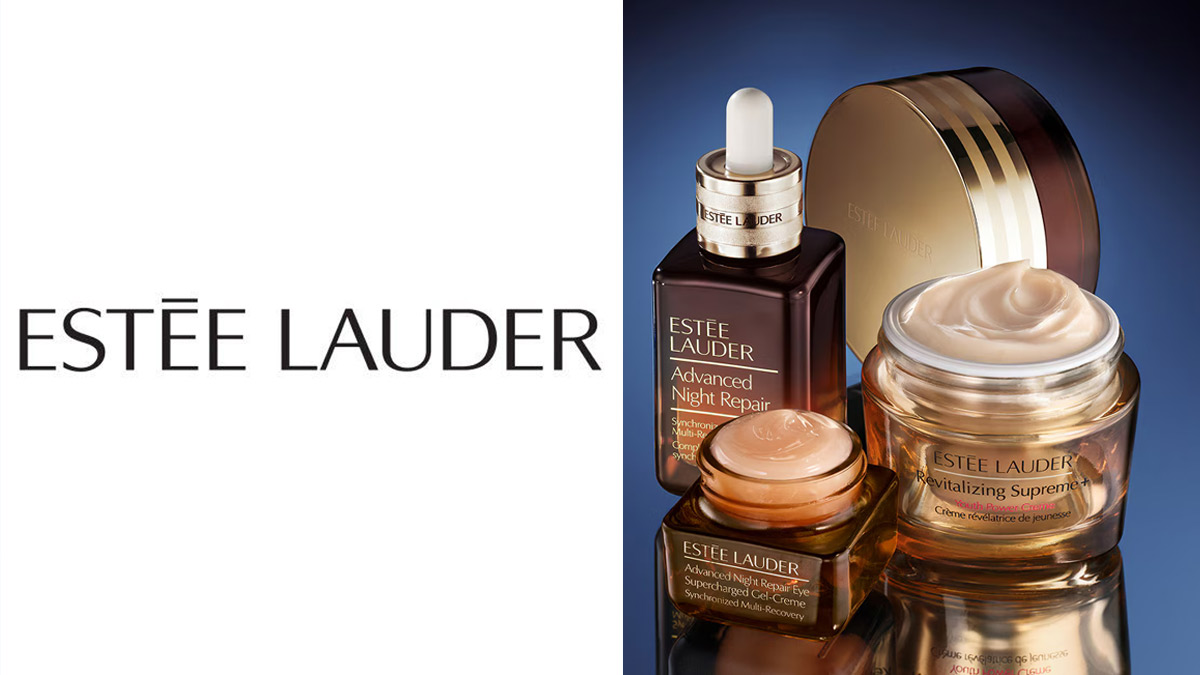
NEW YORK: Stéphane de La Faverie is not done cutting. Estée Lauder announced on Friday that it plans to eliminate as many as 3,000 additional jobs, taking its total redundancy programme to as many as 10,000 roles, up from a previous target of 7,000 announced a year ago. The company, which owns La Mer, The Ordinary, Tom Ford, and Aveda, employs roughly 57,000 people worldwide. The mathematics of what is now being contemplated is stark.
The fresh round of cuts is expected to generate a further $200 million in savings, bringing the total annual savings from the programme to as much as $1.2 billion before taxes. That money, De La Faverie has made clear, will be ploughed back into the turnaround.
A CEO in a hurry
De La Faverie, who took the helm in January 2025, inherited a company that had endured three consecutive years of annual sales declines. His response has been to move fast and cut deep. A significant portion of the latest redundancies reflects his push to reduce headcount at US department stores, long a cornerstone of Estée Lauder’s distribution model but now a channel in structural decline. In their place, he is accelerating the shift toward faster-growing online platforms, including Amazon.com and TikTok Shop, a pivot that is reshaping not just where Estée Lauder sells but how it thinks about its customers.
The numbers are moving in the right direction
Despite the pain, there are signs the medicine is working. Estée Lauder raised its profit outlook for the remainder of the fiscal year, guiding for adjusted earnings per share in the range of $2.35 to $2.45, above analyst estimates and a notable step up from the $2.05 to $2.25 range it had guided for in February. Organic net sales growth is expected to come in at 3 per cent, the company said, at the high end of the range it set out in February.
The share price tells a mixed story. After De La Faverie took charge, the stock surged nearly 60 per cent, buoyed by investor optimism that a longtime company insider could finally arrest the decline. But 2026 has been rougher: the shares have fallen 27 per cent this year, weighed down by disappointing February results and the overhang of unresolved merger talks with Spanish beauty giant Puig Brands SA. The company gave no additional details about those discussions on Friday, leaving the market to guess.
Silence on Puig
The proposed tie-up with Puig remains the most consequential unknown hanging over Estée Lauder. A deal with the Barcelona-based group, which owns brands including Carolina Herrera and Rabanne, would reshape the global luxury beauty landscape. But with nothing new to say and a turnaround still very much in progress, De La Faverie is asking investors to trust the process.
Three years of sales declines, 10,000 job cuts, and a merger that may or may not happen. At Estée Lauder, the overhaul has barely started.