Cable TV
Karnataka LCOs approach High Court to seek stay of DAS Phase III


NEW DELHI: Having a ripple effect of sorts after Telangana, Andhra Pradesh, Sikkim, Maharashtra, Odhisa and Guwahati, now it looks like Karnataka is all set to follow suit to get a court extension on the Digital Addressable System (DAS) Phase III deadline.
On 8 January, the Karnataka High Court is all set to hear a petition filed by the Karnataka Cable TV Operators Association for a stay on implementation of Phase III in view of the low seeding of set top boxes (STBs), problems with interconnect agreements and other issues.

As was reported earlier by Indiantelevision.com, the High Courts have already given extensions for various periods in the states of Andhra Pradesh, Assam, Maharashtra, Orissa, Sikkim, and Telangana, apart from Tamil Nadu where prolonged legal cases have been pending since Phase I.
Meanwhile, senior officials in the Information and Broadcasting Ministry today met legal experts to consider options before it to counter these orders even as sources in the Ministry told this website that the orders given so far will be implemented until a counter action is found.
One of the option before the Government is to ask the Supreme Court to bar any challenge to Phase III in various High Courts as this is a policy issue and the apex court had itself ruled earlier that it would not interfere in matters of policy. The second option is to oppose each case in the respective High Court, which is being done.
While insisting that there will be no extension of the switch off of analogue signals beyond 31 December, 2015, the Ministry is also making a more realistic assessment of the seeding of STBs.
Meanwhile, the Telecom Regulatory Authority of India (TRAI) is awaiting counter suggestions before it comes out with a model interconnect agreement by mid-January.







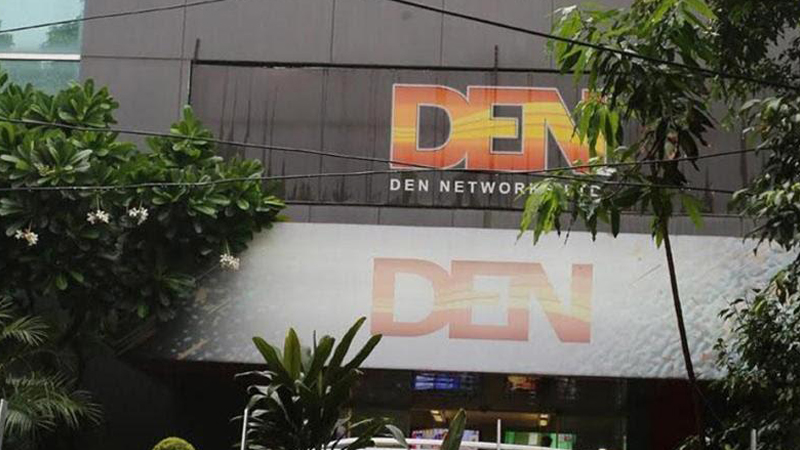
MUMBAI: When margins wobble, liquidity talks and in Q3 FY25-26, cash did most of the talking. Den Networks Limited closed the December quarter with consolidated revenue of Rs.251 crore, marginally higher than the previous quarter but down 4 per cent year-on-year, even as profitability stayed resilient on the back of strong cash reserves and disciplined cost control.
Subscription income softened to Rs.98 crore, slipping 3 per cent sequentially and 14 per cent from last year, while placement and marketing income offered some cheer, rising 15 per cent quarter-on-quarter to Rs.148 crore. Total costs climbed faster than revenue, up 7 per cent QoQ to Rs.238 crore, driven largely by higher content costs and operating expenses. As a result, EBITDA dropped sharply to Rs.13 crore from Rs.19 crore in Q2 and Rs.28 crore a year ago, pulling margins down to 5 per cent.
Yet, the bottom line refused to blink. Profit after tax stood at Rs.40 crore, up 15 per cent sequentially and only marginally lower than last year’s Rs.42 crore. A healthy Rs.57 crore in other income helped cushion operating pressure, keeping profit before tax at Rs.48 crore, broadly stable quarter-on-quarter despite the tougher cost environment.
The real headline-grabber, however, sits on the balance sheet. The company remains debt-free, with cash and cash equivalents swelling to Rs.3,279 crore as of December 31, 2025. Net worth rose to Rs.3,748 crore, while online collections accounted for 97 per cent of total receipts, underscoring strong cash discipline across operations, including subsidiaries.
In short, while Q3 showed signs of operating strain, the financial backbone remains solid. With zero gross debt, steady profits and a formidable cash war chest, the company enters the next quarter with flexibility firmly on its side proving that in uncertain markets, balance sheet strength can be the best growth strategy.