iWorld
Arre’s first sitcom ‘I Don’t Watch TV’ to launch in February

MUMBAI: Arré, the digital media company founded by Ronnie Screwvala along with B Saikumar and Ajay Chacko, is all set to launch its first sitcom in February 2016.
The show titled as I Don’t Watch TV (IDWT) is a wild comedy on the evolving Indian TV industry. The first season consisting of five episodes is already shot and will launch in February, while the second season is under production.

The show will draw commentary on Indian celebrities and the growing obsession with Bollywood. The show is produced by Nakuul Mehta and will star some of the biggest names from daily soaps.
Directed by Ajay Singh, the show will give a close personal look at the daily soap world through Mehta’s eyes.
Other personalities that will be seen on the show are Drashti Dhami, Karan Patel, Rithvik Dhanjani, Kritika Kamra and Karan Wahi amongst others. The show will also feature Alekh Sanghal and Ram Menon.
Not restricting itself to daily soaps, the show has a humorous cameo by film critic Rajeev Masand.
Arré founder and MD B Saikumar said, “Arré aims to be a multi-genre, multi-format content brand and for the mobile and digital consumer who is increasingly moving away from TV – to that end, I Don’t Watch TV, is perhaps the ideal sitcom to launch our video slate with. We don’t believe in doing the straight and narrow and after Ho Ja Re-Gender, a social experiment on gender issues, we now present IDWT, which is a fictionalised, irreverent, yet realistic look at the idiosyncrasies of the daily soap industry. And Nakuul represents the honesty and the dichotomy of this age – and we’re thrilled that he is so passionate about this project himself.”
Mehta said, “We found a great synergy with the folks at Arré and their backing of disruptive ideas makes them a perfect platform for IDWT. This series is truth meets part fiction meets part bizarre, which in essence is Indian television, today. It has been our labour of love and we have been keen to tell this story for a long time as it is personal and quite intense in a lot of ways, though it’s presented in a humorous and edgy way.”







iWorld
Meta plans 8,000 layoffs in new AI-led restructuring wave
First phase from May 20 may cut 10 per cent workforce amid AI pivot.
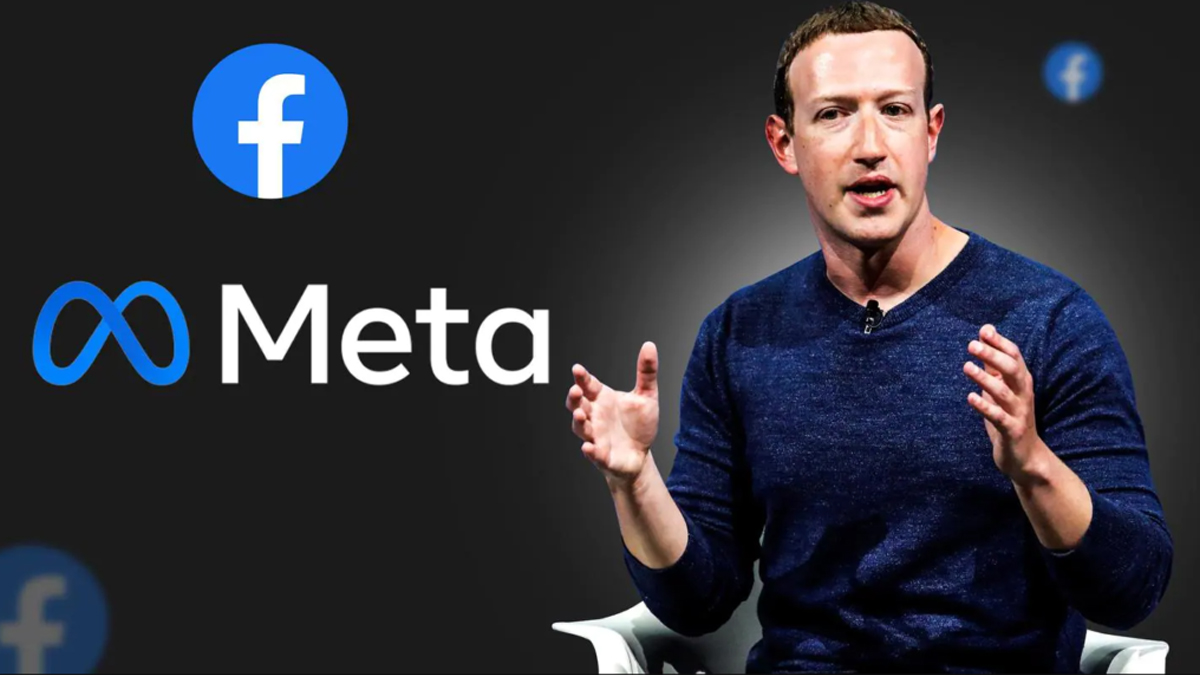
MUMBAI: At Meta, the future may be artificial but the cuts are very real. The social media giant is reportedly preparing a fresh round of layoffs, with an initial wave expected to impact around 8,000 employees as it doubles down on its artificial intelligence ambitions. According to a Reuters report, the first phase of job cuts is slated to begin on May 20, targeting roughly 10 per cent of Meta’s global workforce. With nearly 79,000 employees on its rolls as of December 31, the move marks one of the company’s most significant workforce reductions in recent years.
And this may only be the beginning. Sources indicate that additional layoffs are being planned for the second half of the year, although the scale and timing remain fluid, likely to be shaped by how Meta’s AI capabilities evolve in the coming months. Earlier reports had suggested that total cuts in 2026 could reach 20 per cent or more of its workforce.
The restructuring comes as chief executive Mark Zuckerberg continues to steer the company towards an AI-first operating model, committing hundreds of billions of dollars to the transition. Internally, this shift is already visible: teams within Reality Labs have been reorganised, engineers have been moved into a newly formed Applied AI unit, and a Meta Small Business division has been created to align with broader structural changes.
The trend is hardly isolated. Across the tech sector, companies are trimming headcount while investing aggressively in automation. Amazon, for instance, has reportedly cut around 30,000 corporate roles nearly 10 per cent of its white-collar workforce citing efficiency gains driven by AI. Data from Layoffs.fyi shows over 73,000 tech employees have already lost jobs this year, compared with 153,000 in all of 2024.
For Meta, the move echoes its earlier “year of efficiency” in 2022–23, when about 21,000 roles were eliminated amid slowing growth and market pressures. This time, however, the backdrop is different. The company is financially stronger, generating over $200 billion in revenue and $60 billion in profit last year, with shares up 3.68 per cent year-to-date though still below last summer’s peak.
That contrast underlines the shift underway. These layoffs are less about survival and more about reinvention. As Meta restructures itself around AI from autonomous coding agents to advanced machine learning systems, the question is no longer whether the company will change, but how many roles will be left unchanged when it does.







