Connect with us

High Court

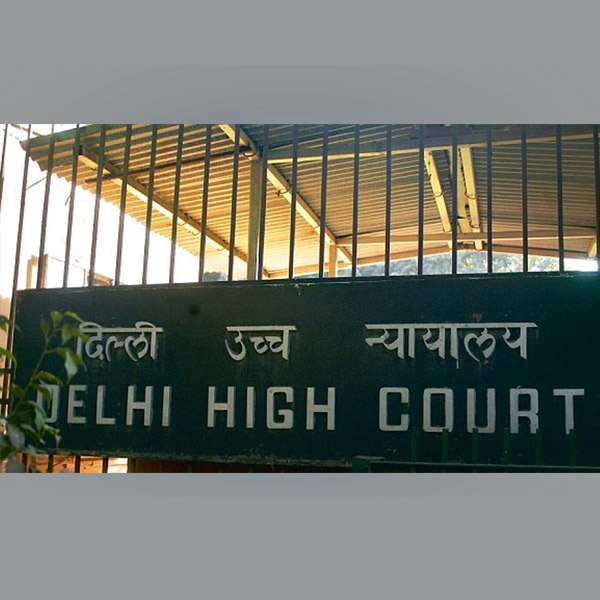
Delhi HC restrains 200+ websites from illegally showing Balaji’s ‘Kyaa Kool Hain Hum 3’

Published

on

NEW DELHI: The Delhi High Court has restrained around 203 websites from streaming, broadcasting or providing online access to Balaji Motion Pictures’ recently released film Kyaa Kool Hain Hum 3.


Passing the restraint order, the court said the production company Balaji Motion Pictures is “entitled to get protection under the Copyright Act.”

Advertisement


Balaji Motion Pictures had approached the High Court contending that 203 websites, local cable operators and others should be restrained from making available or showing, uploading, downloading or exhibiting the movie in any manner without proper licence from the producers.


Advertisement

Accepting the plea, Justice Vipin Sanghi issued notice to 300 defendants including websites and local cable operators and directed them to comply with the order restraining all of them from providing “online access in any manner.” The matter has been listed for 5 May.


Besides restraining the websites from providing access to the film, the court also directed various Internet Service Providers (ISP), Department of Telecommunications and Department of Information Technology to ensure compliance by blocking access to all the 203 websites identified by the producers.

Advertisement


In the Delhi High Court, Balaji counsel Abhishek Malhotra said the film cannot be viewed on any device or broadcast on any platform through Internet without their permission.


Advertisement

He said the cause of action arose after he received information that the defendants and unknown persons were engaged in rampant piracy and abuse of copyright in respect of various other works including the film.


“They are likely to indulge in unlicensed and unauthorised exploitation of the film merely a week ahead,” the counsel contended.

Advertisement


Meanwhile, the Bombay High Court has issued notices to the producers, director and writers of the film and sought a response to a public interest litigation seeking a ban on it for allegedly vulgar content.


Advertisement

The division bench of Justices N H Patil and G S Kulkarni said they will hear the petition next week but reprimanded the petitioner Zuber Khan for moving the court late as the film had already been released. The petition claimed the film is vulgar and against the culture and ethos of the country. “In the trailer, the film is said to be India’s first Porn comedy. The posters are vulgar with semi-nude photos,” it says. The court issued notices to the producers Ekta Kapoor and Shobha Kapoor, director Umesh Ghadge and writers Milap Zaveri and Mustaq Shaikh apart from the Censor Board and the Maharashtra government.


Khan said he would amend the petition and also seek a ban on another such film, Mastizaadefeaturing Sunny Leone amongst others, which is scheduled to release next week.

Advertisement


Released on 22 January, the film stars Tusshar Kapoor and Aftab Shivdasani in the lead along with Mandana Karimi, Gizele Thakral, Claudia Ciesla, Krishna Abhishek, Shakti Kapoor and Darshan Jariwala.


Advertisement
Click to comment

Leave a Reply

Your email address will not be published. Required fields are marked *

High Court

Bombay High Court questions AI celebrity deepfakes in Shilpa Shetty case

Justice questions legality of unconsented AI personas, platforms directed to respond.

Published

on

MUMBAI: The Bombay High Court just put AI on the witness stand because when a chatbot starts chatting as Shilpa Shetty without asking, even the bench wants to know who gave permission. The Bombay High Court on Wednesday expressed serious concerns over the legality of artificial intelligence tools that simulate celebrity personalities without consent, during a personality rights suit filed by actor Shilpa Shetty.

Justice Sharmila Deshmukh, hearing the matter, questioned platforms that allow users to interact with AI-generated versions of actors without authorisation. The court noted that one accused AI chatbot website continued using Shetty’s personality without permission, prompting the judge to ask about the legal basis for such operations.

When the lawyer for the AI company argued that the system relied on algorithms and did not require celebrity consent, Justice Deshmukh challenged the platform’s right to recreate and make public a person’s identity in this manner. She observed that while users uploading photographs raised one set of issues, AI systems generating content based on recognised personalities posed distinct legal and ethical questions especially when the platform itself acknowledged the content was not real.

Advertisement

The court directed the platform to file a detailed response explaining its position.

The case involves Shetty seeking restrictions on more than 30 platforms including e-commerce websites and AI services accused of hosting or enabling misuse of her image and circulation of deepfake content.

The Bench also raised concerns about Youtube commentary videos discussing the ongoing proceedings involving Shetty and her husband, questioning whether unverified discussions could malign parties without journalistic checks.

Advertisement

Counsel for Google, Tenor and the AI entity informed the court that flagged infringing URLs had been removed. Shetty’s team disputed this, leading the court to allow her to file an application alleging non-compliance if links remained active.

Tenor objected to the broad injunction sought, arguing it functions as an intermediary GIF platform without capacity for proactive monitoring. The court directed Tenor to file an affidavit opposing the order.

E-commerce platforms including Amazon stated they had removed unauthorised listings using Shetty’s name and image, and would continue to act on specific notifications.

Advertisement

The court reiterated that directions for intermediaries would operate on a “take-down on notice” basis, requiring removal of infringing content once flagged.

As deepfakes blur the line between real and rendered, the Bombay High Court isn’t just hearing a case, it’s asking the bigger question: in the age of AI avatars, who really owns your face?

Advertisement
Continue Reading

Advertisement News18
Advertisement All three Media
Advertisement Whtasapp
Advertisement Year Enders

Copyright © 2026 Indian Television Dot Com PVT LTD

This will close in 10 seconds

×