MAM
India’s sports sponsorship grew to Rs 51,854 million in 2015; PayTM, Hero, CEAT and MRF emerge as big spenders


MUMBAI: For those you are into sports, be it for the love of the game or love of the business that revolves around it, the welcome news is that India has set itself to become a sporting nation that thrives not only on cricket but number of other sports as well. India with a thriving culture around sports is not a distant mirage but a near reality. The figures in the 3rd edition of Sporting Nation In The Making – III is a testament to this growth.
This comprehensive report compiled by GroupM’s entertainment and sports arm ESP Properties and SportzPower shows that sports sponsorship in India has grown from Rs 46,165 million (Rs 4,616.50 crore) in 2014 to Rs 51,854 million (Rs 5,185.40 crore) in 2015 accounting for 10.4 per cent of the total Indian advertising expenditure. That is a whooping 12.3 per cent growth.
ESP Properties business head Vinit Karnik emphasised how sports can be harnessed as a successful communication medium by brands. He said, “There is definitely a cultivated sense of understanding between corporate sponsors, sports teams and federations. A symbiotic marketing relationship has emerged within the sporting ecosystem in India. 2016 will be fantastic for not only players and federations, but also for brands and spectators, with a deeper engagement with sporting properties.”

Despite the challenges, ICC World Cup managed to garner Rs 5000 million (Rs 500 crore) in advertising revenues in 2015. On air sponsorships over all increased by 6.8 per cent YoY from Rs 25,180 million (Rs 2,518 crore) to Rs 26,900 million (Rs 2,690 crore). Out of which, 30 to 35 per cent was contributed by the emerging sports in India, while cricket took the bulk of the share.
Interestingly, only 30 percent of the growth came from On Air deals, while the rest of the 70 percent came from on ground sponsorships, team sponsorships, franchise fee and athlete’s brand endorsement deals, with on ground seeing most of the action. It grew by 30 per cent from Rs 7948 million (Rs 794.80 crore) to Rs 10,305 million (Rs 1,030.50 crore).
Though cricket bit the biggest chunk off this sponsorship pie, emerging sports leagues were the real growth drivers. Going by the figures roughly 51.38 per cent of the on ground sponsorship share was cricket’s contribution while the rest was all emerging sports.
“Sports other than cricket have successfully established themselves in terms of revenue and fandom within the Indian sporting firmament,” SportzPower co founder Thomas Abraham shared. “Sports like kabaddi andfFootball have massively increased sponsorship revenues in 2015 and we saw return editions of sports like tennis and hockey as well. The successful launch of the Pro Wrestling League bodes well for 2016, which will see the advent of more franchise based leagues. We expect 2016 to be a good year for cricket as well as other sports, generating ad spends and clocking in corporate investments at an exponential pace,” he added.
Infact, football saw an amazing 91.6 per cent sponsorship growth from the previous year valuing it at Rs 1140 million (Rs 114 crore) in 2015. The biggest success story is perhaps Pro Kabaddi League, which grew by 300 per cent YoY and clocked at Rs 480 million (Rs 48 crore) in on ground sponsorship deals without a title sponsor. As per Karnik, it was a clever strategy by the broadcaster to not lock down their title sponsor and raise the bar for the next season.
eCommerce brands took the lead as top spenders in the total ad spends on sports in 2015, followed closely by automobile brands. PayTM, CEAT Tyres and MRF Tyres together contributed Rs 1078 million (Rs 107.8 crore) per year, increasing cricket’s on ground ad spends by 14 per cent.
Endorsements played a huge role in upping the sponsorship ante in 2015 with the sector seeing 27 per cent growth. The biggest endorsement deal was undoubtedly Tata Motors’ bringing Lionel Messi onboard on a two year deal of worth Rs 600 million (Rs 60 crore) per year. 2015 also saw Virat Kohli entering the Rs 1,000 million (Rs 100 crore) endorsement club that God Of Cricket Tendulkar and MS Dhoni earlier ruled.
“Women are ruling the endorsement game when it comes to non-cricketing sports,” said Karnik. “Between Saina Nehwal, Sania Mirza and MC Mary Kom, the ladies share almost 40 per cent of the endorsement spends in the market with over 10 brands in each player’s kitty.” Abraham credited their sophisticated and enthusiastic engagement of fans over social media to be the driving factor apart from their continued good performance throughout the year.
The stress on digital, and social engagement is reiterated by both Abraham and Karnik as critical to players and teams as stats show that 70 percent of fans bring mobile phones to the stadium to share their experience, while 46 percent of mobile internet users search for sports related news and content online.
Karnik calls 2016 to be the year of the fans and points out two key trends that will drive growth in the sector. “Now that we have sowed the seeds of a sporting nation in India, 2016 will see a great synergy between broadcasters, association’s, franchise owners, players and all other stakeholders to come together to build a culture around sports and build the fanbase. Secondly longer seasons or play for they sport will give more opportunities for brands to engage with the fans,” shared Karnik, adding that Pro Kabaddi League will see two seasons this year. Abraham on the other hand names volleyball to be the next big entrant in emerging sports league scene, which will launch with three separate sub-leagues to its name — beach volleyball, men’s volleyball and women’s volleyball league.






MAM
Lessons from global media markets on building enduring content franchises
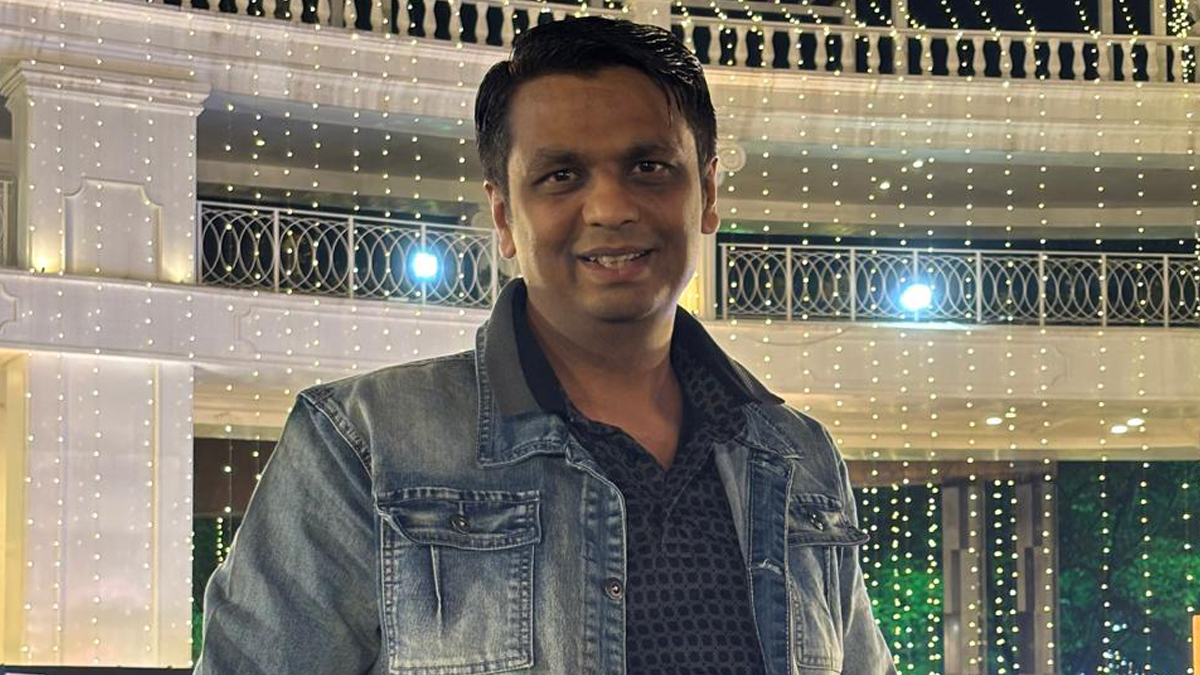
Rose Audio Visuals COO and CFO Mitesh Patel.
MUMBAI: The global media landscape has undergone a fundamental shift. Success today is no longer defined by a single hit show. It is defined by the ability to build intellectual property (IP) that travels, evolves, and compounds over time.
At Rose Audio Visuals, this shift is central to how we think about content pitching and creation. We are no longer in the business of just making shows. We are in the business of building IP ecosystems.
From Hits to Franchises
Globally, the most successful content is designed to extend beyond its first outing. It travels across: Seasons, Platforms (TV → OTT → Digital), Formats (series → spin-offs) Shows like Stranger Things and Money Heist are not just successful series they are multi-layered franchises with global recall, fan engagement, and long-term monetisation. The key learning is simple: If content cannot scale beyond one season or one platform, it remains a project not a franchise.
Local Stories, Global Impact
One of the most powerful global trends is the rise of culturally rooted storytelling. Platforms today reward local authenticity combined with universal emotion. Stories that are deeply regional are no longer limited by geography they are amplified by it. Consider the global impact of Squid Game or India’s own Sacred Games. The takeaway is clear: The more authentic the story, the greater its potential to travel if the emotion resonates universally.
Monetisation Begins After the First Window
A critical global learning is that the true value of content is not realised at launch, it is realised over time.
Strong franchises unlock multiple revenue streams: Licensing, International remakes, Brand integrations, Digital extensions , Events and immersive experiences
Global players like The Walt Disney Company have mastered this approach, turning content into long-term ecosystems that extend far beyond the screen.
The first window is just the beginning. The real value lies in what follows.
At Rose Audio Visuals, we increasingly evaluate projects not just on commissioning value, but on their long-term franchise potential.
The Rise of Creator-Led Franchises
An important global shift is the emergence of creator-led IP ecosystems.
Creators today are not just content producers they are building full-scale franchises across platforms, formats, and businesses.
A powerful example is MrBeast. What started as YouTube videos has evolved into: Multiple content formats, Global audience scale , Brand extensions and businesses, High-impact experiential content This is a fundamentally different model digital-first, audience-owned, and infinitely scalable.
This model is still in its early stages in Indian but it represents a massive opportunity.
The next wave of Indian content franchises may not come from traditional studios alone but from creators who think like media companies.
Balancing Data with Creative Instinct
Streaming platforms today are deeply data-driven. Data helps Identify emerging genres, Predict audience behaviour , Inform commissioning decisions However, global experience shows that data alone does not create hits. Data informs scale, but storytelling creates impact.
Talent is the Foundation of Franchises
Enduring franchises are rarely accidental they are built through long-term creative partnerships. Globally, there is a clear focus on nurturing Actors, Writter, Show runner and director. Franchises are not built on scripts alone they are built on creators. This is an area where we continue to invest deeply building long-term relationships with talent rather than project-based collaborations.
Multi-Platform Thinking from Day One
Content consumption today is inherently multi-platform. A successful show must be designed not just for its primary platform, but for: Short-form extensions, Social media amplification, Digital-first engagement. Every show today needs a second life beyond its original format.
India: A Market at an Inflection Point
India today stands at a unique moment in its content journey.
We are seeing significant opportunity in Regional markets (Telugu, Tamil, Marathi and others) Emerging formats such as micro-dramas, Scalable, franchise-driven fiction IP
India does not lack stories. What we have historically lacked is structured franchise thinking something that is now beginning to evolve.
The Way Forward
The biggest lesson from global markets is this: The future belongs to companies that do not chase hits, but systematically build franchises. Because while hits may deliver immediate success, franchises create long-term value, recall, and compounding growth.
At Rose Audio Visuals, this belief shapes how we develop, greenlight, and scale content across platforms.
For content companies today, the question is no longer “Will this show work?” It is: “Can this become a franchise?”
A Personal Note
Having worked across content, business, and strategy, one thing has become increasingly clear to me, the most valuable companies in our industry will not be those that create the most content, but those that create content that endures.
Building a franchise requires patience, conviction, and a long-term lens something that the industry is only now beginning to fully embrace.As we continue this journey at Rose Audio Visuals, our focus remains simple: to move from volume-driven creation to value-driven storytelling. Because in the end, stories may start conversations but franchises build legacies.







