iWorld
Jacqueline Fernandez becomes Spice Girl In #WhatIReallyReallyWant Film

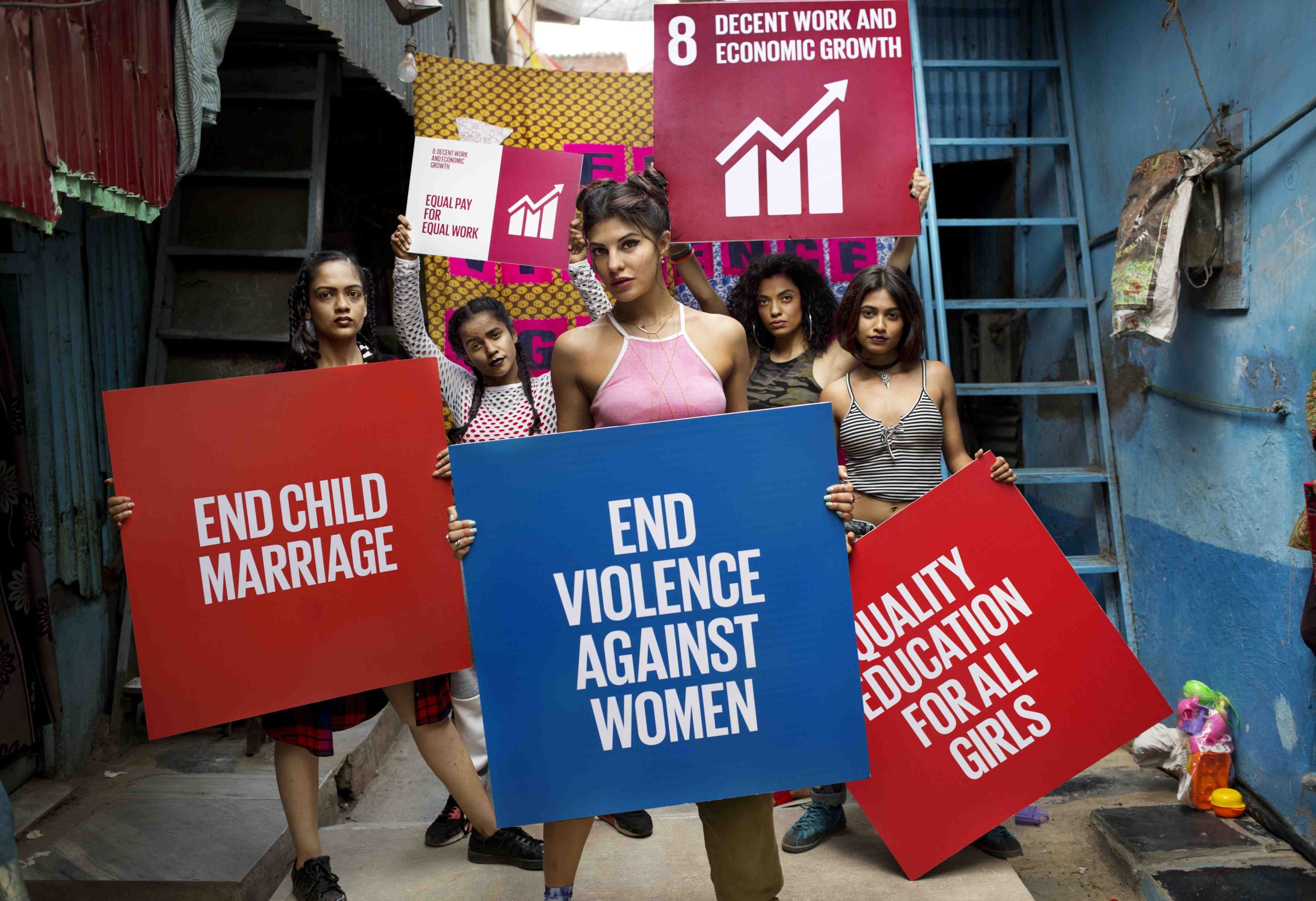
MUMBAI: Two decades since British girl group Spice Girls debuted their smash hit, “Wannabe,” the iconic music video has been recreated with non-other than mega star Jacqueline Fernandez in it. She is one of the ‘Spice Girls’ representing India in the film, along with British hip hop group M.O, Nigerian singer Seyi Shay, South African award winning Hip Hop artist Gigi Lamayne, singer Moneoa and American dancer Taylor Hatala.
Ever since the film hit the internet it has gone viral with 36 Million views and has been retweeted and shared by many of Hollywood’s super stars. The original Spice Girl Victoria Beckham and Hollywood actress Emma Watson were amongst countless personalities to support the film Victoria Beckham, in her support for the Global Goals campaign, has encouraged women to share the goals they want to achieve by using the hashtag #WhatIReallyReallyWant.
“I think this film is a wonderful idea. How fabulous is it that after 20 years, the legacy of the Spice Girls’ — ‘Girl Power’ — is being used to encourage and empower a whole new generation”
She later tweeted –
“#WhatIReallyReallyWant is no more girls dying of HIV @TheGlobalGoals”
Spice Girls member Mel C wrote on Twitter –
“Flattered and honoured that our crazy song is being used so beautifully@theglobalgoals #WhatIReallyReallyWant”
Emma Watson who is a UN Women Goodwill Ambassador also took to Twitter —
“#WhatIReallyReallyWant is to see Goal 5 – Gender Equality achieved@theGlobalGoals”
Lily Singh a.k.a Super Women who is a vlogger and influencer shared the video on facebook saying –
“Yas! Love this spread that #girlpowe”
Talking about being a part of this film Jacqueline Fernandez said “Gender discrimination has to stop and the global community has to start putting girls first. We need to create a community where girls feel strong, safe and supported and have equal access to education, technology, health and sanitation….The world needs a dose of girl power and that’s why I’m supporting the Global Goals campaign for girls and women.”
-Ends-
Please share the link to the film #WhatIReallyReallyWant which is now live:
About the film:
• Tying in with the 20th anniversary since the release of Spice Girls’ Wannabe video, Project Everyone (founded by filmmaker, campaigner, SDG Advocate Richard Curtis) with their partners Getty Images and SAWA (the global cinema advertising association), have released a remake of the video called #WhatIReallyReallyWant
• The film is directed by the supremely talented director MJ Delaney features artists from India (including Bollywoodstar Jacqueline Fernandez!), Nigeria (Seyi Shay), South Africa (Gigi Lamayne, Moneoa), UK (music group M.O), USA(Larsen Thompson) and Canada (Taylor Hatala). It launches online today and in cinemas later this month.
• The film reflects the voices of girls and women all over the world telling world leaders what Goals they ‘really really want’ to be achieved to help improve their lives. These include issues like quality education, an end to violence, an end to child marriage and equal pay for equal work. People will share a picture of #WhatIReallyReallyWant for girls and women and the visual response from around the world will then be presented to world leaders at the UN General Assembly in September.