News Broadcasting
CNBC-TV18 and HSBC India champion gender equality with the second season of Future. Female. Forward

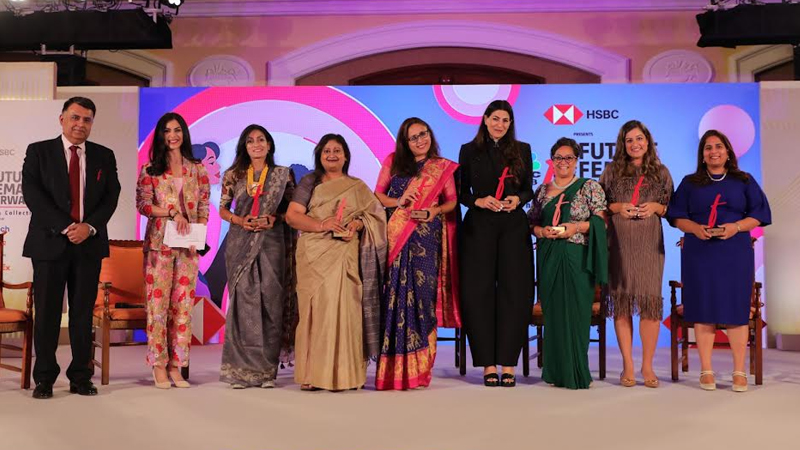
Mumbai: CNBC-TV18 organised an intimate chapter of Future. Female. Forward Season 2: The Leadership Circle – Mumbai Edition, presented by HSBC India. This significant initiative aims to bridge the gender gap and engage in impactful conversations to promote gender equality. The event was held at ITC Grand Central, Mumbai on April 18, 2024, and was attended by prominent figures from business, entrepreneurship, policy, entertainment, and politics.
The Leadership Circle aimed to go beyond traditional networking events by establishing a forum where decision-makers and influential leaders gathered to promote true parity. This chapter welcomed prominent female leaders to share their experiences, encouraging meaningful dialogue and effective collaboration.
The evening kickstarted with a welcome address by CNBC-TV18 managing editor Shereen Bhan. She said, “CNBC-TV18’s Future. Female. Forward. initiative has collected narratives of numerous women across various spheres of life. We have taken our campaign and conversations to global forums with the World Economic Forum in Davos. Our initiative has honoured women who have opened new doors of opportunity. Future. Female. Forward. focuses not just on maintaining women’s presence in the workplace, but also on reclaiming their individuality and promoting empowerment. The initiative brought together leaders from the private sector, governmental, and social sectors.”
The first fireside chat of the Leadership Circle’s Mumbai edition featured Masaba Gupta, fashion designer, entrepreneur, and actor in conversation with Shereen Bhan. Talking about the plans for House of Masaba, she said, “We will have a significantly larger retail footprint across India and globally. Currently, we operate around 17 stores across India, and we aim to increase this number to between 35 and 40 in the upcoming years. Additionally, we have exciting new categories and product extensions in the pipeline. We are gradually shifting towards the luxury market, recognizing the dynamic nature of today’s Indian market. I used to say, people loved heading West, finding joy in opening stores in New York or Dubai. But today, we’ve got it all right here in our Indian market.”
The evening moved ahead with an enriching panel discussion on the topic ‘Lessons in Leadership’ with Naiyya Saggi, co-founder, Good Glam Group & CEO, Good Community; Radhika Gupta, managing director & CEO, of Edelweiss Mutual Fund; Neera Nundy, partner & co-founder, Dasra; Neetu Kashiramka, managing director, VIP Industries Ltd; Deepali Goenka, managing director, Welspun Living Limited; Aparna Piramal Raje, writer & public speaker and Dr Aparna Bandodkar.
Reflecting on her journey, Edelweiss Mutual Fund MD & CEO Radhika Gupta stated, “A defining moment for me was when I walked onto the stage at the Jio Theater without informing my family or colleagues, ready to open up to 500 strangers about my experiences. Supported by the encouragement of a mentor, I was uncertain about the effect my words would have. By embracing my vulnerabilities, I discovered strength and built a greater sense of self-assurance. I realized that my flaws were not weaknesses but rather connections to others. Sharing my story turned into a beacon of hope for many who were on similar paths.”
VIP Industries Ltd managing director Neetu Kashiramka speaking about her journey of overcoming societal taboos said “I come from a conservative Marwadi family where even attending college was a challenge. Despite my father’s pressure to marry at 20, I was resolute about pursuing a career. It took tears and persistence to gain his approval. The next hurdle was finding a progressive partner who would respect and support my ambitions. With confidence, I approached my husband-to-be, laying out my expectations clearly. His unwavering support and sacrifices have been crucial to my career success. From starting as an assistant manager to becoming a vice president, I’ve achieved milestones beyond imagination. Each step, from K-11 to VIP Industries, has been driven by determination and a commitment to excellence.”
Good Community co-founder, Good Glam Group & CEO Naiyya Saggi said “At its core, we are fostering a community where both remarkable women and men unite. Growing up, my mother was an indomitable force who shattered stereotypes, ensuring that gender was never a barrier in my life. Entrepreneurship, particularly founding Baby Chakra, opened my eyes to the existing disparities. We encountered difficulties in persuading male investors, but we never gave up. I was recently elected to the governing council of the Mumbai Tech Entrepreneurs Association, where I advocate for increased female representation. As I prepare to become a mother for the second time, my journey is a testament to the power of persistence. Each challenge we overcome not only advances our cause but also sets the stage for others to follow. We aim to create a domino effect, where each success story motivates many more to embark on their own paths.”
Sohini Chattopadhyay, national-award-winning film critic, journalist, and author delivered a special author session about the growth of Women in history, specific women in sports.
The event’s concluding discussion session on partner perspectives on ‘Championing Diversity and Inclusion’ was led by Amitabh Malhotra, head of Global Banking of HSBC India. Talking about the diverse culture and various programs for women, he said, “At HSBC, our dedication to promoting diversity and inclusion extends beyond individual stories to a collective effort. Our ‘Power to Her’ initiative, aimed at reintegrating skilled women back into the workforce after career breaks, illustrates this commitment. Achieving an impressive 60 per cent conversion rate to full-time positions underscores our resolve to leverage diverse talent pools and cultivate upcoming leaders. Likewise, our ‘Ascent’ program empowers senior female leaders by enhancing their self-awareness and leadership capabilities, leading to more than 50 per cent advancement into new roles.”
CNBC-TV18’s Future. Female. Forward – The Women’s Collective was proudly presented by HSBC India. It is co-presented by HCLTech, and ITC, FedEx, Reliance supported the initiative as Associate Partners, with Industry Partner, FICCI.