eNews
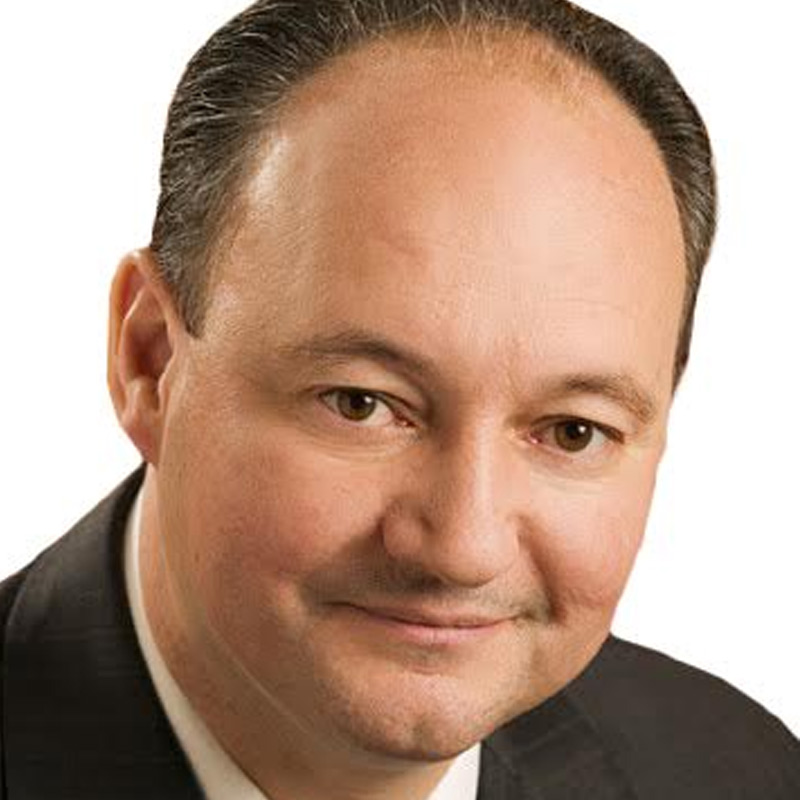
Content piracy making b’casters invest in good tech for security: Tata Communications VP Brian Morris

Somebody had aptly said that a new development brings along with it not only benefits, but also various downsides. If technology is opening up new frontiers of content delivery to consumers, the menace of content piracy too is rising globally. So, it’s almost always a race against time to find neutralizers to a menace like piracy for content owners and technology & security companies.
And, Tata Communications is one such company that not only helps its customers deliver content, but also does continuous research in safety methods. That’s just one of the many reasons why the company continually makes major investments in building and improving state-of-the-art global communications network. One such example of investments is the $1.19 billion spent on the company’s global subsea fibre network — the company claims it is one of the world’s largest and most advanced —- that covers 700,000 km or more than 17 times around the world; the only Ethernet ring serving the Middle East; more than 400 points of presence on five continents, apart from ownership and operation of over 1 million sq. ft. of data centre space in 44 locations worldwide.
In an interaction with Indiantelevision.com, Tata Communications VP and GM – Global Media and Entertainment Services Brian Morris holds forth on various aspects of content delivery, tackling content piracy and the need to have a good technology partner for broadcasters.

Excerpts:
As broadcasters deliver content on multi-platform like social media and OTT, how can they ensure that they have the highest levels of content security integrated within the core of their business operations and across various delivery platforms?
Today, content owners, enabled by technology providers, are taking control in a world where the viewing patterns of consumers are dramatically changing due to advances in mobile and flexible content provisioning. The broadcasting counter-revolution is about staying ahead of the game and providing viewers with the platforms and services that give them more control when it comes to dictating their own viewing experiences.
For broadcasters and Over the Top (OTT) and streaming network providers, this means enabling content to be delivered via non-traditional distribution channels, to support on-demand and catch-up services that allow viewers to watch whatever content they want, whenever they want, on any device. It is also enabling the disruption of regionalization and rights management as content owners seek to extend reach and distribute their content on a global basis.
Hence, emergence of OTT and streaming players and growing adoption of various smart devices, in an increasingly growing connected world, has forced pay-TV operators to offer their content on multiple networks and multiple devices. This gradual transformation has led to roll out of parallel systems requiring adoption of multiple service delivery and content security platforms resulting into management complexities.
To manage the multi-service / multi-platform environment, media service providers need to adopt unified security approach to meet security requirement on any device and any type of content (live or on-demand). Below are the key trends in unified content security space:
# Single security client combining CAS (conditional access systems) and DRM (digital rights management) functionalities to support DVB, IPTV STB and OTT based media distribution
# Adaptive security solutions compatible with any devices (including device with HWRoT, Open STBs like Android STB, Legacy STBs without HWRoT and Open CE devices)
# Security solutions to meet requirements for enhanced content (UHD, HD HDR, early release content) – MovieLabs , an R&D JV of six major motion picture studios, has come with new content security ECP guidelines
# Security solutions to support open consumer devices – software based security solutions compatible with customer owned devices.
Is forensic watermarking a step in the right direction when it comes to content security?
It is the prerogative of content owners to do any kind of watermarking. We, at Tata Communications, are fully supportive and capable of carrying any watermarking through our infrastructure. Forensic watermark is a great help when it comes to content security. It offers a range of benefits to broadcasters and content providers and some of them are the following:
# Single solution to fight against content redistribution across the value chain– For the content owner, the source of leak can be found out; while for the licensee, session-based watermarking enables them to identify which OTT account or smart card the pirate stream is originating from.
# Lower total cost of ownership with easy deployment and scalability – all consumers (irrespective of the device they use) receive watermarked content, and not just those users who own watermarked enabled devices.
# Fast time to market on deployed devices and existing workflows – there is no need for specific client side hardware, which makes it easier to deploy to existing devices.
# Renewable, robust security based on a centralized design – central architecture is more secure, in order to make it impossible for pirates to exploit the client device and easy to renew if a breach occurs.
The main limitation of forensic watermarking technology is the occasional occurrence of false positives in which legal copies of a document, image, video or program are tagged as unauthorized. Forensic watermarks have gained acceptance in the software and digital video industries. Other applications in which the technology holds promise include digital music and electronic books (e-books).
With the rise of number of OTT platforms in India, are the players taking security breach or its possibility seriously as Indian security systems generally tend to be lax?
A mega-trend noticed in the broadcasting industry in India is the rise in non-traditional content viewing and distribution. With the growing adoption of smart devices and the millennial audience of the country, with 50 per cent of the population under the age of 25, looking to consume videos on-the-go, the video-on-demand is on an exponential growth. This growth has raised a number of concerns around public safety and privacy issues, both at an organizational and a national level.
OTT players are, therefore, looking to adopt a unified security approach that can meet the security requirement on any platform and any region. An important change noticed amongst the Indian broadcasters is the investment made in technology partners who can keep up with the demand of maximum uptime, reach and security. A strong network player can carry the content applications securely and smoothly.
Do you feel that the level of piracy of Indian content within and outside India is growing?
Piracy has become a major issue for broadcasters globally. One example of this would be the final episode of Game of Thrones’ season five in 2015; it was illegally downloaded 1.5 million times before it had even aired. This shows that there is a complete breakdown of geographical boundaries and India is seeing a boom in online piracy too. The recent addition of Netflix and other big OTT players in the country is an additional reason of worry for the industry.
According to a study conducted by Evisional and America’s Motion Pictures Association (MPA), Indians form the largest group to download Indian copyright content from torrent sites. So, broadcasters are not only looking to harness the power of non-traditional distribution methods to get their content to the consumer, they also face a battle to decrease illegal broadcasting.
If piracy is a growing phenomenon, are Indian broadcasters and content owners really alive to the problem and taking safety measures or these are just ad hoc moves?
The biggest challenge for broadcasters is: how do they make content available to global audiences in real-time and in different file formats ranging from HD TV, to tablets and smartphones to protect their content and minimize piracy? Cases like the Game of Thrones are a wake-up call. While there is no foolproof way to completely block content piracy, but iinnovative broadcasting organizations are increasingly looking to fibre to run their content on. The readily available bandwidth of fibre enables the transport of live video in higher resolutions, with more security and more potential for customization than other methods. Fibre is also ideal for moving large video files.
Content transcoding and delivery technology in the cloud is also making headway. It enables broadcasters to move content files to the cloud and transcode them into broadcast quality formats ready for immediate transmission and secure delivery to selected destinations. This means that it is possible to make authorized content available for simulcast in HD format. with the aim of helping broadcasters and content creators transcode media files into broadcast quality formats ready for immediate delivery and transmission globally. This drastically reduces the delivery time compared with traditional solutions that rely on the physical transport of media, meaning the time to view can be reduced across all regions.
Considering that Tata Communications also operates in APAC region, how seriously piracy is taken by players in that region?
According to a recent report by digital TV research, OTT TV and video revenues for 17 countries in the Asia Pacific region will reach $18,396 million in 2021. Another finding shows that Game of Thrones has been crowned as the most pirated television show for a few years with data collected from the first 12 hours during season six’s premiere episode showing that India stood as the second country in top downloads. Content piracy clearly ignores geographical boundaries and the unauthorized distribution of premium content is here to stay.
However, with the entry of global players like Netflix, RedBull Media House, OTT players are realizing that content offering and content security are two important factors that will help them differentiate from each other. A technology partner that can help with their global distribution requirements over a secure network is becoming a need. Tata Communications’ partnership with Red Bull Media House or distribution of live Formula1 races over Sky television are some of the recent partnerships we have seen as a result of these requirements.







eNews
How short, addictive story videos quietly colonised the Indian smartphone
A landmark Meta-Ormax study of 2,000 viewers reveals a format that is growing fast, paying slowly and consumed almost entirely in secret

CALIFORNIA, MUMBAI: India has a new entertainment habit, and it arrived without anyone really noticing. Micro dramas, those short, cliffhanger-driven episodic stories built for the smartphone screen, have quietly embedded themselves into the daily routines of millions of Indians, discovered not by design but by algorithmic accident, watched not in living rooms but in bedrooms, on commutes and in the five minutes before sleep.
That, in essence, is the finding of a sweeping new audience study released by Meta and media insights firm Ormax Media at Meta’s inaugural Marketing Summit: Micro-Drama Edition. Titled “Micro Dramas: The India Story” and based on 2,000 personal interviews and 50 depth interviews conducted between November 2025 and January 2026 across 14 states, it is the most comprehensive study of the category in India to date, and its findings are striking.
Sixty-five per cent of viewers discovered micro dramas within the last year. Of those, 89 per cent stumbled upon the format through social media feeds, primarily Instagram and Facebook, without ever searching for it. The algorithm did the heavy lifting. Discovery, as the report puts it bluntly, is algorithm-led, not intent-led.
The typical viewer journey begins with accidental exposure while scrolling, moves through a cliffhanger-driven incompletion hook that makes stopping feel unfinished, and is reinforced by algorithmic repetition until habitual consumption sets in. Only then, when a platform asks for an app download or a payment, does the viewer pause. Trust, not content quality, determines what happens next, and many simply return to the free feed rather than pay. It is a funnel with a wide mouth and a narrow neck.
The numbers on consumption tell their own story. Viewers spend a median of 3.5 hours per week watching micro dramas, spread across seven to eight sessions of roughly 30 minutes each, peaking sharply between 8pm and midnight. Daytime viewing is snackable and low-commitment, squeezed into morning commutes, work breaks and coffee pauses. Night-time is where the format truly lives: private, uninterrupted and, for many viewers, socially invisible. Ninety per cent watch alone, compared to just 43 per cent for long-form OTT content. Half the audience watches during their commute, well above the 37 per cent figure for streaming platforms, a direct reflection of the format’s low time investment advantage.
The audience itself breaks into three segments. Incidental viewers, comprising 39 per cent of the total, are passive consumers who stumble in and rarely seek content actively. Intent-building viewers, the largest group at 43 per cent, are beginning to form habits and seek out episodes but remain cautious. High-intent viewers, just 18 per cent, are the ones who download apps, tolerate ads and occasionally pay: skewing male, younger and urban.
What audiences want from the content is revealing. The top three genres are romance at 72 per cent, family drama at 64 per cent and comedy at 63 per cent, precisely the same top three as Hindi general entertainment television. The format rewards emotional familiarity over complexity. Romance in particular thrives because it demands low cognitive investment, needs no elaborate world-building and plays naturally into the private, pre-sleep viewing window where inhibitions lower and emotional intimacy feels safe.
The most-recalled shows, led by Kuku TV titles such as The Lady Boss Returns, The Billionaire Husband and Kiss My Luck, share a common narrative DNA: rich-poor conflict, hidden identities, power imbalances, melodrama and cliffhangers that make stopping feel physically uncomfortable. Predictability, the research warns, is fatal. Each episode must re-earn attention from scratch.
The terminology question is telling. Despite the industry’s embrace of the phrase “micro drama,” viewers have not adopted it. They call the content “short story videos,” “short dramas,” “reels with stories” or simply “serials.” One respondent from Chennai said bluntly that “micro sounds like a scientific word.” The category is at the stage that OTT occupied in 2019 and podcasts in the same year: widely consumed, poorly named and not yet crystallised in the public imagination.
Platform awareness remains alarmingly thin. Only three platforms, Kuku TV at 78 per cent, Story TV at 46 per cent and Quick TV at 28 per cent, have crossed the 20 per cent awareness threshold. The rest languish in single digits. This creates a trust deficit that directly throttles monetisation: viewers who cannot remember which app they used are hardly primed to enter their payment details.
Yet the appetite is clearly there. Sixty-five per cent of viewers watch only Indian content, drawn by the TV-serial familiarity of the storytelling, the comfort of Hindi as a shared language and the sight of actors they half-recognise from decades of television. South languages are rising fast: Tamil, Telugu and Kannada together account for 24 per cent of first-choice viewing. And AI-generated content, still a novelty, has landed better than expected: 47 per cent of viewers call it creative and unique, with only 6 per cent actively rejecting it.
Shweta Bajpai, director, media and entertainment (India) at Meta, called micro drama “a category that is rewriting the rules of Indian entertainment,” adding that the discovery engine being social distinguishes this wave from previous content formats. Shailesh Kapoor, founder and chief executive of Ormax Media, was characteristically measured: the format, he said, is showing “the early signs of becoming a distinct content category” and, given how closely it aligns with natural mobile behaviour, “has the potential to scale very quickly.”
The format’s fundamental mechanics are working. It enters lives quietly, through boredom and a scrolling thumb, and burrows in through incompletion and habit. The challenge now is monetisation: converting a category of highly engaged but deeply anonymous viewers into paying customers who trust the platform enough to hand over their UPI credentials. The story, as any micro-drama writer knows, is only as good as the next cliffhanger. India’s platforms had better have one ready.







