eNews
Google takes down 1.7 bn. ads for violating policies

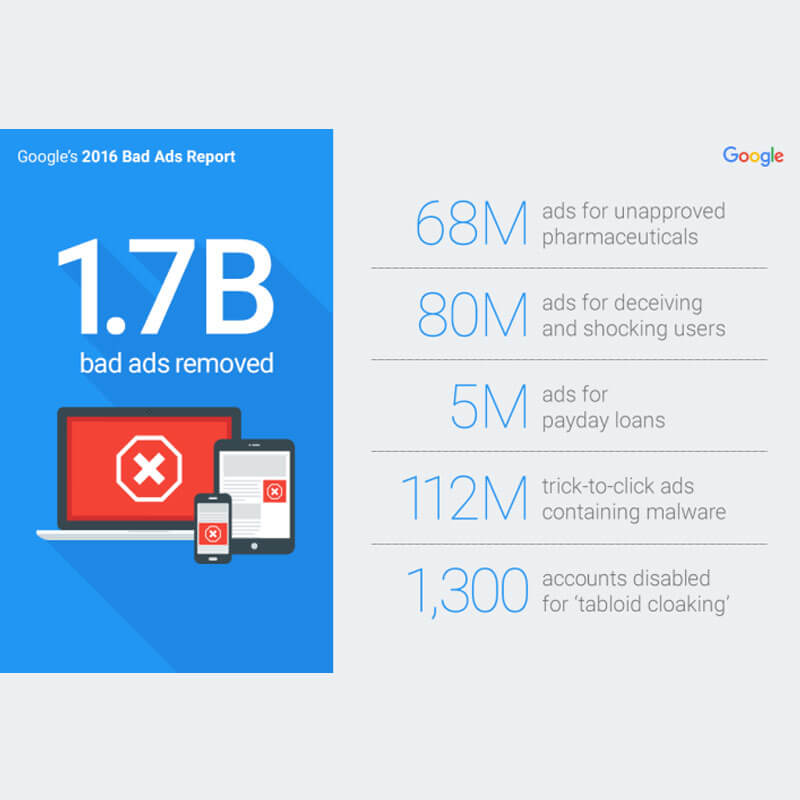
MUMBAI: In 2016, Google took down 1.7 billion ads that violated its advertising policies, more than double the amount of bad ads it took down in 2015, according to the latest ‘Better Ads Report’ for 2016 released by the company.
“A free and open web is a vital resource for people and businesses around the world. And ads play a key role in ensuring you have access to accurate, quality information online. But bad ads can ruin the online experience for everyone. They promote illegal products and unrealistic offers. They can trick people into sharing personal information and infect devices with harmful software. Ultimately, bad ads pose a threat to users, Google’s partners, and the sustainability of the open web itself,” said Sustainable Ads Product Management director Scott Spencer.
Last year, Google did two key things to take down more bad ads. First, it expanded the company’s policies to better protect users from misleading and making predatory offers. For example, in July it introduced a policy to ban ads for payday loans, which often result in unaffordable payments and high default rates for users. In the six months since launching this policy, Google disabled more than five million payday loan ads.
Second, it beefed up its technology to spot and disable bad ads even faster. For example, “trick to click” ads often appear as system warnings to deceive users into clicking on them, not realizing they are often downloading harmful software or malware. In 2016, Google detected and disabled a total of 112 million ads for “trick to click,” 6X more than in 2015.
According to the report, most common inappropriate online ads were those for illegal products. Google disabled more than 68 million bad ads for healthcare violations and 17 million ads for illegal gambling violations in 2016.
Protecting consumers against misleading ads that try to drive clicks and views by intentionally misleading people with false information like asking `Are you at risk for this rare, skin-eating disease?’ or offering miracle cures like a pill that will help people lose 50 pounds in three days without lifting a finger, Google took down nearly 80 million bad ads for deceiving, misleading and shocking users in 2016.
As for ads developed exclusively for the mobile web, Google’s systems detected and disabled over 23,000 ‘self-clicking ads’ on its platforms as compared to only having to disable a few thousand of these bad ads last year. Similarly, the report highlighted a dramatic increase in scamming activity in 2016 and approximately 7 million bad ads were disabled for intentionally attempting to trick the Google detection systems.
2016 also saw rise of a new type of scammers called `tabloid cloakers’ that take advantage of current trends and hot topics: a government election or a trending news story or a well-known celebrity. The ads used by these scammers may look like headlines for real articles on a news website but when clicked upon, consumers are redirected to a site selling weight loss products. In 2016, Google suspended over 1,300 accounts for `tabloid cloaking’. In December alone, Google took down 22 `cloakers’ that were responsible for ads seen over 20 million times by people online in a single week.
Over the years, Google has been working to find ads that violate its policies and blocks the ad or the advertiser, depending on the violation. In 2016, it took action on 47,000 sites for promoting content and products related to weight-loss scams. It also took action on more than 15,000 sites for unwanted software and disabled 900,000 ads for containing malware. Around 6,000 sites and 6,000 accounts were suspended for attempting to advertise counterfeit goods, like imitation designer watches.
In order to keep Google’s content and search networks safe and clean, Google has introduced stricter policies, including the new AdSense mis-representative content policy. The policy update introduced in November 2016, enables the company to take action against website owners misrepresenting who they were and deceiving users with their content.