Special Report
Zee leads pack of musical sagas; Sony overtakes Star

Weekend primetime viewing is bracing up for some nail biting competition across the top general entertainment channels, each sprucing up its reality offerings to capture audiences. This wave of reality formats emerged across the horizon in the month of May, each following the reality curve and heading towards climax as they collectively approach their final weeks.
The broadcasters – Star Plus, Zee TV and Sony – are gearing up to back each of their weekend ‘eye pullers’ with full gusto! An analysis of Tam’s revelations bring to light how each of these shows have shaped up since launch, followed by how they stack up against each other in their fight to reach the top.
The Evolution:

 |
In this race for TRP’s, Zee TV has consistently been ahead of the game with its music talent hunt Sa Re Ga Ma Pa Challenge 2007. In its opening weeks the broadcaster was wrestling with Sony’sIndian Idol that launched at the same time. But not for long, as Zee suddenly snatched a huge chunk of eyeballs with a whooping TVR of 5.5 on 18 May (Tam C&S 4+, HSM) and has practically hogged the limelight since then. Coincidently, this was the same day that Star Plus kicked off its version of the musical talent hunt Star Voice of India, which received a cold shoulder from viewers with a TVR 2.9 inspite of having grabbed the former producer, host and judges from Zee’s earlier edition of the musical format.
Grappling with this situation, Zee seems to have aggressively upped its efforts stating that this edition of the landmark property would prove to be a “Sangeet Ka Pratham Vishwayudh,” as though the broadcaster were making a point! So far, Star has only beatenSa Re Ga Ma Pa on one occasion with a rating of 4.3 (Tam 8 – 9 June, C&S 4+, HSM) while Zee lagged at 4.1.
|
Date
|
Day
|
Sa Re Ga Ma Pa Challenge
|
Indian Idol 3
|
Star Voice Of India
|
| 4 May | Fri |
3.5
|
3.66
|
NA
|
| 5 May | Sat |
3.47
|
3.67
|
NA
|
| 11 May | Fri |
3.84
|
3.16
|
NA
|
| 12 May | Sat |
3.46
|
4.01
|
NA
|
| 18 May | Fri |
5.5
|
3.58
|
2.88
|
| 19 May | Sat |
5.05
|
3.7
|
2.45
|
| 25 May | Fri |
4.74
|
2.75
|
3.56
|
| 26 May | Sat |
4.07
|
2.61
|
2.57
|
| 1 June | Fri |
4.09
|
3.14
|
3.16
|
| 2 June | Sat |
3.79
|
3.42
|
2.89
|
| 4 June | Mon |
NA
|
2.68
|
NA
|
| 5 June | Tue |
NA
|
2.81
|
NA
|
| 6 June | Wed |
NA
|
2.91
|
NA
|
| 7 June | Thu |
NA
|
3.27
|
NA
|
| 8 June | Fri |
4.38
|
3.46
|
4.46
|
| 9 June | Sat |
3.86
|
4.03
|
4.13
|
| 15 June | Fri |
4.89
|
3.26
|
4.62
|
| 16 June | Sat |
4.33
|
2.96
|
3.01
|
| 22 June | Fri |
4.34
|
3.6
|
3.68
|
| 23 June | Sat |
3.65
|
2.95
|
3.61
|
| 29 June | Fri |
3.46
|
2.67
|
2.06
|
| 30 June | Sat |
4.63
|
3.42
|
2.92
|
|
(Tam Peoplemeter System: TVR, C&S 4+, HSM)
|
||||
More recently, the tables seem to have turned on Star as Indian Idol, which was earlier trailing behind Voice of India, has suddenly propelled into the second spot after Zee, for two weeks running. Sony’s Idol clocked a rating of 2.67 and 3.42, shoving Star to 2.06 and 2.92 on 29 and 30 June respectively (C&S 4+ HSM).
 |
This is particularly significant as Zee’sSa Re Ga Ma Pa andIndian Idol have already entered the final stages rounding off the shortlisted contestants, a phase that garners large audiences. Star Voice of India will arrive at this juncture next week. Therefore, one can expect heavy duty action between the three players.
The Experts:
Skirmishing for the spotlight, programming tweaks and surprises will be the order of the day. The experts that tug the reigns of success for these shows have their own gyan to share……
Zee TV senior vice president programming Ashvini Yardi confesses, “My biggest fear was that this being the second edition of Sa Re Ga Ma Pa, it would not fare as well as the first. But it turns out that this year the response in terms of ratings has been far better. It is an established brand with the best singers and mentors on board and this year were have consciously made it bigger and more glamorous.”
 |
Talking of talent – other players also vouch for the superiority of their talent, so who decides? A confident Yardi replies, “Let the ratings speak for themselves.”
With Zee holding centre stage andIndian Idol putting up a challenge to Star Voice of India, the space is getting more intense. Star India VP marketing Prem Kamath attributes the slip in ratings to its delay in the peaking cycle because it was launched after its two competitors. “This is a natural swing of ratings that are witnessed on a weekly basis. Besides, Voice of India will only step into its final stages of voting in the coming week. It is then that we will see the show peak to reach its crescendo.”
He adds that with crucial Indian cricket matches coinciding “the share will go from the leaders.” But will this rating dip indicate a trend? “Well, we will just have to wait and watch,” opines Kamath.
 |
Betting big on Idol is Sony EVP and business head Albert Almeda who says a “snowball effect” has emerged out of the evolution of the show across the four stages including the auditions, the theatre round, the piano round and now culminating with a gala final phase. “Over time, the viewers have grown in their emotional involvement with the show and its characters. We are bound to see a huge spike in the ratings as the contestants are backed by audiences in their transformation from uncut individuals to professional artists.
“As the pressure mounts in the fourth and final stage of the show spanning over 12 weeks, we expect to see our ratings to be in excess of four,” adds Almeida.
With no less fervor, both Zee and Star will up the volume of their activities around the show. Zee has seen benefits of roping in celebrities for cross promotional activities and will continue to invest heavily on that strategy. They recently brought Sunny Deol onto the show to promote his latest film Apne.
Kamath counters, “A marketing outburst of both on and off air activities will be unleashed during the voting rounds, while twists and turns embedded in the programming will be seen. This will result in a natural fillip in the ratings.”
But Zee has bigger aspirations, Yardi has raised the bar for the challenge expecting it to touch the No 1 slot across all GECs. “Just as the finale of Lil’ Champs pushed the property into the No 1 position across all general entertainment channels, so also do we expect the Sa Re Ga Ma Pa Challenge to achieve the same,” she affirms.
The Bigger Picture:
With a bird’s eye view of the Indian television landscape, the scenario of the top three players from January to June 2007 depicts the gradual decline of a leader and the emergence of a strong challenger. Star Plus has been showing a consistent downward trend with the relative channel share touching 36 per cent in June from its position at the beginning of the year at 44 per cent.
Meanwhile, Zee TV has creeped up the ladder to occupy a share of 26 per cent from its position at 22 per cent in January. Although taking baby steps, Sony has also upped its standards from 12 to 14 per cent during the six month duration.
|
Relative channel share across Hindi GEC for Jan – June 2007
|
||||||
|
Channel
|
Jan
|
Feb
|
Mar
|
Apr
|
May
|
Jun
|
| Star Plus |
44
|
45
|
42
|
39
|
39
|
36
|
| Zee TV |
22
|
22
|
21
|
24
|
26
|
26
|
| Sony TV |
12
|
11
|
11
|
11
|
13
|
14
|
|
( Tam: Relative shares, C&S 4+, HSM)
|
||||||
What’s more, Zee TV is claiming to be far closer to Star than ever before. The recent weekly GRP figures from Tam show Star at 323.5 and Zee at 263 narrowing the gap between the two to 60 (Week 26, 24 – 30 June).
Yardi points out the significance, “This is the first time in seven years that the gap between us and Star has been narrowed to 60. On two occasions earlier the difference has been 90 but this is the closest it has ever been.”
The last week of June has actually seen the leader (Star Plus) forfeit 35.7 GRP’s and Zee TV gain 19.6 GRP’s.




MUMBAI: Some friendships are made in heaven; others are coded in Mumbai. Hamara Vinayak, the first-ever digital original from Siddharth Kumar Tewary’s Swastik Stories, turns the divine into the delightful, serving up a story that’s equal parts start-up hustle and spiritual hustle.
Some tech start-ups chase unicorns. This one already has a god on board. Hamara Vinayak takes the leap from temple bells to notification pings and it does so with heart, humour and a healthy dose of the divine.
At its core, the show asks a simple but audacious question: what if God wasn’t up there, but right beside you, maybe even debugging your life over a cup of chai?
The show’s tagline, “God isn’t distant… He’s your closest friend” perfectly captures its quirky soul. Across its first two episodes, screened exclusively for media in Mumbai, the series proves that enlightenment can come with a good punchline.
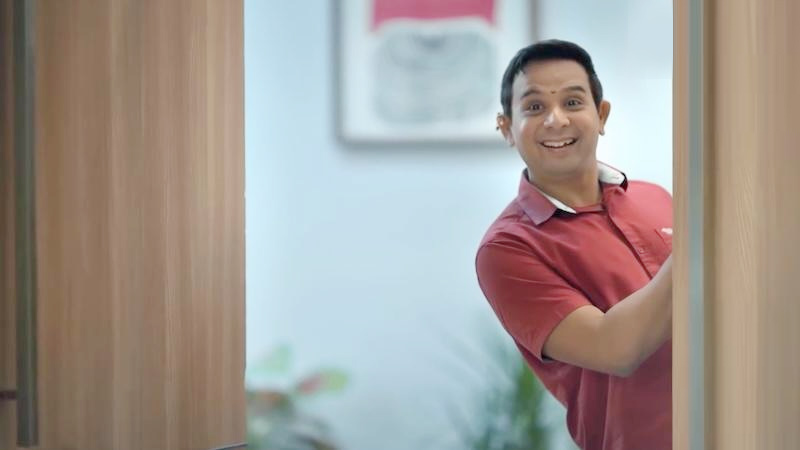
The series follows a group of ambitious young entrepreneurs running a Mumbai-based tech start-up that lets people around the world book exclusive virtual poojas at India’s most revered shrines. But as their app grows, so do their ethical grey zones. Into this chaos walks Vinayak, played with soulful serenity and sly wit by the charming Namit Das, a young man whose calm smile hides something celestial.

He’s got the peaceful look of a saint but the wit of someone who could out-think your favourite stand-up comic. Around him spins a crew of dream-driven youngsters – Luv Vispute, Arnav Bhasin, Vaidehi Nair and Saloni Daini who run a Mumbai-based tech start-up offering devotees across the world the chance to book “exclusive” poojas at India’s most sacred shrines. It’s a business plan that blends belief and broadband – and, as the story unfolds, also tests the moral compass of its ambitious founders.
“The first time I read the script, I found the character very pretty,” Namit joked at the post-screening interaction. “It’s a beautiful thought that God isn’t distant, he’s your closest friend. And playing Vinayak, you feel that calm but also his cleverness. He’s the friend who makes you think.”
The reactions to the series ranged from smiles to sighs of wonder. Viewers were charmed by the show’s sincerity and sparkle, a quality that stems from its creator’s belief that faith can be funny without being frivolous.
Among the cast, Luv Vispute shines brightest, his comic timing adding sparkle to the show’s more reflective beats. But what keeps Hamara Vinayak engaging is the easy rhythm of its writing – one moment touching, the next teasing, always gently reminding us that spirituality doesn’t have to be solemn.
Luv spoke fondly of his long association with Swastik. “Since my first show was with Swastik, this feels like home,” he said. “Every project with them is positive, feel-good, and this one just had such a different vibe. I truly feel blessed.”
Saloni Daini, who brings infectious warmth to her role, added that she signed up the moment she heard the show was about “Bappa.”
“We shot during the Ganpati festival,” she recalled. “The energy on set was incredible festive, faithful, and full of laughter. It’s such a relatable story for our generation: chaos, friendship, love, kindness, and faith all mixed together.”

Vaidehi Nair and Arnav Bhasin complete the ensemble, each representing different shades of ambition and morality in the start-up’s journey. Their camaraderie is easy and believable, a testament to how much the cast connected off-screen as well.
This clever fusion of mythology and modernity plays to India’s two enduring loves, entertainment and faith. Mythology has long been the comfort zone of Indian storytellers, from the televised epics of the 1980s to the glossy remakes that still command prime-time TRPs. For decades, gods have been our most bankable heroes. But Hamara Vinayak tweaks the formula not by preaching, but by laughing with its characters, and sometimes, at their confusion about where divinity ends and data begins.
Creator Siddharth Kumar Tewary, long hailed as Indian television’s myth-maker for shows like Mahabharat, Radha Krishn and Porus, explained the show’s intent with characteristic clarity, “This is our first story where we are talking directly to the audience, not through a platform,” he said. “We wanted to connect young people with our culture to say that God isn’t someone you only worship; He’s your friend, walking beside you, even when you take the wrong path. The story may be simple, but the thought is big.”
That blend of philosophy and playfulness runs through the show. “We had to keep asking ourselves why we’re doing this,” Tewary added. “It’s tricky to make something positive and spiritual for the OTT audience, they’ve changed, they want nuance, not sermons. But when the purpose is clear, everything else aligns.”
For the creator of some of Indian TV’s most lavish spectacles, Hamara Vinayak marks a refreshing tonal shift. Here, Tewary trades celestial kingdoms for co-working spaces and cosmic battles for office banter. Yet his signature remains: an eye for allegory, a love for faith-infused storytelling, and an understanding that belief is most powerful when it feels personal.
Hamara Vinayak, after all, feels less like a sermon and more like a conversation over chai about what success means, what faith costs, and why even the gods might be rooting for a start-up’s Series A round.
As Namit Das reflected during the Q&A, “Life gives us many magical, divine moments we just forget to notice them. Sometimes even through a phone screen, you see something that redirects you. That’s a Vinayak moment.”
The series also mirrors a larger cultural pivot. As audiences migrate from television to OTT, myth-inspired tales are finding new form and flexibility online. The digital screen lets creators like Tewary reinvent the genre, giving ancient ideas a modern interface, without losing the emotional charge that’s made mythology India’s storytelling backbone for decades.
In a country where faith trends faster than any hashtag, Hamara Vinayak feels both familiar and refreshingly new, a comedy that’s blessed with heart, humour and just enough philosophy to keep the binge holy.
For a country where mythology remains the oldest streaming service, Tewary’s move from TV to OTT feels both natural and necessary. Indian storytellers have always turned to gods for drama, guidance and TRPs from Ramayan and Mahabharat on Doordarshan to glossy mytho-dramas on prime time. But digital platforms allow creators to remix reverence with realism, and in Hamara Vinayak, faith gets an interface upgrade.
The result is a show that feels like a warm chat with destiny, part comedy, part contemplation. And in an age of cynicism, that’s no small miracle.
As Tewary put it, smiling at his cast, “The message had to be positive. We just wanted to remind people that even in chaos, God hasn’t unfriended you.”
With 5 episodes planned, Hamara Vinayak promises to keep walking that fine line between laughter and light. It’s mythology with memes, devotion with dialogue, and a digital-age reminder that even the cloud has a silver lining or perhaps, a divine one.
If the first two episodes are any sign, the show doesn’t just bridge heaven and earth, it gives both a Wi-Fi connection.







