News Broadcasting
WIFT: WOOING WOMEN

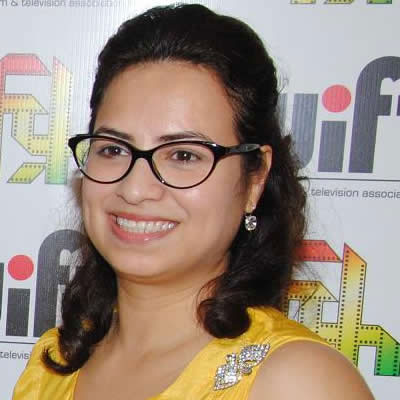
Women are increasingly blazing a trail in the world of film and television these days. But one is disappointed when one looks at how the ladies are faring as far as the Women in Film & Television (WIFT) association is concerned. More than a year after its formation it has only 300 odd members.
“We fail to understand why people are still hesitant about joining. Maybe we need to be more out there (sic). We want people to spread the word so that we can help as many women as possible,” says WIFT founder Petrina M D’Rozario.
The association is dedicated to advancing professional development and achievement for women working in all areas of film, video, and other screen-based media.

Her association with the organisation goes back a long way when she was studying in New Zealand. When she came back to India, she thought of starting the Indian arm of the global society.
Internationally, the association has organised various forums wherein people from the industry have come forward to help each other and the ones who want to enter the ‘glamourous’ world of entertainment. There are 44 chapters all across the world with over 14,000 members.
Petrina D’Rozario launched the India chapter of WIFT
“After completing my studies and job, when I got back, I thought to myself that there could be nothing better than meet people from the industry through the platform of Wift. I had made a lot of friends in New Zealand through the platform. When I found out that that there was no Wift in India, I thought of starting the platform where like-minded women filmmakers and women in the industry can meet, talk, discuss and help each other.”
Petrina personally went and met senior women professionals in the industry and got them on its advisory board. There are 11 advisory board members with the likes of Kiran Rao, Anupma Chopra, Jeroo Mulla, Lynn DeSouza and many more. There are three board members including Petrina. Film critic and editor, Uma da Cunha and media relations professional Riddhi Wallia are the other members.
“I was approached by Petrina to join the association when I was heading Colors. I was so impressed and charged by the aim of Wift that I didn’t hesitate once to confirm my support. An impetus behind joining was to help tap talent and support women across the country to have a safe destination and network to get a foothold in the entertainment (film/television) and media industries which we all know is a very competitive field. I was keen to do my part to help all women including those from marginalised communities to have the correct and best chance to enter the industry,” recounts Grazing Goat Pictures co-founder Ashvini Yardi.
The association doesn’t want to be known as a sorority. It is no kitty-party gang, but aims to provide opportunities to other women to interact as well as network, helping them grow in the field. “If a media student joins us, we ensure that she meets people like Kiran Rao, Zoya Akhtar and the likes. This gives the student a chance to learn from them,” says Petrina.
Through its mentoring scheme WIFT looks at matching professional members with experienced practitioners for mentoring over a six month period or as designed by the mentor. The scheme is designed to increase women’s skills, knowledge, networks and confidence as they build their careers. The mentors include the cream of the industry across disciplines like Tanuja Chandra (Director), Deepa Bhatia (Editor), Anjuli Shukla (Cinematographer), Zoya Akhtar (Director), Kiran Rao (Director),Paromita Vohra (Documentary Filmmaker), Onir (Director), Aarti Bajaj (Editor) and Akeev Ali (Editor).
Ashini Yardi feels that WIFT is a brilliant platform which provides direction and support to women who have dared to dream
Filmmaker, producer and activist Madhusree Dutta who is an advisory member says that such organisations are very much needed because there is a need to provide a cohesive working space in what has male-dominated industry. “One might wonder what travails can people like Kiran or Anupma or me go through. The association isn’t about what we are going through now. It is about what we have gone through and do not want them to tread the same path. We want a better place and want to help women in the industry,” says Dutta while explaining her association with WIFT.
So, does it plan to revolutionise the industry? ‘No’, comes the prompt reply from Petrina. “We are not here to ‘change’ the world because we can’t even do that. We are no big shakers who can make changes or bring a revolution in the industry individually; it all happens collectively through the course of time.”
However, there are challenges it faces. “If you follow the crowd, there won’t be any but if you go against the tide, there will be challenges,” she says. The shortage of funds is the biggest roadblack. “In a city like Mumbai, one needs to pay-up for even putting a toe at some place. So, when we want to screen films or organise events or workshops, we do face monetary issues.”
But she is quick to add that there are many who are willing to help them and provide venues at low or no cost to hold various events as it is for a good cause. The association aims to have events – workshop, film screenings, and discussion forms – every two weeks. And they are for women only. “However, during workshops men are allowed,” laughs Petrina.
WIFT just finished one such event – The Red Dot Film Festival. The three-day festival (23, 24, 25 August) was held at the Films Division in Mumbai. The movies featured were by national award-winning filmmakers, actors, editors, and writers cutting across languages, forms and styles. Among them were I Am Micro, Paradesi, Celluloid Man, and many more.
Madhusree Dutta wants the industry to become a cohesive place for women to work
The organisation feels that films are a medium, which touch millions of lives, and therefore they have the potential to bring about a societal change, even if it is one step at a time. Be it women-centric films, which give conventional commercial flicks a run for their money. Women lyricists and music composers are taking the traditional male bastions by storm. Women writers and directors are winning international accolades for their portrayal of sensitive subjects and women actors and producers balance creativity with commercial success. The world is changing, step by step, with these exceptional women acting as the torchbearers, showing the way for the aspiring millions. Hence, the hope is that these women and WIFT will end up being the true champions of women empowerment.
Petrina says she is hopeful WIFT’s numbers will rise. “We have kept membership low at Rs 2,000 a year for professionals and Rs 700 for students,” she says. “We would love to have many more than what we have currently.”
Karisma Kapoor and Shobha De at the launch of The Red Dot Film Festival
Internationally, WIFT organizes regular get togethers like luncheons, special events, high teas to foster exchange of ideas between its members and the association has almost become a movement for women in the TV and film trade. The numbers in India too will surely rise over time, there’s no doubt, as WIFT starts getting more active and word of mouth spreads amongst the army of women who are defining film and television today.
But don’t be surprised by the first words you hear if you are a woman in media and you happen to be introduced to Petrina. “Are you a member of WIFT? If you are not, then it’s high time that you did.”
With Petrina as chief evangelist, you’ll hear a lot of WIFT in the coming weeks, months and years. More power to her elbow!




News Broadcasting
CNN-News18 to host Fury in the Gulf conclave on West Asia crisis
Three-hour summit to unpack geopolitical fallout and impact on India

MUMBAI: CNN-News18 is set to host a special three-hour broadcast, Fury in the Gulf – War Conclave, on April 7, aiming to decode the escalating West Asia crisis and its far-reaching implications for India.
Scheduled from 4:00 PM to 7:00 PM, the conclave comes at a time when tensions between Iran and the United States are reshaping global geopolitics and triggering economic uncertainty. With India’s deep energy ties, trade links and large diaspora in the Gulf, the developments carry significant domestic relevance.
Built around the theme ‘Conflict, Consequences, and The Future,’ the programme will feature six curated sessions combining one-on-one interviews and panel discussions. The focus is to cut through the clutter and offer viewers a clearer understanding of the fast-evolving situation.
Key sessions include ‘Diplomacy in Times of War’ featuring Shashi Tharoor, and ‘World After the Iran Conflict’ with voices such as Ram Madhav, Reuven Azar, representatives from the European Union and the Iranian Deputy Envoy. Another session titled ‘Another Dunkirk?’ will bring together K. J. S. Dhillon and Jitin Prasada among others.
CNN-News18 editorial affairs director Rahul Shivshankar said, “In times of war, clarity becomes the most powerful tool. Fury in the Gulf – War Conclave brings together credible voices to address the questions and confusion that arise amid an overwhelming influx of information.”
He added that the initiative is aimed at delivering “facts, perspective, and insight” at a time when misinformation can easily cloud public understanding.
Echoing the sentiment, CNN-News18 CEO– English and business news Smriti Mehra said the conflict marks a defining global moment, with consequences that extend well beyond the region. She noted that the conclave seeks to present the crisis with “depth, nuance and responsibility” so audiences can better grasp its real-world impact.
As geopolitical tensions continue to dominate headlines, the conclave positions itself as an attempt to bring order to the noise, offering viewers a structured, insight-led look at a complex and rapidly shifting global situation.






