Executive Dossier
‘While multiplexes will grow our existing business, local movies will allow us to progress faster’ : Uday Singh – Sony Pictures Releasing of India managing director

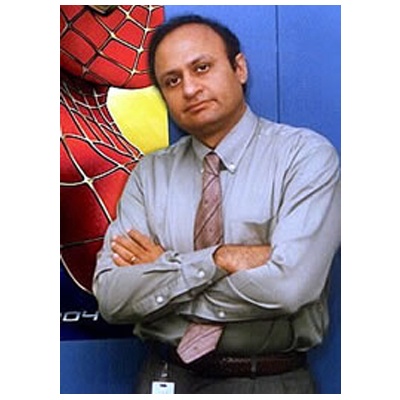
Hollywood film distribution companies have found the going tough in India, a market which has stood firm on local tastes and preferences. Rupert Murdoch’s 20th Century Fox, in fact, has indicated it is closing down its Indian operations. But Sony Pictures Releasing of India Ltd (earlier Columbia TriStar Films of India) has grown from a moribund organisation in the 1990s to reach a turnover of Rs 1 billion last year.
In an interview with indiantelevision.com’s Sibabrata Das and Bijoy A K, Sony Pictures Releasing of India managing director Uday Singh explains how it is important to read the market right and de-risk the film distribution business while aiming at faster growth. Excerpts.
Growth will come from multiplexes and distribution of local movies.

|
Is film distribution turning out to be a risky business as is evident from indications of 20th Century Fox closing down operations in India? |
||
|
How do you ensure that you read the market right? |
||
|
Have you de-risked the model by not acquiring local movies for distribution? |
||
|
How then do you see top line growth? |
||
|
But you had touched Rs 1.10 billion in 2002. Isn’t growth plateauing? |
||
|
||
|
With Sony acquiring MGM, do you think you will be in a position to take higher risks on local products as you will have an assured supply from the three big Hollywood studios (Sony, Disney and MGM)? |
||
| Does the turnover reflect on your profits? In the overall box office earnings, India stands in the 15th-17th position in the world. Earlier, India used to be the 44th largest revenue contributor for us. But in terms of profit earnings, India compares poorly because of high tax structures. |
||
|
How is the Indian market different from the US? |
||
|
How do you cushion against the risks then? |
||
|
Has it become more difficult? |
||
|
Why have you slowed down the distribution of regional films? |
||
|
Sony has a television channel, runs a music business and has a film distribution network in India. Why haven’t you acquired movies to complete a value chain drive? |
||
| Why didn’t you distribute a movie produced by Sony Entertainment Television? SET India wanted us to distribute Pyar Kiya Nahin Jata. We were evaluating it, but realized it didn’t have great potential. That doesn’t mean we are not working in synergy. If we acquire movies, we will also keep satellite telecast rights which SET can exploit. |
||
|
SPRIL has not got into movie production despite getting FIPB (Foreign Investment Promotion Board) clearance. Why? |
||
| How are you tackling the issue of under-reporting in ticket sales from cinema exhibitors? We have knowledge of the centres where underreporting is the maximum. There is very little you can do. We take a fixed amount from them. The situation though is improving in urban centres and with multiplexes coming in. But we can’t bulletproof the system. It is like policing the police. |









MUMBAI: Game faces on, pressure high India’s gaming ambitions are levelling up. Good Game, billed as the world’s first as-live global gaming reality show, has officially launched in India with a bold mission: to crown the country’s first Global Gaming Superstar.
Blending esports with mainstream entertainment, the show brings together competitive gaming, creativity and on-camera performance in a format that tests more than just joystick skills. Contestants will be judged on gameplay, screen presence and their ability to perform under pressure, reflecting how gaming has evolved from pastime to profession and pop culture currency.
Fronting the show are three high-profile ambassadors: actor and entrepreneur Samantha Ruth Prabhu, Indian cricket star Rishabh Pant, and gaming creator Ujjwal Chaurasia. The winner will take home Rs 1 crore ($100,000) among the largest prize pools for any Indian reality show along with the chance to represent India on a global stage.
Backed by a planned annual investment of up to Rs 100 crore, Good Game is also courting brand partners, promising a minimum reach of 500 million among India’s core youth audience. The creators position the show as a bridge between entertainment and interactive culture, offering long-format content, community engagement and commercial scale.
Auditions are now open to Indian citizens aged 18 and above, inviting amateur and professional gamers, creators and performers alike. Shortlisted candidates will be called for in-person auditions in Mumbai on 14 and 15 February, and in Delhi on 28 February and 1 March 2026.
With big money, big names and even bigger ambition, Good Game signals a shift in how India views gaming not just as play, but as performance, profession and prime-time spectacle.







