News Broadcasting
BARC-NBA face-off: Experts feel ad agencies, TV channels will take individual call; resolution best option

MUMBAI/NEW DELHI: Now that English TV news channels have boycotted BARC India’s audience data and the measurement company hit back by saying it is not its job to sort out issues like usage of multiple LCNs by TV channels with an aim to increase viewership, what next? The twists and turns continue coming thick and fast in this soap opera, though the Ministry of Information and Broadcasting (MIB) has kept itself aloof unwilling to wade into the matter yet.
Will this boycott continue for long? Or, is it just a passing protest where players concerned will kiss and make up after some time? Will BARC India continue to measure viewership of the protesting TV channels and not release the data? Can no data also result in lessening advertising revenue — in the long run? Will the government (not petitioned yet) and the regulator TRAI, which has already been asked to look into the issue by some stakeholders, intervene and on what ground?
As some more dirty linen is expected to be washed in public over the next few days — an independent analytics company Chrome Data & Analytics Media has stated many Indian TV channels use the multiple LCNs route to spike viewership — questions swirl in the Indian media landscape.

For the uninitiated, multiple LCNs is a technical term used by media industry to describe a situation where a TV channel, most of the time, pays cable distribution networks to place the particular channel — assigned a unique number in the EPG — under more than one genre aimed at increasing viewership numbers.
Dentsu Aegis Network South Asia chairman and CEO Ashish Bhasin is of the opinion that in the long run if there is no audience data of TV channels, it could “impact” advertisers’ decisions.
“Ultimately any advertiser would want to know the return on investment and the only way to measure that, is to see the amount of money being spent by advertisers vs. how much viewership they were getting. If that (data) is not available, advertisers would get reluctant at some stage, “Bhasin explained, adding if the impasse was temporary, advertising revenue for TV channels may not get affected.
According to IPG Mediabrands India CEO Shashi Sinha, absence of viewership data and its effects on advertising revenue of the protesting TV channels will largely depend on the way advertisers view the situation.
“Each advertiser will make its own call. I can’t predict what will happen to the industry, but it’s an individual call (of advertisers and clients). They will go with their own metric. Some will say no data, no advertising, while some may happily advertise (in the absence of audience data),” Sinha pointed out, highlighting the fluid nature of the advertising industry.
A veteran television news executive, who did not want to be named, said that the pull-out by the English news channels from BARC India is unlikely to affect the advertisers. “Even an advertiser knows that the whole TRP system was flawed despite a new regime aiming to keep the data robust and transparent. Viewership of 180-plus million TV households is difficult to measure on the basis of a few thousands of boxes for a country as big as India,” the TV exec argued.
Echoing similar sentiments on the importance of audience data — or the lack of it — a chief executive of one of the TV channels that has decided to boycott BARC India said their move may actually clarify some issues.
Pointing out that they expected ratings of Republic TV to be high for the next two weeks and hoping TRAI would crack down soon on the issue of multiple LCNs, the CEO, who didn’t want to be named, said, “If advertisers don’t really give a hoot whether we are part of ratings or not, then it’s great for us. Then we will know that BARC’s measurement is not that important for the entire TV industry. So, it’s actually a good thing that we have taken the decision to stay out of BARC as it allow us to measure whether BARC data is important to advertisers and agencies or not.”
However, not everybody believes that taking on BARC and boycotting the measurement company, a joint industry initiative, is a good idea.
“I don’t think it is right for anyone, whether a GEC or a news channel, to say that we will not participate in the ratings system. As BARC was founded by all the constituents of the industry, it is BARC’s job to make sure ratings are available all the time to everybody. If anybody has issues with BARC reporting, then it should be taken up with BARC and the issue should be mutually corrected. Pulling out (of BARC) is not a solution,” Bhasin expressed his views.
Another industry veteran Paritosh Joshi, who had been actively involved during the period BARC was being set up two years back, also did not agree that absence of credible data can benefit any player or the industry in general.
Reacting to an observation made on Facebook on an indiantelevision.com report detailing the decision of a few English TV news channels to boycott BARC, Joshi observed, “What the recalcitrant measurement subjects need to introspect on are the following two issues: how many times have they used multiple frequencies? How long will their advertising proposition survive without a credible, agnostic measure? Many of them (the boycotting TV news channels) also have print businesses and (they) can’t be oblivious to the havoc wreaked upon revenues by the absence of a readership measure for an indefinitely long period.”
Even as the industry debates the pros and cons of such a data boycott, regulator TRAI is still to come out officially stating its views on this developing story, if a TV lingo is used, though it has been petitioned on the issue of rampant usage of LCNs or frequencies by TV channels not only by the News Broadcasters’ Association, but by an individual TV company too. TV Today Network has accused rival Times Now of alleged distribution malpractices.
What about the government that had actually officially blessed formation of BARC India to replace TAM India, which was a joint venture between AC Nielsen and WPP-owned Kantar Media? A source in the MIB, while keeping a distance from the developments of the past few days, said the matter involved TV news channels and BARC India and the government had nothing to say on the issue. Yet.
Keep tuned in for more on this ratings soap opera, which has all the hallmarks of a serial that many an Indian GECs air on their networks.
ALSO READ:
Republic TV has 51.9% viewership in debut week: BARC gives data to paid subs despite NBA’s request
Indian English news channels boycott BARC’s viewership monitoring
News channel controversy: BARC India fires riposte to NBA
“Dual LCNs is not the best thing to do” — Chrome Data CEO Pankaj Krishna
“The NBA is a toothless group,” says Republic TV’s Arnab Goswami






News Broadcasting
CNN-News18 to host Fury in the Gulf conclave on West Asia crisis
Three-hour summit to unpack geopolitical fallout and impact on India
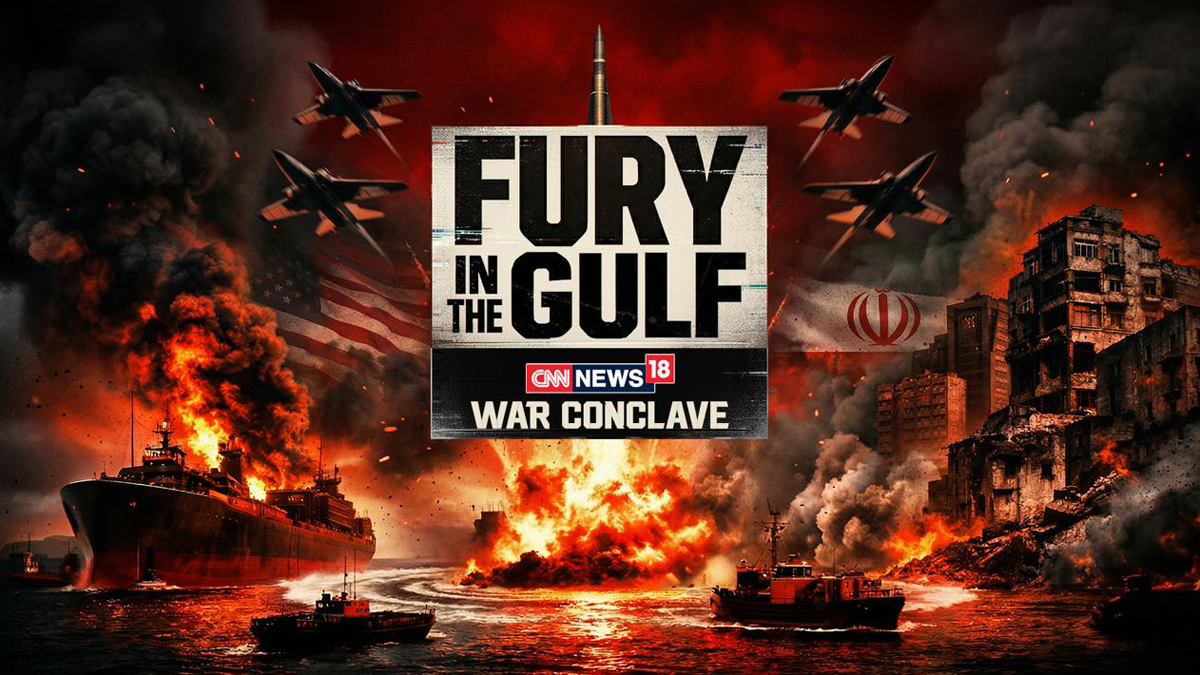
MUMBAI: CNN-News18 is set to host a special three-hour broadcast, Fury in the Gulf – War Conclave, on April 7, aiming to decode the escalating West Asia crisis and its far-reaching implications for India.
Scheduled from 4:00 PM to 7:00 PM, the conclave comes at a time when tensions between Iran and the United States are reshaping global geopolitics and triggering economic uncertainty. With India’s deep energy ties, trade links and large diaspora in the Gulf, the developments carry significant domestic relevance.
Built around the theme ‘Conflict, Consequences, and The Future,’ the programme will feature six curated sessions combining one-on-one interviews and panel discussions. The focus is to cut through the clutter and offer viewers a clearer understanding of the fast-evolving situation.
Key sessions include ‘Diplomacy in Times of War’ featuring Shashi Tharoor, and ‘World After the Iran Conflict’ with voices such as Ram Madhav, Reuven Azar, representatives from the European Union and the Iranian Deputy Envoy. Another session titled ‘Another Dunkirk?’ will bring together K. J. S. Dhillon and Jitin Prasada among others.
CNN-News18 editorial affairs director Rahul Shivshankar said, “In times of war, clarity becomes the most powerful tool. Fury in the Gulf – War Conclave brings together credible voices to address the questions and confusion that arise amid an overwhelming influx of information.”
He added that the initiative is aimed at delivering “facts, perspective, and insight” at a time when misinformation can easily cloud public understanding.
Echoing the sentiment, CNN-News18 CEO– English and business news Smriti Mehra said the conflict marks a defining global moment, with consequences that extend well beyond the region. She noted that the conclave seeks to present the crisis with “depth, nuance and responsibility” so audiences can better grasp its real-world impact.
As geopolitical tensions continue to dominate headlines, the conclave positions itself as an attempt to bring order to the noise, offering viewers a structured, insight-led look at a complex and rapidly shifting global situation.






