Drama Series
‘The very scope of creating something new is extremely limited on TV’ : Vipul D Shah

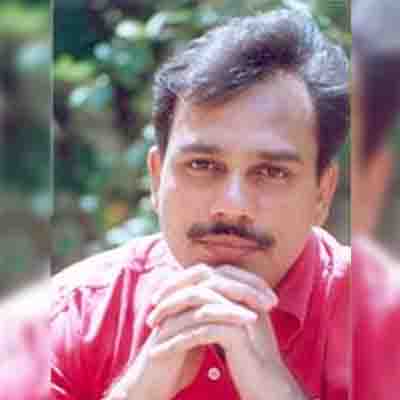
For someone who came to Mumbai from a small town in Gujarat as a teenager and could hardly speak or even understand English, Vipul D Shah has certainly come a long way.
Shah made his debut as a writer with the Anand Mahendroo-directed Dekh Bhai Dekh which won him the TV and Video World best writer award. Soon to follow were other successful comedies like Philips Top 10, Battle of Bollywood, Asha Parekh's Dal Mein Kala, I Love You and the recently concluded soap on SABe TV Lekin.
Shah is a restless guy. Not satisfied with the money and fame that TV writing gave (by his own admission, his desire in life is to be extremely rich and famous and he plans to achieve this by being a successful writer-director of movies), Shah ventured into direction. He is currently directing Chalti Ka Naam Antakshri on Star TV, which shot into fame last year when 10 of its episodes were shot in the open near the India Gate and all of these had prominent celebrities as their participants. Shah is the producer of Khulja Sim Sim on Star TV which is already off to a flying start in its first few weeks.

The writer in Shah is also very much alive and kicking.
He is the writer of the soon-to-be-released film Rehna Hai Tere Dil Mein, produced by Vashu Bhagnani, which is the remake of a Tamil film Minnele, also written by him.
Indiantelevision.com's correspondent Amar met Vipul to find out what makes the man tick.
How did the idea of being the writer of TV serials come to you?
There is an interesting story behind it. I came to Mumbai when I was in Std. 8 from a small village called Parnala in interior Gujarat. I could hardly speak or understand English. One day my teacher asked me what my aim in life was. I confused aim for name, since both words sounded similar. So I replied Vipul D. Shah. She kept asking me the same question and I kept replying Vipul D. Shah. Finally, she punished me by making me stand on the bench for more than an hour. I felt extremely humiliated and when I returned home, I asked my uncle the meaning of aim. At that very point I decided that my aim in life would be to make a name in whatever I do. Since even as a child I enjoyed writing Gujarati poetry and was fascinated by movies, I immediately decided that my aim in life would be to become a successful writer and director in the medium. I have not deviated from this since.
Your forte seems to be comedy. Any specific reason for that?
No, not really. I have never taken life too seriously and have had this knack of finding something funny in every situation. This attitude was there in me even in my days of struggle and it reflects in my writing.
They say comedy is the most difficult part of acting. Does it hold true in writing also?
Well, it depends from person to person. I have found it the easiest because my attitude to life is one of going out and having fun. I have thoroughly enjoyed writing my comedies.
 |
I came to Mumbai when I was in Std. 8 from a small village called Parnala in interior Gujarat. I could hardly speak or understand English.
|
Where do you draw your inspiration from?
I draw my inspiration or flair for comedy from the small and oft forgotten incidents / conversations that take place in our daily lives and the characters I get to see and interact with regularly. See, I 've told you, it is not difficult for me to search for a comical twist in any situation and this is my biggest strength. Political satire doesn't impress me because I hardly take any interest in it.
How do you go about creating your characters?
Almost all my characters have traits of people I normally get to meet or observe in real life. Whatever shades a character in a comedy serial requires is more or less taken care of by this.
It is said that in shooting a comedy quite a bit of improvisation takes place on the shoot which must be requiring you to alter the script regularly. How do you cope with this?
Are you present on the shoots? Yes. I have been present on 95 per cent of my shoots. On many an occasion I have even written the future episodes on the shoot. This is because unlike soaps which move in a set style or pattern, the style of comedy ought to be altered immediately if on the shoot you find that what actually comes out is not quite what you expected it to be like.
Outline your whole process of work right from the conception of the idea to the actual churning out of the serial.
The first thing I do is conceive a concept. In doing that, I look for a new approach and treatment to subjects rather than being very particular about new subjects altogether, because TV is a limiting medium and moreover in the last 10-15 years, every possible subject has more or less been explored. Then I gather the necessary matter or content. If need be some market research or information searching is needed, especially if it is a film based-programme. Thereafter I write the screenplay and dialogues of a sample episode and take it to producers and directors. This is the complete process I had followed in the case of a program called Battle of Bollwood, which was my brainchild.
|
What you write for the 20th episode can more or less be repeated in the 25th episode on different characters and with some other minor changes.
|
 |
We've heard a lot about the significance of catchy one-liners in a comedy. Just how important are they?
Nobody can deny the importance of one-liners and playing with words. I feel I have a good sense of humour and can play with virtually every word or sentence. For instance, a simple word or sentence like "Baal bachche hain"? (Do you have children?) can be shown as being understood by the other person as – Is your hair intact? – And the other person starts feeling his hair. It's as simple as that.
How much time does it take you to write one episode and how many projects do you work on simultaneously?
Normally, it takes me two days to write the complete story, screenplay and dialogues of one episode. I don't work on more than two projects at a time because when I take up more than two projects, my interest levels tend to wane.
What is your writing schedule like?
(Laughs) I am a very lazy writer. I don't start writing seriously unless the deadline is very close, even though the ideas are there in my mind. I like to write in the mornings and late nights. Afternoons and evenings are spent meeting people.
How paying is TV writing?
I won't say the money is bad, even though it does not satisfy me. (Laughs) I am too ambitious. I have got anywhere between Rs15,000 to Rs.25,000 per episode.
How is writing a movie different from writing a serial?
Writing a movie is like writing a novel while writing a serial is like writing a newspaper article. The shelf life and the recall value of a serial is much, much less. As a result, frankly speaking, at least in my personal case, I have found that I have not been able to put in as much commitment and dedication in writing for TV as I have done in the case of my movie. Also, the very scope of creating something new is extremely limited on TV. For instance, in a long running soap like Lekin, all you need to do is create new plots, even the central story tends to take a backseat and what you write for the 20th episode can more or less be repeated in the 25th episode on different characters and with some other minor changes. I have realized that once you understand a few basic tricks, TV writing can be very easy.
Tell us how you shot 10 episodes of Chalti ka Naam Antakshri in the open near India Gate?
Basically, it was the brainchild of Anuradha Prasad, president of BAG Films, which is presenting the show. India Gate is a visual delight at night and we tried to capture it in the backdrop in all 10 episodes of the show. It was an unprecedented move and got us a lot of mileage. We used eight cameras, positioned strategically, for the purpose. The shoot would begin at 7:00 pm and continue till 3:00 am. We were able to complete the entire shoot in just four days which was a very rapid pace considering the vast levels of crowd management required and the presence of celebrities.
|
|
Nobody can deny the importance of one-liners and playing with words.
|
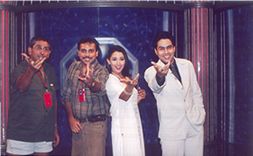
Your quiz show Khul Ja Sim Sim is doing well. What makes game shows click? Do you see this trend continuing?
Human greed and ambition, the desire and the prospect of making easy and quick money.
This trend will definitely continue but at the same time not all game shows can succeed. After all, both Zee's and Sony's efforts in this direction have failed. The format of the game show has to be simple and enticing enough to catch the attention of viewers immediately.
What made you choose Aman Verma as an anchor for the show?
This decision was taken by the channel. In fact, Star TV has helped us in many areas in the shooting of this show. Also, the infrastructure of Star is an added boon.
|
|
I draw my inspiration or flair for comedy from the small and oft forgotten incidents / conversations.
|
|

You've done almost everything – comedy, soaps, gameshows, Antakshri. Was it all planned? What's up next?
No, none of my career moves have been planned. I take life as it comes.
As far as my immediate future plans go, we are planning to produce a daily soap and another gameshow. I will continue writing but now expectations from me have gone up and I will be more selective in taking up future projects. As of now, I have not decided what I will write next.
Many writers feel that the authenticity of what they have visualised gets eroded at times specially if the director has got different ideas. Have you ever felt the same?
Yes, this happened in the case of Philips Top 10 (on Zee). The director did not have the same flair for comedy and as a result the desired result was not there.
Which has been the happiest moment of your career?
(Laughs) Last week, I was driving across Juhu Beach. Within a stone's throw of one another, there were two hoardings with my name on them. One had me mentioned as writer of "Rehna Hai Tere Dil Mein" and the other had me mentioned as the director of "Chalti Ka Naam Antakshri". I felt very happy at that moment.





Drama Series
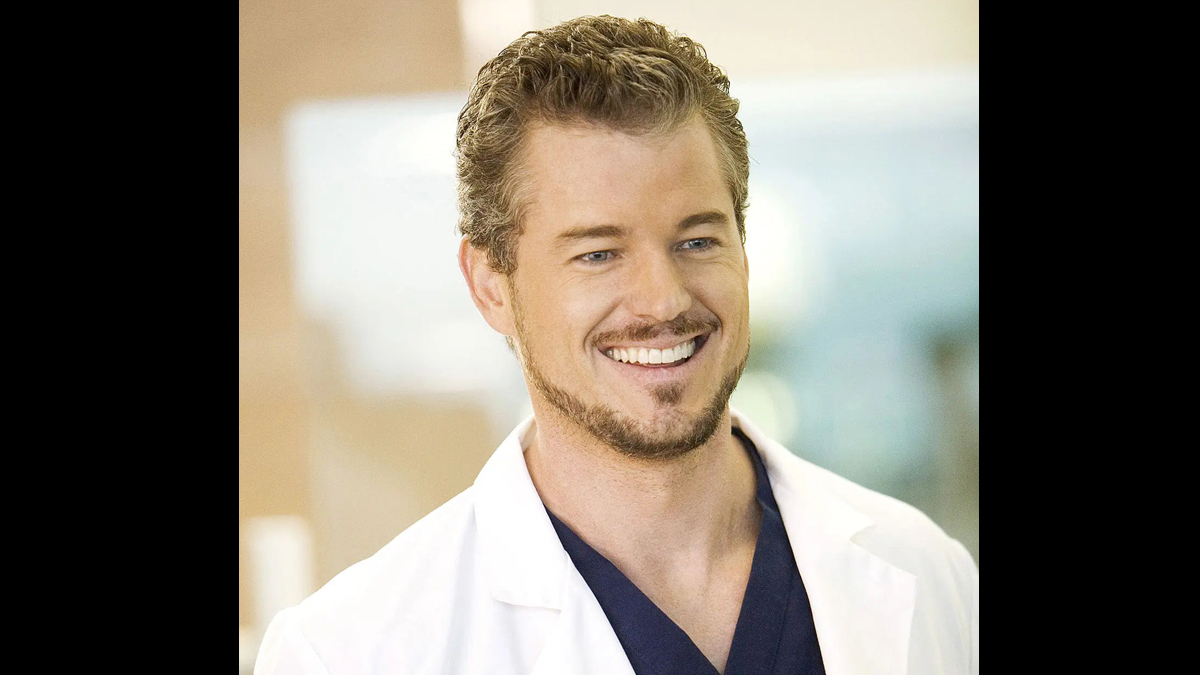
Eric Dane, Grey’s Anatomy’s McSteamy, dies after ALS diagnosis
Dane’s death follows months of campaigning on motor neurone disease
MUMBAI: Shakira’s hips don’t lie and neither does the buzz, the Colombian superstar is shaking up India with a long-awaited return, headlining the Feeding India Concert 2026 across two cities for the first time ever. Announced on 20 February 2026, the third edition of the music-for-change initiative organised by not-for-profit Feeding India alongside District by Zomato brings the multiple Grammy winner to Mumbai’s Mahalaxmi Racecourse on 10 April and Delhi’s Jawaharlal Nehru Stadium on 15 April. Presented by HSBC India and exclusively ticketed via District, the shows mark Shakira’s first major India gigs in nearly two decades.
Fans have been waiting eagerly for this Latin pop powerhouse known for anthems like Hips Don’t Lie, Whenever, Wherever, and the iconic World Cup hit Waka Waka to light up the stage again. But it’s not just about the beats, Shakira’s involvement amps up the national conversation on hunger and child malnutrition. Through her Barefoot Foundation, she’s long championed education and welfare for vulnerable kids worldwide, a mission that dovetails neatly with Feeding India’s push toward the UN’s Zero Hunger goal by 2030.
Shakira said, “Performing in India has always been special to me, and I’m excited to connect with my fans across Mumbai and Delhi. The Feeding India Concert is about more than music, it’s about standing together to ensure every child has access to the nutrition they need to thrive.”
District by Zomato CEO Rahul Ganjoo added, “This is a defining moment for the Feeding India Concert. Bringing an artist of Shakira’s global stature to two cities represents our commitment to scaling impact while delivering world-class entertainment. Music has the unique power to unite people across boundaries, and we’re leveraging that to drive meaningful conversations that can transform lives.”
Feeding India tackles hunger through government-backed systemic work, direct meal support in schools (low-income, government, and NGO), and a youth volunteer network that sparks awareness and action. The concerts unite artists, philanthropists, and everyday folks in collective action proving music can move crowds and move the needle on social issues.
Ticket details are rolling out fast, HSBC credit cardholders get exclusive 48-hour early access from 12 pm on 27 February to 12 pm on 1 March, with 10 per cent off up to Rs 1,000. General sales kick off at 1 pm on 1 March. District app users can hit ‘Notify Me’ for real-time updates. Plus, snag flexible payments Buy Now, Pay Later with 50 per cent upfront and the rest by 20 March 2026.
Opening acts drop soon via feedingindia and districtupdates pages on Instagram, or straight in the District app. Whether you’re there for the spectacle, the cause, or just to finally see Shakira live, this one’s got rhythm with real purpose turning dance floors into drivers of change.
LOS ANGELES: Eric Dane, best known for his roles in Grey’s Anatomy and Euphoria, has died aged 53, less than a year after revealing he had amyotrophic lateral sclerosis (ALS), a form of motor neurone disease.
Dane died on Thursday afternoon, after being diagnosed in April 2025. In a statement, his family said he spent his final days surrounded by close friends, his wife, the actor Rebecca Gayheart, and their two daughters.
Over the past decade, Dane was closely associated with two of television’s most recognisable characters. He played Dr Mark Sloan, nicknamed “McSteamy”, on Grey’s Anatomy, joining the series for a single episode before becoming a regular for six seasons. More recently, he appeared as Cal Jacobs in Euphoria, the troubled father of Jacob Elordi’s character Nate Jacobs.
Despite his illness, Dane continued working and completed filming for the upcoming third season of Euphoria, appearing in a wheelchair as his condition progressed. Speaking to People last year, he said he felt fortunate to remain active professionally while asking for privacy for his family.
ALS is a terminal degenerative disease that progressively impairs movement, speech and breathing. While there is no cure, progression varies widely among patients. In recent months, Dane emerged as a vocal advocate for awareness and research, using his diagnosis to highlight the condition’s impact.
Tributes followed swiftly from colleagues across the industry. Sam Levinson, creator of Euphoria, described Dane as both a gifted collaborator and a close friend, praising his warmth and generosity on and off set.
Born in San Francisco in 1972, Dane appeared in more than 140 episodes of Grey’s Anatomy between 2006 and 2021 and starred in films including X-Men: The Last Stand and Marley & Me. His death marks the loss of a familiar presence in American television, remembered as much for his resilience as for his performances.






