Comment
The Reliance-Disney merger’s impact on the media ecosystem: an Elara perspective


MUMBAI: We believe the merger of Viacom18 and Star India will have a big impact on the entire M&E ecosystem as the combined entity will command a huge market share. The merger will create a large media juggernaut with 108 plus channels (Star India has 70+ TV channels in eight languages whereas Viacom has 38 TV channels in eight languages), two large OTT apps (Jio Cinema and Hotstar) and two film studios (one each of Reliance and Disney India). Large market opportunity (TAM) for the merged company, as India’s M&E market for print, TV and digital is at $18 billion in CY22, poised to post a CAGR of 8.2 per cent over CY22-25 (Source: EY FICCI).
Post the merger, the combined entity will command a TV advertisement/TV subscription (excluding distributors/DTH/MSO revenue)/Total TV market share of 40 per cent /44 per cent /42 per cent (as of FY23) respectively. The merged entity is expected to command a digital OTT market share of ~34 per cent in CY23, while the TV viewership share in top 10 channels (according to BARC) is ~40 per cent as of CY23. The consolidation between RIL and Disney on the India TV side could have a negative impact on other linear TV broadcasters, such as Sun TV, Zee, Sony, and others, as they may not be scale up on market share. The merged entity’s focus on maximizing market share through increased investments in content, synergies, and enhanced marketing power poses challenges for individual broadcasters to compete and grow. With a large customer base across various genres, including regional genres and urban GEC, the combined entity aims to dominate key markets, potentially leading to market share loss and challenges for other players, including the possibility of smaller channels shutting down.
Jio Cinema + Disney Hotstar merger – potential negative for global OTT giants

The merger of JioCinema and Hotstar poses a challenge for global OTT platforms, as India’s market values bundling and is price sensitive. The combined entity can offer a comprehensive package including web series, movies, sports, originals, and a global catalogue. This bundled premium plan, possibly in collaboration with Jio’s large subscriber base, may hinder the ability of global OTT platforms to raise Average Revenue Per User (ARPU).
Better prospects of profitability in the medium to long term
The merger may result in improved profitability for the combined entity as there may be a reduction in employee cost, production cost and marketing costs on the TV side and content costs, particularly on the OTT side, which could contribute to a more sustainable path to profitability over the medium to long term. Currently, both platforms are facing heavy losses due to high content costs, and Jio Cinema relies solely on AVOD without significant paid subscriber revenue. With the combination of Hotstar and JioCinema, the merged entity can enhance its subscription revenue by increasing subscription prices and attracting a larger subscriber base. Reliance may drive the entire business through Jio Platforms, with a significant influx of ad revenues in digital advertising. The digital advertising market, being a winner-takes-all business, heavily relies on scale. They may also have a pay-based mechanism via Jio Cinema/Hotstar at a larger scale which will propel healthy subscription revenue over the medium term
Monopoly in sports properties may lead to higher ad revenues
On the sports front, the merged entity is set to become monopolistic, with Disney and Jio collectively controlling approximately ~75-80 per cent of the Indian sports market across both linear TV and digital platforms. This dominance in sports, primarily cricket, positions them to command a substantial share of the overall ad market, showcasing strong growth in an industry where sports is a key driver of viewership on both linear TV and digital platforms. In CY22, sports adex (TV+Digital) in India stood at Rs 71billion (according to GroupM) out of which Disney India had a contribution of ~80 per cent . The combined entity will have lucrative sports properties like Indian Premier League (both TV and digital), ICC cricket tournaments (both TV and digital), Wimbledon, Pro Kabaddi League, BCCI domestic cricket etc.
Telco customer retention and bundling
Telecom companies have used OTT as a value-add to retain/gain subscribers. And OTT companies piggyback on telecom plays to scale up their subscriber base – TSPs (telecom service providers) have larger access to a wide variety of customers. With the vast content library of Jio and Disney, the merged entity’s content, spanning 1) international movies, 2) web series, 3) sports content and 4) catch-up TV content, could prove advantageous for Jio subscribers and make it a one-stop content hub. There might be initiatives such as a Jio Prime offering, providing subscribers access to content at an affordable or even free price through last mile resource and 5G wireless access. The company will have a big advantage of last mile with Jio having a subscriber base of more than 450 million smartphone users This will hit Bharti Airtel as it has tried to tie up with OTT players in the content ecosystem to offer value-add. Thus, Bharti Airtel may have to invest heavily in own content or shape partnerships with global OTT giants such as Netflix and Amazon or other OTT platforms to generate clout in the content ecosystem.
Synergy prospects
– The ad revenue potential from IPL is expected to increase significantly with the merged entity having exclusive rights (TV+Digital) to IPL. This consolidation may result in bundled advertisement revenues, potentially mitigating the higher cost of IPL rights and reducing overall losses; due to IPL rights being split between TV and digital between two different platforms and digital platform offering IPL free, there was a big dent in the IPL revenues on TV, which could see some respite.
– The merger is anticipated to bring about restructuring in employee costs, reduced production expenses, and lower advertisement costs for TV. These potential cost synergies could contribute to improved margins for the merged entity. On the sports side too, content costs may pare sharply for TV, digital over the medium to long term, given that fewer platforms may bid aggressively for expensive properties.
– In digital, content cost inflation (content cost for web series 3-5x higher than for TV non-fiction shows, per episode) has been sharper due to heavy fragmentation in the OTT market and entry of global giants with deep pockets. With the merger, content cost in digital may see much lower growth, which may improve the unit economics for the OTT business, potentially resulting in lower EBITDA losses for Jio Cinema and Hotstar.
– Considering the critical role of technological advancements in the success of OTT platforms, the integration of Disney’s technological expertise is expected to enhance the user experience on Jio Cinema. This improvement may subsequently drive higher subscriber numbers and revenue growth.
Risks
– Post CCI approval, NCLT (National Company Law Tribunal) approval may take another eight to 12 months
– A below par customer experience on the video apps despite a wide variety of content may not augur well in subscribers paying for the same; global OTT giants like Netflix have a very superior experience to command a premium ARPU
– Continuance of hefty losses of the merged entity over the near to medium term due to high costs sports properties (IPL, ICC tournaments & BCCI bilateral rights) could negatively impact valuation prospects for the merged entity
Shareholding pattern of the merged entity
After the merger, the ownership structure of the combined entity will be as follows: Reliance will hold 53 per cent stake through cash infusion, after acquiring Paramount’s balance stake and factoring TV18 and Viacom 18 stake in JV, which are RIL’s subsidiaries; Disney will hold 36.8 per cent , whereas the Bodhi Tree (stake through Viacom18) /TV18 (ex of Reliance stake) will hold balance 6.2 per cent /3.8 per cent stake respectively.
Valuation
The joint entity, including cash infusion, is valued at RS 704bn. This valuation comprises Rs 115 billion in cash, Rs 330 billion for Viacom18 (including Jio Cinema) and the remaining Rs 260 billion (~USD 3.2 billion) is the combined valuation of Star India and Hotstar. This valuation of Star India and Hotstar is much lower compared to pre-covid valuation of $12-13 billion which may be due to 1) loss of IPL digital rights leading to ~50 per cent ad revenue decline and 40 per cent subscription revenue decline for Hotstar, 2) TV ad revenue remaining flat over FY19-23 and 3) sports content which may continue to incur hefty losses in linear TV due to slower revenue growth. From a valuation standpoint, the impact on TV18 (which owns 13 per cent in Viacom18) is minimal to negative, as the combined entity is expected to generate substantial losses in the near term due to sports content. Additionally, TV18’s stake in the merged entity is valued at Rs 42 billion, implying a hefty premium for its news business at Rs 40 billion (considering TV18’s overall current market cap of Rs 82 billion).






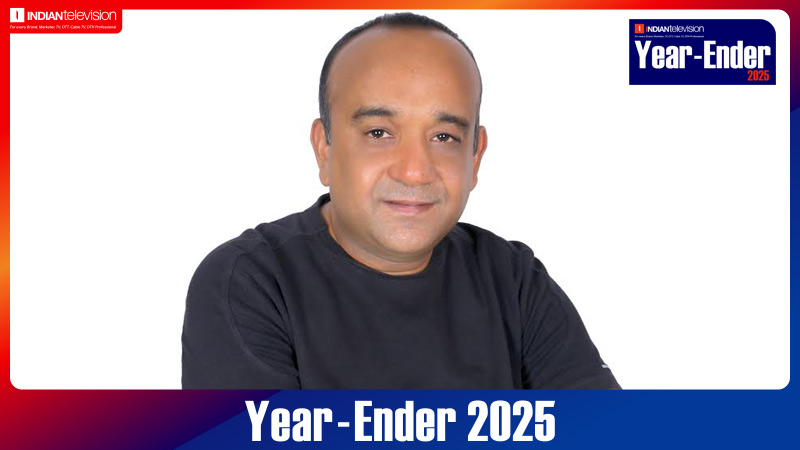
MUMBAI: 2025 will be remembered as the year India’s OTT industry stopped chasing scale for its own sake and began reckoning with how audiences actually consume content. Completion rates fell, patience wore thin and the limits of long-form excess became impossible to ignore. In this guest column, Pratap Jain, founder and CEO of ChanaJor, traces how micro-drama moved from the fringes to the centre of viewing behaviour, why short-form fiction emerged as a retention engine rather than a trend, and how platforms that respected time, habit and emotional payoff were the ones that truly grew up in 2025.
If there is one thing 2025 will be remembered for in the Indian OTT industry, it’s this: the industry finally stopped pretending.
Stopped pretending that bigger automatically meant better.
Stopped pretending that viewers had endless time.
Stopped pretending that scale without retention was success.
What began as a quiet reset in 2023 and a cautious correction in 2024 turned into a very visible shift in 2025. Business models matured. Content strategies tightened. And most importantly, platforms started aligning themselves with how Indians actually watch content, not how the industry wished they would.
At the centre of this shift was micro-drama—not as a trend, but as a behavioural inevitability.
When OTT finally understood the time problem
For years, long episodes were treated as a marker of seriousness. A 45–60 minute runtime was almost a badge of credibility. Shorter formats were pushed to the margins, labelled as “snack content” or “mobile-only.”
That belief quietly collapsed in 2025.
What platform data showed very clearly was not a drop in interest—but a drop in patience. Viewers weren’t rejecting stories. They were rejecting commitment.
Across platforms, the same patterns appeared:
* First-episode drop-offs on long-form shows kept increasing
* Completion rates continued to slide
* Viewers were sampling more titles but finishing fewer
At the same time, shows with episodes in the six to 10 minute range started showing the opposite behaviour: higher completion, higher repeat viewing, and stronger daily habit formation.
Micro-drama didn’t win because it was short. It won because it respected time.
Micro-Drama didn’t arrive loudly. It took over quietly.
There was no single moment when micro-drama “launched” in India. It crept in through dashboards and retention charts.
By mid-2025, it was clear that viewers were happy watching four, five, sometimes six short episodes in one sitting—even when they wouldn’t finish a single long episode. Romance, relationship drama, slice-of-life conflict, and grounded comedy worked especially well.
This wasn’t disposable content. It was compressed storytelling.
In shorter formats, there was no room for indulgence. Every episode had to move the story forward. Weak writing was punished faster. Strong writing was rewarded immediately.
Micro-drama raised the bar instead of lowering it.
Where ChanaJor naturally fit into this shift
ChanaJor didn’t pivot to micro-drama in 2025 because the market demanded it. In many ways, the platform was already built around the same viewing behaviour.
From the beginning, ChanaJor focused on short-to-mid-length fictional stories that felt close to everyday Indian life—hostels, rented flats, office romances, small-town relationships, young people figuring things out. Stories that didn’t need heavy context or cinematic scale to connect.
What worked in ChanaJor’s favour in 2025 was clarity:
* A clearly defined audience
* Tight episode lengths
* Storytelling that prioritised emotion and pace over spectacle
While several platforms rushed to copy global micro-drama formats, ChanaJor stayed rooted in familiar Indian settings and conflicts. That familiarity mattered. Viewers didn’t have to “enter” the world of the show—it already felt like theirs.
Why audiences started responding differently
One of the biggest misconceptions going into 2025 was that audiences wanted shorter content because their attention spans had reduced. That wasn’t entirely true.
What viewers actually wanted was meaningful payoff per minute.
On platforms like ChanaJor, episodes didn’t waste time setting the mood for ten minutes. Conflicts arrived early. Characters were recognisable within moments. Emotional hooks landed fast.
A typical consumption pattern looked like real life:
* One episode during a break
* Two more before sleeping
* A few the next day
This is how viewing habits are built—not through marketing spends, but through comfort and consistency.
Viewers came back not because every show was a blockbuster, but because they knew what kind of experience to expect.
2025 was also the year OTT faced business reality
The other big change in 2025 was on the business side. Subscriber growth slowed. Discounts stopped hiding churn. Customer acquisition costs rose.
Platforms were forced to ask harder questions:
* Are viewers finishing what they start?
* Are they returning without reminders?
* Is this content worth what we’re spending on it?
This is where micro-drama began outperforming expectations. A well-written short series could deliver sustained engagement without massive budgets. It didn’t peak for one weekend and disappear—it stayed alive through repeat viewing.
Platforms like ChanaJor benefited because they weren’t chasing inflated launch numbers. The focus was on consistency and retention, not noise.
Failures Became Visible Faster
2025 also exposed weaknesses brutally.
Several platforms assumed micro-drama was a shortcut—short episodes, quick shoots, instant traction. What they discovered was that bad writing fails faster in short formats than in long ones.
Viewers dropped off within minutes. Episodes were abandoned mid-way. Weak stories had nowhere to hide.
Micro-drama didn’t forgive laziness. It amplified it.
The platforms that survived were the ones that treated short storytelling with the same seriousness as long-form—sometimes more.
OTT Stopped Chasing Prestige and Started Chasing Habit
Perhaps the most important shift in 2025 wasn’t technical or creative—it was psychological.
OTT stopped trying to look like cinema. It stopped chasing validation through scale and awards alone. It began behaving like what it actually is in people’s lives: a daily companion.
Platforms like ChanaJor found their space here because that mindset was already baked in. The goal wasn’t to dominate a weekend launch. It was to quietly become part of someone’s everyday viewing routine.
That shift changed everything—from release strategies to how success was measured.
What 2025 Ultimately Taught the Industry
By the end of the year, three truths were impossible to ignore:
* Time is the most valuable thing a viewer gives you
* Retention matters more than reach
* Format must follow behaviour, not ego
Micro-drama didn’t take over because it was fashionable. It took over because it fit real life.
Looking Ahead
Micro-drama is not replacing long-form storytelling. It is redefining the baseline of engagement.
Longer shows will survive—but only when they earn their length. Short-form fiction will continue to evolve, becoming sharper, more emotionally confident, and better written.
Platforms like ChanaJor have shown that it’s possible to grow without shouting—by understanding the audience, respecting their time, and telling stories that feel real.
2025 wasn’t the year OTT became smaller. It was the year it became smarter.
Note: The views expressed in this article are solely the author’s and do not necessarily reflect our own.







