Special Report
Ten Sports Rajesh Sethis relocation challenge

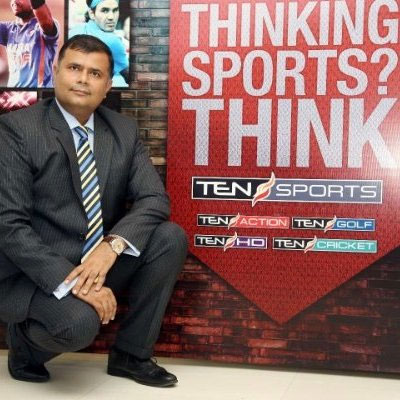
Ten Sports CEO Rajesh Sethi is clocking a lot of flying miles these days. And it is easier to catch him aboard a flight en route to Dubai than in his office. Reason: Well! He is busy organising a massive relocation of staff from Ten Sports’ Dubai office to Noida in Uttar Pradesh.
It is not only Sethi who is caught up with this shifting. Even those who have agreed to relocate are busy wrapping up rent agreements for accommodation in Dubai, repaying local loans, seeking admissions for their kids in schools in Noida, packing their bags and searching for new accommodation options in north Indian industrial town and surrounding areas.
Ten Sports Network (TSN) which operates five sporting channels- Ten Sports, Ten Cricket, Ten Action, Ten Golf and Ten HD is today owned by Zee which bought out the Dubai-based Bukhatir group’s 95 per stake in Taj Television in 2010. And it had seen some sort of an exodus even then. Senior managers, mainly expatriates, headed for the exits following the acquisition by India’s most known TV network. Among those who bailed out included: COO Peter Hutton along with his number two Mark Denton, both of whom cofounded the network with former CEO Chris McDonald who had left even earlier.

We are now consolidating our operations in India with the purpose of increasing stakeholder value and also enhancing viewership experience expounds Rajesh Sethi
TSN has some prime cricket properties which can be considered hot viewing options for Indian sports TV viewers. This includes the exclusive India rights to telecast action on the field for five cricket boards – South Africa, West Indies, Zimbabwe, Pakistan and Sri Lanka. As compared to this, rival ESPN Star Sports has the rights to domestic Indian cricket, which it pocketed after committing close to $770 million dollars to the BCCI. Neo Sports – another sportscaster in India – has the rights to New Zealand cricket, while Sony Entertainment boasts of the highly popular and profitable though controversial Indian Premier League. This apart, TSN has also signed up other sporting properties such as WWE, US Open, ATP Tournaments, WTA, Ryder Cup, Moto GP, Euro league, PGA Championship, Asian Tour, European Tour and Tour De France.
Clearly, when Ten Sports was set up in Dubai, it was headed by expats who were tapping into investments provided by Bukhatir with employees having several different nationalities as is the practice amongst companies in west Asia. At the time of being set up, the company had more than 100 staff and it had stated that “Taj represents Dubai’s premier television production resource. No other production facility in the UAE can match Taj in terms of technology, experienced personnel and efficiency. “
When Zee TV acquired the network from Bukhatir, chairman Subhash Chandra too had waxed eloquent about having an outpost in west Asia. “The acquisition of a stake in Ten Sports not only gives us a strong foothold in the arena of sports broadcasting across Asia but also strengthens our operations in the Middle East,” Chandra had said then.
The Zee Network currently operates popular entertainment channels in the Middle East and has a team – headed by Mukund Cairae – which looks after its interests there. In fact, Cairae has done very well for Zee in the Middle East, North Africa, Pakistan and has been ranked 24 in a list of powerful Indians for the region.
A Dubai-based broadcast professional who has been in the Middle East for more than a decade gives his perspective on Zee TV there. Says he: “Zee TV’s operations in the Middle East involve turning around its GECs and movie channels and producing and acquiring local Arabic content for its channels Zee Alwan and Aflam. It also garners local advertising revenues for its bouquet of channels. Cairae and his team operate out of the same Ten Sports building from the third floor.”
Two years on after acquiring Ten Sports, Chandra discovered that it was bleeding badly and running up losses running into crores, something which a former employee says upset him greatly. He decided to shift Ten Sports’ base to India to generate whatever sayings he could generate from the move. For the network, it became a mandate to be implemented.
Says a sports broadcast veteran: “The sports business is pretty tricky, especially international sports rights. You buy the rights in dollars, which have been appreciating consistently against the rupee, and you take advertising in rupees. The rise in advertising rates has not been making up for the depreciation of the rupee against the dollar. Hence, unless distribution revenues go up significantly which have not so far, losses are bound to be there. For the Zee Network it made eminent sense for Ten Sports to shift its technical operations including play out, production and post-production to a lower cost base like Noida where it has its uplinking hub, rather than operate out of expensive Dubai where employee costs are pretty stiff, and everything is costlier.”
Agrees Sethi: “The move is a part of our decision to make India a hub for better synergies, virtues and also for huge scales of economy, which the country, as a common central location, offers us. We have a significant set up in Noida with huge facilities and have invested heavily in both technology and modern equipment. We are now consolidating our operations in India with the purpose of increasing stakeholder value and also enhancing viewership experience.”
An investment analyst expects the Ten Sports shift to Noida to generate savings in double digit crore annually for the Zee Network. A local TV professional estimates that the savings will be in the region of $4-5 million per annum, mostly in employee costs. “It’s a very good reason for them to shift,” he says.
Since Chandra’s diktat was announced, the rumour mills had been running internally that relocation was coming, and several employees had already started looking for other options. Dubai-based Ten Sports COO Sanjay Raina left the firm in June end and is reportedly working with Fox International in Dubai. A handful quit to take up jobs with other regional broadcasters, according to local reports. Additionally, Mumbai-based TSN CEO Atul Pande chose to take up another posting within the Zee Network and Sethi was brought in as his replacement in mid-2013.
Sethi claims that the first communication regarding the shift was relayed in March this year while the final letter went out in August.
The Dubai-based broadcast professional – quoted earlier – highlights that “Effectively only a month’s notice was given to employees. The way TSN management has dealt with the relocation is objectionable. They could have dealt better with it on the human resources front. Employees have been given just one month’s severance pay; look at Network18 in India, it is giving employees a three month severance package. You have to remember the Dubai media job market is saturated with very few jobs going around. Working rules in the Middle East are pretty tough for Indians. Many of the former Ten Sports employees are literally on the streets; and this after serving the organisation for so many years. Remember their families’ future is also in jeopardy.”
But Sethi empasises, “Every Dubai-based employee has been given an opportunity to relocate to Noida. While few are happy, there are a few who are anxious about the change. People are free to either take the opportunity or refuse. No one is being laid off.”
Employee reaction to the offer has been mixed, says the Dubai-based broadcast professional. He explains: “Most staff that had earlier moved to Dubai had done so to get higher salaries and to upgrade their life style. These executives and professionals are now apprehensive about shifting to Noida, where they will have to start from scratch. For many employees, this was more than a hint to resign. “
Sethi however maintains that quite a few of the staff are looking forward to the change even as “There are others who are happily ensconced in the Arab emirate and not very enthusiastic about the shift. This is because of nationality issues. While there are a few who are happy and are in fact pushing to bring forward the shift date, there are others who are uncomfortable because they do not have roots in India. This is basically due to mixed nationalities that Ten Sports employs.”
Out of the 114 employees with Ten Sports in Dubai, it is learnt that around 15 Pakistani employees have chosen to discontinue as working in India was not feasible. And about 25-30 of them are actually boarding the relocation boat to Noida. The others are struggling to stay afloat.
For employees being yanked out of the relative comforts of Dubai, things don’t just end with moving to a new workplace in crowded and noisy Noida. Concerns are also being aired about their pay slips being clipped.
“The base salary according to Indian standards is anyway less. Additionally, there are taxes. One can expect a 30-40 per cent cut in the salary,” informs the Dubai-based broadcast professional.
Sethi begs to differ. “We are not majorly cutting salaries of those we are relocating. The taxation laws in the two countries are different. While India has a huge taxation policy, Dubai is a tax-free nation. And I do not think this can be termed as a salary cut,” he says.
The TSN CEO expects the relocation exercise to keep him busy for at least another couple of months. Settling down the staff to a routine could take a little longer.
But when it is completed and Ten Sports’ operations start purring smoothly out of India, he would have fulfilled what he had been mandated to do when he was hired for the job earlier this year.






MUMBAI: Some friendships are made in heaven; others are coded in Mumbai. Hamara Vinayak, the first-ever digital original from Siddharth Kumar Tewary’s Swastik Stories, turns the divine into the delightful, serving up a story that’s equal parts start-up hustle and spiritual hustle.
Some tech start-ups chase unicorns. This one already has a god on board. Hamara Vinayak takes the leap from temple bells to notification pings and it does so with heart, humour and a healthy dose of the divine.
At its core, the show asks a simple but audacious question: what if God wasn’t up there, but right beside you, maybe even debugging your life over a cup of chai?
The show’s tagline, “God isn’t distant… He’s your closest friend” perfectly captures its quirky soul. Across its first two episodes, screened exclusively for media in Mumbai, the series proves that enlightenment can come with a good punchline.
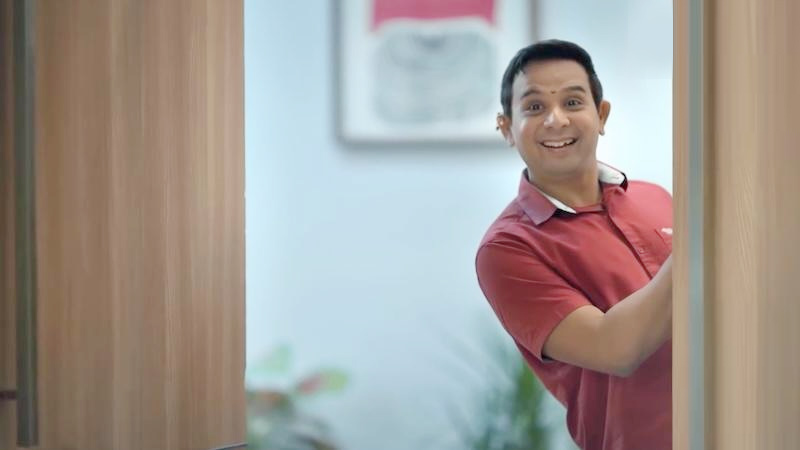
The series follows a group of ambitious young entrepreneurs running a Mumbai-based tech start-up that lets people around the world book exclusive virtual poojas at India’s most revered shrines. But as their app grows, so do their ethical grey zones. Into this chaos walks Vinayak, played with soulful serenity and sly wit by the charming Namit Das, a young man whose calm smile hides something celestial.

He’s got the peaceful look of a saint but the wit of someone who could out-think your favourite stand-up comic. Around him spins a crew of dream-driven youngsters – Luv Vispute, Arnav Bhasin, Vaidehi Nair and Saloni Daini who run a Mumbai-based tech start-up offering devotees across the world the chance to book “exclusive” poojas at India’s most sacred shrines. It’s a business plan that blends belief and broadband – and, as the story unfolds, also tests the moral compass of its ambitious founders.
“The first time I read the script, I found the character very pretty,” Namit joked at the post-screening interaction. “It’s a beautiful thought that God isn’t distant, he’s your closest friend. And playing Vinayak, you feel that calm but also his cleverness. He’s the friend who makes you think.”
The reactions to the series ranged from smiles to sighs of wonder. Viewers were charmed by the show’s sincerity and sparkle, a quality that stems from its creator’s belief that faith can be funny without being frivolous.
Among the cast, Luv Vispute shines brightest, his comic timing adding sparkle to the show’s more reflective beats. But what keeps Hamara Vinayak engaging is the easy rhythm of its writing – one moment touching, the next teasing, always gently reminding us that spirituality doesn’t have to be solemn.
Luv spoke fondly of his long association with Swastik. “Since my first show was with Swastik, this feels like home,” he said. “Every project with them is positive, feel-good, and this one just had such a different vibe. I truly feel blessed.”
Saloni Daini, who brings infectious warmth to her role, added that she signed up the moment she heard the show was about “Bappa.”
“We shot during the Ganpati festival,” she recalled. “The energy on set was incredible festive, faithful, and full of laughter. It’s such a relatable story for our generation: chaos, friendship, love, kindness, and faith all mixed together.”

Vaidehi Nair and Arnav Bhasin complete the ensemble, each representing different shades of ambition and morality in the start-up’s journey. Their camaraderie is easy and believable, a testament to how much the cast connected off-screen as well.
This clever fusion of mythology and modernity plays to India’s two enduring loves, entertainment and faith. Mythology has long been the comfort zone of Indian storytellers, from the televised epics of the 1980s to the glossy remakes that still command prime-time TRPs. For decades, gods have been our most bankable heroes. But Hamara Vinayak tweaks the formula not by preaching, but by laughing with its characters, and sometimes, at their confusion about where divinity ends and data begins.
Creator Siddharth Kumar Tewary, long hailed as Indian television’s myth-maker for shows like Mahabharat, Radha Krishn and Porus, explained the show’s intent with characteristic clarity, “This is our first story where we are talking directly to the audience, not through a platform,” he said. “We wanted to connect young people with our culture to say that God isn’t someone you only worship; He’s your friend, walking beside you, even when you take the wrong path. The story may be simple, but the thought is big.”
That blend of philosophy and playfulness runs through the show. “We had to keep asking ourselves why we’re doing this,” Tewary added. “It’s tricky to make something positive and spiritual for the OTT audience, they’ve changed, they want nuance, not sermons. But when the purpose is clear, everything else aligns.”
For the creator of some of Indian TV’s most lavish spectacles, Hamara Vinayak marks a refreshing tonal shift. Here, Tewary trades celestial kingdoms for co-working spaces and cosmic battles for office banter. Yet his signature remains: an eye for allegory, a love for faith-infused storytelling, and an understanding that belief is most powerful when it feels personal.
Hamara Vinayak, after all, feels less like a sermon and more like a conversation over chai about what success means, what faith costs, and why even the gods might be rooting for a start-up’s Series A round.
As Namit Das reflected during the Q&A, “Life gives us many magical, divine moments we just forget to notice them. Sometimes even through a phone screen, you see something that redirects you. That’s a Vinayak moment.”
The series also mirrors a larger cultural pivot. As audiences migrate from television to OTT, myth-inspired tales are finding new form and flexibility online. The digital screen lets creators like Tewary reinvent the genre, giving ancient ideas a modern interface, without losing the emotional charge that’s made mythology India’s storytelling backbone for decades.
In a country where faith trends faster than any hashtag, Hamara Vinayak feels both familiar and refreshingly new, a comedy that’s blessed with heart, humour and just enough philosophy to keep the binge holy.
For a country where mythology remains the oldest streaming service, Tewary’s move from TV to OTT feels both natural and necessary. Indian storytellers have always turned to gods for drama, guidance and TRPs from Ramayan and Mahabharat on Doordarshan to glossy mytho-dramas on prime time. But digital platforms allow creators to remix reverence with realism, and in Hamara Vinayak, faith gets an interface upgrade.
The result is a show that feels like a warm chat with destiny, part comedy, part contemplation. And in an age of cynicism, that’s no small miracle.
As Tewary put it, smiling at his cast, “The message had to be positive. We just wanted to remind people that even in chaos, God hasn’t unfriended you.”
With 5 episodes planned, Hamara Vinayak promises to keep walking that fine line between laughter and light. It’s mythology with memes, devotion with dialogue, and a digital-age reminder that even the cloud has a silver lining or perhaps, a divine one.
If the first two episodes are any sign, the show doesn’t just bridge heaven and earth, it gives both a Wi-Fi connection.






