Special Report
Quo vadis, FM Radio?


Is what started with much promise, destined to end with a whimper?
FM station Win, that pulled down shutters in Mumbai two months ago in protest against crushing license fees, is unlikely to restart operations. The Mid-Day run Go too had to bow to investor pressure and offer closure notice by June end this year, leaving just three private players in Mumbai. Bleak days ahead for FM?
 Apparently so. But FM Radio, with its fair share of government pitfalls and technical roadblocks, is not willing to let go so easily. Go, in all likelihood, is poised to soldier on for some more months, and is not willing to buckle under. The remaining players, backed by major media houses, continue to innovate and experiment.
As the latest Indian Listenership Track (ILT) 2004 shows, listenership is not the problem it had seemed. Nor is advertising, if media planners‘ enthusiasm is any indicator. FM radio is on the growth track, with an amazingly equitable reach across SECs. FM in Mumbai has grown three times, while in Delhi the number has doubled in the last three years. Among the young, radio scores over magazine readership, and in terms of exposure, even over television in some day parts, the ILT study shows.
To get to this ‘young‘ audience, and to attract more listeners, most of the stations have been, however, catering to the lowest common denominator. One of the few stations that has stood out, in Mumbai, is the Mid-day run Go, which early on adopted the strategy to cater only to a niche educated, English speaking audience. Today, while the other players attract a gamut of advertising clientele, mostly that of mass based goods and services, Go has established itself as one catering to those ‘who like to be spoken to in English‘ and hence the upper crust of the advertising pie.

The station, unlike the mass based Radio City and Radio Mirchi, currently embroiled in stiff competition in providing Bollywood in liberal doses, focuses on young professionals, educated but currently housebound housewives and college kids.
Even Go has not been able to resist the lure of Bollywood. Despite fora like the Singles Club it recently launched to good response, it has succumbed to a sure shot winner in Bollywood Badshah, a Hindi film quiz. While Radio City tops awareness in Mumbai, it is Mirchi that steals the show in Delhi. However, industry insiders say that although many listeners are loyal to one station, awareness of at least two to three other stations is high, owing to the propensity to flick between frequencies during songs.
City, Mirchi and RED, the prominent three players across cities have a clear advantage in terms of revenue. A presence across cities not just doubles revenue, it also brings in additional brands. A reason why Go, despite having pulled out of the Delhi franchise, still looks ahead to launching in other cities once the license fee hurdles are crossed.
Is news the saviour?
 However, many players believe that news and current affairs, one of the main issues under consideration of the Telecom Regulatory Authority of India (Trai), the broadcast and cable regulator, would be just a fragment of the overall picture. Concurs Go‘s station head Shariq Patel, “News will constitute a part of the overall programming mix, but I doubt if, in the present circumstances, a standalone news radio station would work.”
So, what is it that will work if the license regime is revoked in favour of a model that will allow stations to breathe easier? More players to grow the market, assert all the players. All also agree that serious discussions are not what is going to work as a programming tactic on FM. Kids‘ programming is one area that is waiting to be tapped, say the players.
Stations also realised that RJ rapport is what is going to count. While Win and Go were the pioneers of RJ based programming, particularly for the popular morning slots, Radio Mirchi too has realised its potential. RJ Harsh is being promoted heavily from billboards as the guy to listen to on hot topical issue discussions. Which also raises the matter of the slim line of distinction on what constitutes news and whether it can air on the private stations. Argues a station director, “If Star can run news on Star News, is there any reason why it cannot run news on Radio City?”
 News however, is not on the priority list of
many programmers in FM radio, who believe that though non music content is going to be differentiator in the coming days, serious discussions will not bring in much of the listenership or the moolah.
Trai is expected to recommend allowing news on radio, to accommodate which, the FM stations are likely to be divided into two categories — one purely entertainment based and has no news element, while the other will have news-cum-entertainment.
The pure entertainment channels are likely to be allowed 100 per cent foreign equity, but the foreign equity limit to be imposed on channels carrying news in the FM sphere is yet to be fixed by Trai, say sources. Safeguards like a cap of 100 to 150 seconds of news per half hour of programming are likely to be imposed, they say.
Home bound listeners
In the two years that the stations have been in operation, listenership has grown majorly but most of it is ‘at home‘. Says Lintas Media Services – Research & Technologies head Premjeet Sodhi,”In-car listenership has definitely grown by leaps and bounds, but the number of car owners being a fraction of the universe, the number of mobile listeners are bound to remain low.”
The rising popularity of radio in metros like Mumbai and Delhi have had a natural fallout – media planners are now actively including radio in their plans. Agrees Sodhi, “The number of studies that are being invested in radio, as well as demographic patterns mapped out by the stations themselves are helping. Planners are definitely looking very seriously at radio now.”
The recently concluded ILT, validated by the Media Research Users Council‘s (MRUC) technical committee, will help in providing the objective data about listenership that was missing thus far, believes Sodhi. Patel points out that unlike earlier, advertisers are opting for original radio commercials being devised for radio, understanding the listeners‘ mindset and offering value adds with the programming.
The recent Wakaw Pakaw campaign on Go, that stemmed from a brainstorming session over innovative programming is an example. Radio City has experimented with several non music genre shows, but studies on ratings available thus far do not indicate that these have revolutionised the FM industry. City‘s Crorepati venture was by far more successful than its aural version of Kyunki Saas Bhi Kabhi Bahu Thi and Saans, but the station keeps innovating. Mirchi has stuck to Bollywood for bringing in the bucks, but as Bennett Coleman and Co MD Vineet Jain himself pointed out after the meeting with Reddy, the parent company‘s backing and subsidy is what keeping the stations afloat, failing which individual losses could be even higher than what they are. The FM radio industry stands to collectively lose Rs. 1,500- Rs. 2,000 million, due to the government‘s dithering over the FM imbroglio, say players.
‘Ad‘ing up the gains
Entertainment has emerged as the largest spender in the last one year on radio. Not just TV channels that want to reinforce their programming on radio, but international  studios like Columbia Tristar have inked annual deals for all forthcoming releases in India. Even restaurants advertised their new year bashes on radio this year, indicating the rapport that FM has struck with the masses.
Retail advertising however has not picked up as much as it was expected to, shattering the myth that retail would drive the advertising growth in FM. With the exit of Win, the Millennium Broadcast promoted and Gautam Radia run station that was unofficially the most popular station among advertisers, the share of advertising of rivals, particularly Go, that shared a closer profile with Win, has gone up, say insiders. To grow the pie, however, what would be needed is not a decrease in the number of players but more entrants in different genres who would build their own niche listener base, is the refrain among the FM players.
Is the government tuned in?
On 7 June, a delegation of private FM radio players met information and broadcasting minister Jaipal Reddy to exhort him to expedite work on the recommendations for expansion of the second phase of FM radio in the country. This is not likely to happen anytime soon. Till which time the radio stations will continue to bleed with the inbuilt 15 per cent escalation clause in annual license fees.
As India Today Group promoter Aroon Purie mentioned after the meeting, “There is no question of not paying the licence fee. We will.” But Purie also pointed out that the main issue was to take forward the second phase of FM radio expansion for which the government has to give the FM radio players “certain directions.”
 Down South, Suryan claims dominance over rivals |
TRAI meanwhile, is sitting tight on its recommendations. And even these are not guaranteed to be accepted by the new government, which will take its own time to assess the FM scenario and decide the direction it should take. Nor is there much hope for the lackluster AIR FM channels (and Mumbai has two, neither of which attract the kind of advertising they could due to their reach). The marketing, programming and ad sales are all in the domain of babus who are content to fill in the hours and let government machinery take its course. AIR‘s chief revenue springs sporadically from cricket commentaries, a monopoly the pubcaster is using increasingly cannily. Sports commentators secretly complain that their job these days has been reduced to giving a minimum commentary, broken by incessant sponsor messages. FM however chugs along as an afterthought in babudom.
The private FM radio players, lobbying for a change of regime, are hoping that the government would accept soon or slightly modify the Trai recommendations, which would be based on a report submitted by an expert committee headed by Ficci‘s Dr Amit Mitra
With an eye to put some pressure, the private FM players had even moved the court and then TDSAT, a dispute redressal tribunal under the sector regulator Trai, for some interim relief earlier this year. But neither the court, nor TDSAT came to their rescue and put the ball back in the government‘s court.
In fits and starts, the players have coughed up the monies (four months of licence fee, that is), but are now crossing their fingers for more long term relief. It‘s over to the Trai and the I&B ministry for now. Till then, the music plays on and it‘s not very soothing to the ears of the private players.

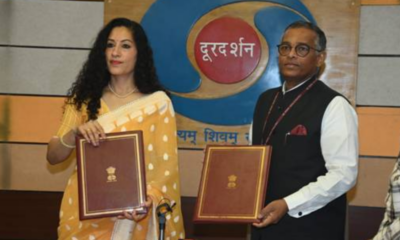





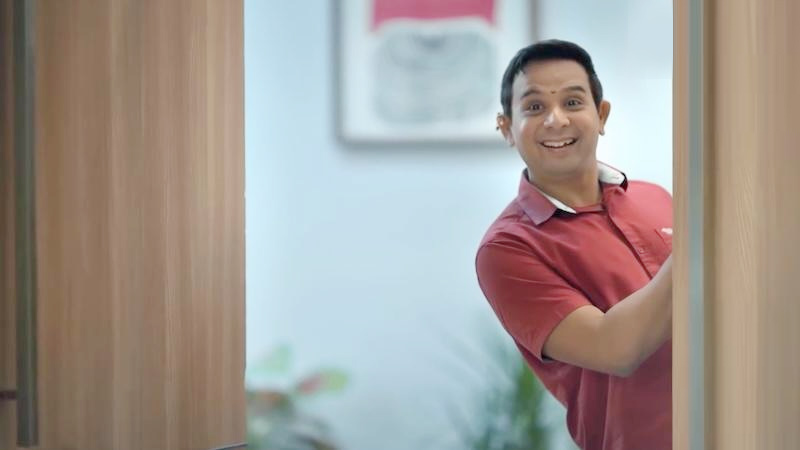
MUMBAI: Some friendships are made in heaven; others are coded in Mumbai. Hamara Vinayak, the first-ever digital original from Siddharth Kumar Tewary’s Swastik Stories, turns the divine into the delightful, serving up a story that’s equal parts start-up hustle and spiritual hustle.
Some tech start-ups chase unicorns. This one already has a god on board. Hamara Vinayak takes the leap from temple bells to notification pings and it does so with heart, humour and a healthy dose of the divine.
At its core, the show asks a simple but audacious question: what if God wasn’t up there, but right beside you, maybe even debugging your life over a cup of chai?
The show’s tagline, “God isn’t distant… He’s your closest friend” perfectly captures its quirky soul. Across its first two episodes, screened exclusively for media in Mumbai, the series proves that enlightenment can come with a good punchline.
The series follows a group of ambitious young entrepreneurs running a Mumbai-based tech start-up that lets people around the world book exclusive virtual poojas at India’s most revered shrines. But as their app grows, so do their ethical grey zones. Into this chaos walks Vinayak, played with soulful serenity and sly wit by the charming Namit Das, a young man whose calm smile hides something celestial.

He’s got the peaceful look of a saint but the wit of someone who could out-think your favourite stand-up comic. Around him spins a crew of dream-driven youngsters – Luv Vispute, Arnav Bhasin, Vaidehi Nair and Saloni Daini who run a Mumbai-based tech start-up offering devotees across the world the chance to book “exclusive” poojas at India’s most sacred shrines. It’s a business plan that blends belief and broadband – and, as the story unfolds, also tests the moral compass of its ambitious founders.
“The first time I read the script, I found the character very pretty,” Namit joked at the post-screening interaction. “It’s a beautiful thought that God isn’t distant, he’s your closest friend. And playing Vinayak, you feel that calm but also his cleverness. He’s the friend who makes you think.”
The reactions to the series ranged from smiles to sighs of wonder. Viewers were charmed by the show’s sincerity and sparkle, a quality that stems from its creator’s belief that faith can be funny without being frivolous.
Among the cast, Luv Vispute shines brightest, his comic timing adding sparkle to the show’s more reflective beats. But what keeps Hamara Vinayak engaging is the easy rhythm of its writing – one moment touching, the next teasing, always gently reminding us that spirituality doesn’t have to be solemn.
Luv spoke fondly of his long association with Swastik. “Since my first show was with Swastik, this feels like home,” he said. “Every project with them is positive, feel-good, and this one just had such a different vibe. I truly feel blessed.”
Saloni Daini, who brings infectious warmth to her role, added that she signed up the moment she heard the show was about “Bappa.”
“We shot during the Ganpati festival,” she recalled. “The energy on set was incredible festive, faithful, and full of laughter. It’s such a relatable story for our generation: chaos, friendship, love, kindness, and faith all mixed together.”

Vaidehi Nair and Arnav Bhasin complete the ensemble, each representing different shades of ambition and morality in the start-up’s journey. Their camaraderie is easy and believable, a testament to how much the cast connected off-screen as well.
This clever fusion of mythology and modernity plays to India’s two enduring loves, entertainment and faith. Mythology has long been the comfort zone of Indian storytellers, from the televised epics of the 1980s to the glossy remakes that still command prime-time TRPs. For decades, gods have been our most bankable heroes. But Hamara Vinayak tweaks the formula not by preaching, but by laughing with its characters, and sometimes, at their confusion about where divinity ends and data begins.
Creator Siddharth Kumar Tewary, long hailed as Indian television’s myth-maker for shows like Mahabharat, Radha Krishn and Porus, explained the show’s intent with characteristic clarity, “This is our first story where we are talking directly to the audience, not through a platform,” he said. “We wanted to connect young people with our culture to say that God isn’t someone you only worship; He’s your friend, walking beside you, even when you take the wrong path. The story may be simple, but the thought is big.”
That blend of philosophy and playfulness runs through the show. “We had to keep asking ourselves why we’re doing this,” Tewary added. “It’s tricky to make something positive and spiritual for the OTT audience, they’ve changed, they want nuance, not sermons. But when the purpose is clear, everything else aligns.”
For the creator of some of Indian TV’s most lavish spectacles, Hamara Vinayak marks a refreshing tonal shift. Here, Tewary trades celestial kingdoms for co-working spaces and cosmic battles for office banter. Yet his signature remains: an eye for allegory, a love for faith-infused storytelling, and an understanding that belief is most powerful when it feels personal.
Hamara Vinayak, after all, feels less like a sermon and more like a conversation over chai about what success means, what faith costs, and why even the gods might be rooting for a start-up’s Series A round.
As Namit Das reflected during the Q&A, “Life gives us many magical, divine moments we just forget to notice them. Sometimes even through a phone screen, you see something that redirects you. That’s a Vinayak moment.”
The series also mirrors a larger cultural pivot. As audiences migrate from television to OTT, myth-inspired tales are finding new form and flexibility online. The digital screen lets creators like Tewary reinvent the genre, giving ancient ideas a modern interface, without losing the emotional charge that’s made mythology India’s storytelling backbone for decades.
In a country where faith trends faster than any hashtag, Hamara Vinayak feels both familiar and refreshingly new, a comedy that’s blessed with heart, humour and just enough philosophy to keep the binge holy.
For a country where mythology remains the oldest streaming service, Tewary’s move from TV to OTT feels both natural and necessary. Indian storytellers have always turned to gods for drama, guidance and TRPs from Ramayan and Mahabharat on Doordarshan to glossy mytho-dramas on prime time. But digital platforms allow creators to remix reverence with realism, and in Hamara Vinayak, faith gets an interface upgrade.
The result is a show that feels like a warm chat with destiny, part comedy, part contemplation. And in an age of cynicism, that’s no small miracle.
As Tewary put it, smiling at his cast, “The message had to be positive. We just wanted to remind people that even in chaos, God hasn’t unfriended you.”
With 5 episodes planned, Hamara Vinayak promises to keep walking that fine line between laughter and light. It’s mythology with memes, devotion with dialogue, and a digital-age reminder that even the cloud has a silver lining or perhaps, a divine one.
If the first two episodes are any sign, the show doesn’t just bridge heaven and earth, it gives both a Wi-Fi connection.







