News Broadcasting
Not just couch potatoes


While watching television is the main source of entertainment for millions of Indians, the sheer number of channels and programs from which one has to choose makes for a rather mind-boggling exercise. But don’t fret for there’s help in the form of a new platform where people with similar viewing preferences can exchange views and stay updated with the latest developments.
Founded by BIT-Meerut B.Tech graduates Rabi Gupta and Ashish Kumar in May this year, iCouchApp helps television viewers engage with the programs they are watching, get TV program alerts, and have loads of fun while they are at it.
Audiences are attracted more towards a product that has official link-ups explain Ashish and Rabi

Television enthusiasts Rabi and Ashish wanted more from TV shows than just nicely packaged programs, which is why they entered the domain with iDubba, a platform designed to bridge the gap between television and audiences. “We launched iDubba last year and it basically worked as a TV guide. Like viewers could set alerts for their favourite shows, movies, etc,” says Rabi, who not only was not satisfied with the existing shows but also curious to know more about them.
Within sometime of launching iDubba, the duo noticed a change in the behaviour of their users, who started interacting on the platform about their likes and dislikes with respect to certain shows. “We came to the conclusion that while TV audience requires information, they also want an interactive platform. And that was the germ from where we started working on the iCouch app,” says Rabi about the genesis of the application, which has now found popularity among more than 25,000 android phone users.
With very few contacts in the television industry, the duo first ran the idea through Zee Café and found it was taken in good spirit. “The channel was in the process of launching the new season of their popular show, Grey’s Anatomy and tied up with us for the same,” reveals Rabi.
Zee Café found it an exhilarating idea as it would help them expand their viewer base. Business head Zee – niche channels Anurag Bedi says: “The rate at which various communication vehicles are seeing a decline, this initiative was taken to give the viewers a personalised bite into their TV viewing experience. This differentiated app has been developed in a creative and nimble way to get viewers talking about the show real time. With majority of the urban population now making a shift to smartphones, creating such an app was an obvious choice for engagement for this kind of a show,” adding that the app was meant to unite all fans of Grey’s Anatomy on a common platform and keep them glued to the show.”
Before taking their plan ahead, Rabi and Ashish interacted with different TV channels to understand their problems in engaging with audiences. “It basically required building a kind of trust with the TV audience. Audiences are attracted more towards a product that has official link-ups. So we made sure to promote the app on the TV screen as a ticker while the show was on air,” says Rabi, adding that since the app is still new, their associations with channels are free of monetary give and take.
After Zee Café, History Channel followed suit, partnering with iDubba for their series Ancient Aliens.
Says A+E Networks TV18 VP and head marketing Sangeetha Aiyer: “We’re always on the lookout for ideas and activities which can help increase the overall engagement and help make the process of receiving viewer feedback more efficient. In this case, we were looking to integrate the social interactions with television directly, and iCouch solved this problem efficiently. Apart from being a novel experience for our viewers, it helped us receive direct feedback from the viewers – something that regular social interaction was not equipped to deliver efficiently.”
Social analytics data derived from audience interactions helped the channel to analyse the mood and reception more accurately. “While the App helped us engage with viewers, the ticker playing live during the telecast helped the App accrue more downloads, making it a truly symbiotic relationship for both parties,” says Aiyer, highlighting that the business arrangement between both parties is pretty basic and their prime objective at the moment is to increase engagement.
Rabi and Ashish were able to generate funds from many people in the industry like Ashok Kurien and Rajan Anandan.
Currently, the app is really popular with audiences and is promoting few non-partner shows like Kaun Banega Crorepati and Bigg Boss Season 7 that are helping the duo increase their user base. “These are non-partner shows but they have become really popular and have picked up a lot of traction because of the interesting concept,” says Rabi, who has huge plans for the app in future. “It is not just exciting for viewers but broadcasters too. In the time to come, we are going to build a lot of things inside the app which would amplify engagement,” he concludes.






News Broadcasting
UDF poised to return to power in Kerala, says Manorama-CVoter survey
Massive opinion poll projects shift in Kerala politics ahead of 2026 Assembly elections.
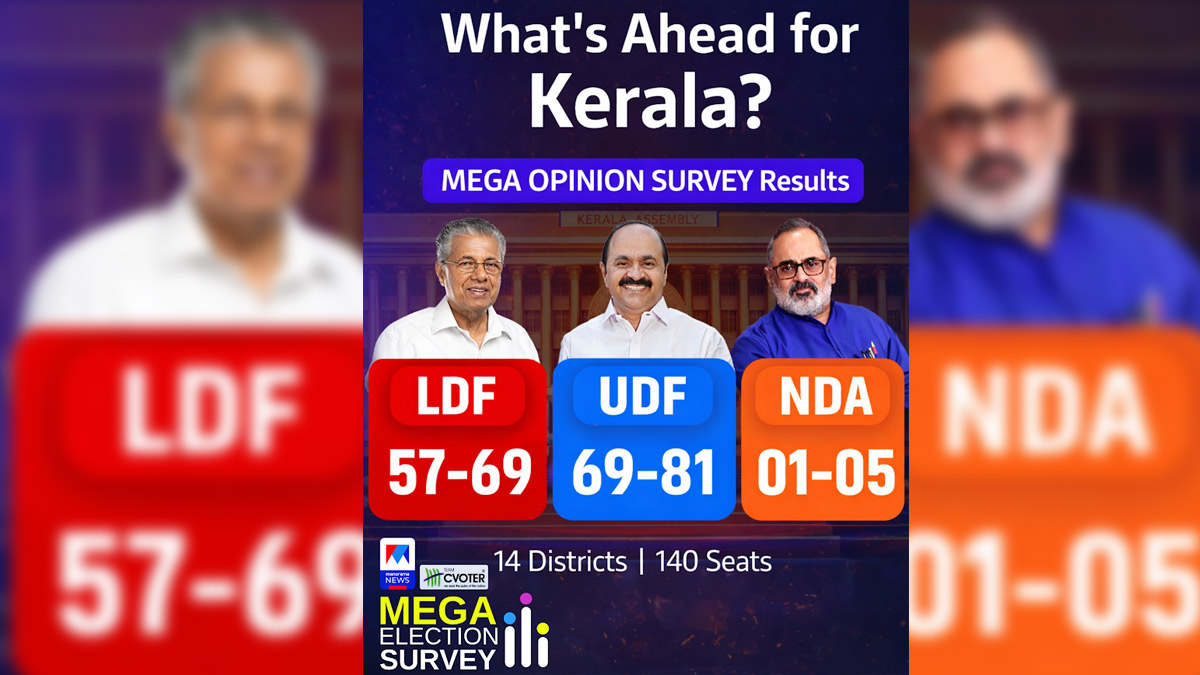
MUMBAI: The winds of change appear to be blowing through Kerala’s political landscape and this time, they seem to favour the United Democratic Front. A comprehensive mega opinion survey conducted by Manorama News in partnership with CVoter projects a potential comeback for the UDF in the upcoming Kerala Legislative Assembly Elections 2026. The survey, covering all 140 constituencies with a massive sample size of nearly 90,000 respondents, predicts the UDF could win between 69 and 81 seats.
The ruling Left Democratic Front (LDF) is expected to secure 57 to 69 seats, a significant drop from the 99 seats it won in the 2021 elections. This would mean the LDF losing 30 to 42 of its sitting seats. Meanwhile, the National Democratic Alliance (NDA), which drew a blank in 2021, is projected to open its account with 1 to 5 seats.
Region-wise, the UDF is expected to make strong gains in Malabar, winning 25 to 34 out of 48 seats, and in Central Kerala, where it could bag 29 to 33 out of 53 seats. In South Kerala, the LDF is likely to retain an edge with 21 to 25 seats, while the UDF may improve to 12 to 16 seats. The NDA could pick up 1 to 3 seats in the southern region.
The survey was conducted between 14 and 26 March 2026, with additional tracker and snap polls carried out from December 2025 to March 2026. A total of 89,693 respondents participated, ensuring representation across all demographics and social segments.
Manorama News has a strong track record of accuracy, with its previous projections closely matching the actual results of the 2019 and 2024 Lok Sabha elections as well as the 2021 Kerala Assembly polls.
In Kerala’s famously fierce political battles, this survey suggests the pendulum may be swinging back. Whether the final verdict matches these numbers or throws up another surprise, one thing is clear, the 2026 Assembly elections are shaping up to be one of the most keenly watched contests in the state’s history.






