Film Production
Media education space in focus as industry biggies take aim

The Indian media and entertainment industry is expected to grow at 19 per cent compound annual growth rate to reach Rs 837.4 billion by 2010 from Rs 353 billion at present, says a study by FICCI and PricewaterhouseCoopers. As market analysts point out, one area, which is going to capitalise immensely on this expansion will be the media education sector.
 So, that explains the kind of boom that this particular stream of education has been witnessing since the last two years. Some of the listed media firms in the country such as Zee and B.A.G. have also chosen the occasion to explore the media education space while more players are gearing up to make their entries.
B.A.G. invested to the tune of Rs 120 million to launch its International School of Media and Entertainment Studies (iSOMES), Noida, in collaboration with Missouri School of Journalism, USA in August 2004. Zee Interactive Learning Systems Ltd (ZILS), the education arm of the Subhash Chandra-promoted Essel Group, launched its own media institute, the Zee Institute of Media Arts (ZIMA), in the same year in November on an initial investment of Rs 30 million.
 The latest to join the bandwagon is the Subhash Ghai promoted Mukta Arts Ltd which will unveil its Whistling Woods International Ltd (WWIL) in July this year. Mukta Arts has invested Rs 500 million to set up what it claims is Asia‘s biggest film, television, animation and media arts institute in Mumbai.
Balaji Telefilms is another player, which is seriously looking at the media education sector. According to market sources, the production house will be launching its institute in Pune within another year or two.

 |
|
B.A.G Film‘s iSOMES at Noida
|
Looking at the kind of investments made by these media firms on media education, the thought would occur that if they are considering the space as a natural extension of their main area of business. Does a firm hold on the media space and the right understanding of the industry enable them to give a better performance in this area? Are they able to translate the kind of talent accessible to improved business performance in the areas of production and broadcasting? How much does it help them to forget the worries of head-hunting for their own organisations? Are their final products competitive enough to survive in the uncertain industry (here films)?
“The media industry is now driven by the techniques of convergence and I would say a well-trained talent pool is the key for survival,” says B.A.G. Films promoter Anurradha Prasad. “Earlier, we used to hire fresh trainees and spend a lot of time and effort to get them equipped. Now, we are able to source well-rounded professionals from our institute and that helps our cause to an extent. It saves a lot of trouble because they are already trained. That way, the whole industry is also benefited.”
ZILS CEO Arun Khetan says his institute follows a standalone business model irrespective of Zee‘s interest in the broadcast business. “Irrespective of our parent company‘s interest in the broadcast business, we have access to all the major players in the industry,” he says.
Speaking on the advantages, Khetan adds it brings a certain kind of synergy into the business. “You can get the right kind of feedback on the programming and other areas from your student community. They can be very good critics. You can use this talent pool for your research as well.”
 Subhash Ghai‘s Mukta Arts has followed the theory that, expert knowledge should be passed on to the right hands. Explains Chaitanya Chinchlikar, who heads the marketing division of WWIL, on the rational behind Mukta extending to film education: “If one knows how to make a qualitatively good film and turn a profit while doing so, it would make sense to teach others how to do so.”
When queried on the kind of revenues that these initiatives chip into the kitty of their parent companies, the general feedback is that there is not much dependence as such for the initial years. “We are not looking at WWIL as a revenue resource at this point of time. The idea is to invest in quality education, which keeps up to the international standards, and boosts the whole industry by offering well-trained talents,” says Ghai.
Khetan reveals that, Zima was launched as a high level pilot project and major expansion plans are on the anvil. “We made an initial investment of about Rs 30 million to launch this project. Now the plan is to convert it as a complete academy through a gradual process of expansion. We are planning to pump in at least Rs 350 million more over a peiod of three years,” he says.
 |
|
WWIL dean Kurt Inderbitzinn
|
While Zima is mainly targeting Indian students, WWIL and iSOMES (remember the Missouri connection) keep an eye on the international aspirants as well. That fact is reflected in the fees structure that these institutes follow. Zima charges about Rs 150,000 for its one-year Diploma course in Television Direction, according to Khetan.
“While offering a competitive curriculum, we have also made it a point to attract the right Indian talent through an affordable fees structure. Presently we are not targeting international students,” says Khetan.
On the other hand, the two-year film direction course in WWIL costs about Rs 1 million. On an aggressive note — in order to attract global attention — WWIL has gone ahead and associated with most of the leading entertainment technology providers on the infrastructure front. The institute also has its dean in the internationally renowned film-television professional Kurt Inderbitzin.
“There is a clear lack of International level of technical expertise. Hence India falls behind in a truly global economy,” reasons Chinchlikar.
 At a time when media institutes mushroom as each and everyone – be it media firms, media personalities or independent aspirants – try a hand in the seemingly lucrative space, what should be the criterion for choosing an effective educational platform?
“I agree that lots of shops are being opened these days and they are charging some unbelievable amounts as fees. It is up to the aspirants to decide between boys and men. The criteria one should look at to choose an institute would be, exposure, experience and quality of curriculum. Work experience in a live environment is very important,” says Prasad.
So much said and done, there remains the most important element in any education – placements. Khetan feels that the television industry‘s growth in the recent past and the eagerness to rope in the right talent has boosted the placement side really well. “The concept of campus interviews is now gradually coming into this space. Well trained students will really benefit from this trend,” he says.
 |
|
Visualisation of the reception area at WWIL
|
“An Indian Film, TV, Animation & Media Arts institute having campus placements akin to MBA schools and Engineering colleges will be commonplace. The industry is hungry for professionally trained talent,” confirms Chinchlikar.
Prasad feels that this has become true to an extent for television, while it is not the same for film aspirants. “People who are trained in television-related streams are able to fetch jobs very easily and the payment is also decent. An assistant director earns in the range of Rs 12,000 to Rs 16,000 and that is not very bad if that person is a new entrant. However, it is still difficult in films,” says Prasad.
Film industry aspirants indiantelevision.com spoke to call for an organised professional set up to drive recruitments and a competitive payment structure. They feel that firms such as Zee, Mukta and B.A.G. should take an initiative in this regard. “If the industry is coming up with so many courses, the main question is – are they prepared to offer job and pay on merit? Or do they expect their students to work free-of-cost for them? Industry contacts should not be the criteria, but the right talent. Opportunities should be given on merit,” says a qualified film aspirant in condition of anonymity.
“It matters what training has been imparted to the student – students who are taught expired knowledge, will not be valued heavily in the industry, and hence will be paid less. Time will tell that well-trained, technically brilliant freshers will be able to command a much higher price in the market than their current peers,” Chinchlikar responds.
That seems a valid question and a valid explanation at a time the industry is witnessing an explosion of growth. However, lot would depend on how these companies plan their growth in this space.



Film Production
Arka Mediaworks onboards 88 Pictures as animation studio partner on ‘The Eternal War – Part 1’
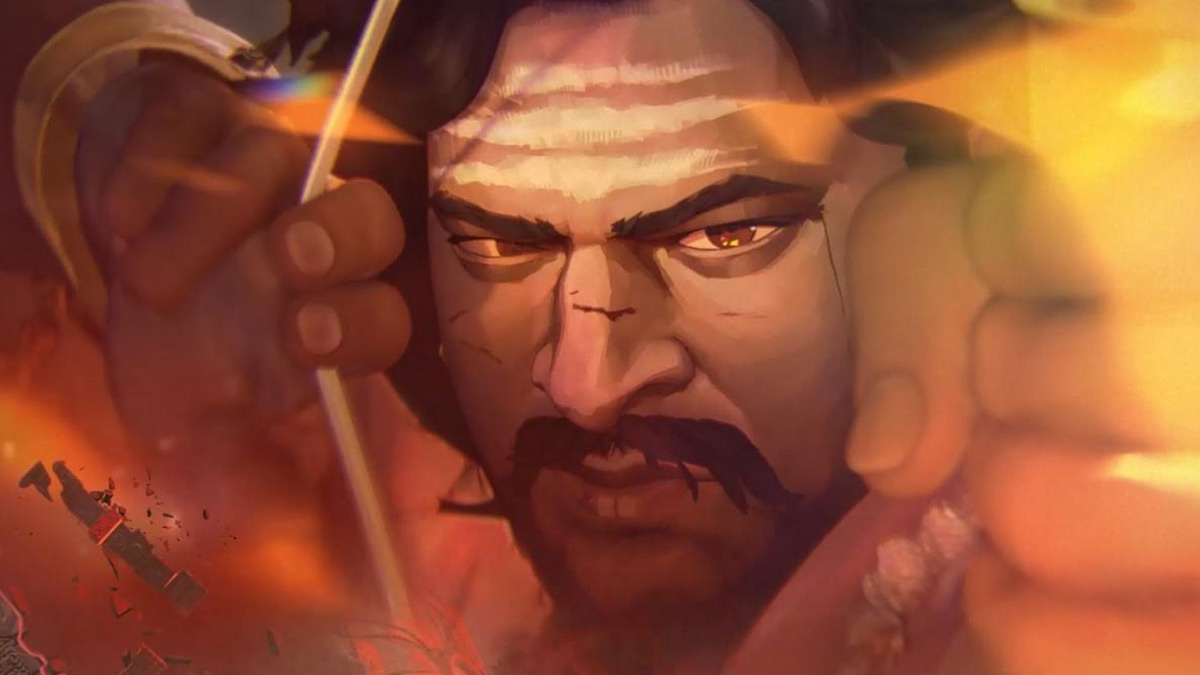
Arka Mediaworks announces that 88 Pictures, the acclaimed animation and visual storytelling studio known for its cutting-edge CGI and cinematic artistry, is on board as the animation partner for the highly anticipated Baahubali: The Eternal War, a groundbreaking two-part 3D animated feature film set in the globally beloved Baahubali universe.
Baahubali: The Eternal War represents a bold new chapter in the Baahubali saga envisioned for national and international audiences and crafted with the ambition of delivering one of India’s most ambitious and globally benchmarked animation projects to date.
88 Pictures will execute the animation production, bringing to life the film’s richly detailed worlds, epic battle sequences, and larger-than-life characters with its signature blend of artistic vision, performance-driven animation, and advanced production pipelines. Working closely with the film’s creative leadership and technical partners, the studio aims to set new benchmarks in animation quality, cinematic storytelling, and global scalability.
This animated epic follows the successful re-release of Baahubali: The Epic (the combined theatrical version of the original live-action films) on 31 October 2025 across India and the USA. During the film’s interval, legendary creator and director S.S. Rajamouli (Baahubali 1 & 2, RRR) stunned audiences with a surprise teaser for The Eternal War – Part 1. The video immediately went viral, garnering widespread national and international acclaim across LinkedIn, Instagram, and YouTube for its ambitious visual style and scale.
Produced by Arka Mediaworks and led by co-founder and CEO Shobu Yarlagadda – producer of the iconic Baahubali duology, The Eternal War brings together fantastic storytelling and cutting-edge animation.. The film is directed and written by acclaimed animation filmmaker Ishan Shukla (Schirkoa: In Lies We Trust, Star Wars: Visions – “The Bandits of Golak”) and screenplay by Scott Mosier (The Grinch). Mihira Visual Labs, the studio co-founded by Yarlagadda anchors the film’s animation, visual development, and execution.
The partnership with 88 Pictures brings significant pedigree to the project; the studio is well-regarded for its work on high-profile international titles including DreamWorks’ series Trollhunters, the HBO Max original series Gremlins: Secrets of the Mogwai, Disney’s animated short An Almost Christmas Story to name a few.
Yarlagadda shared, “We are happy to onboard 88 Pictures as the animation studio partner for our prestigious and most expensive animated film from India. We believe that their expertise and capabilities will allow us to produce a first-of-its-kind, world-class animated feature film from India.”
88 Pictures founder & CEO Milind D. Shinde said, “Baahubali changed the way cinema is perceived and became a defining milestone that turned the tide for Indian live-action filmmaking. Expanding the franchise into an entirely new universe—at a never-seen, never-done scale—through an animated feature created in India for a global audience is set to redefine how the world views Indian animation. We are truly thrilled to be part of this landmark project and to bring it to life under the visionary direction of Ishan Shukla, guided by the experience and leadership of acclaimed producer Shobu Yarlagadda.”
Shukla expressed, “Eternal War requires a level of visual and emotional precision that can only come from teams who truly understand both craft and intent. Working with 88 Pictures, alongside Mihira Visual Labs, has been a deeply collaborative experience. This association brings together technical excellence and creative sensitivity, enabling us to translate an ambitious vision into a compelling cinematic reality.”
Baahubali: The Eternal War – Part 1 is scheduled for release in 2027






