GECs
Indians Optimistic About Future: Ipsos Study


MUMBAI: 50 per cent Indians are optimistic about Indian economy and expect that the economy will be stronger in next six months, a rise of two points, according to a report by global research firm Ipsos.
According to the “Ipsos Economic Pulse of the World” study, India’s economic confidence level has declined to 58 per cent in March 2014, a decline of three points. However, India continues to hold sixth position as the most economically confident country in the world after Saudi Arabia, Sweden, Germany, China and Canada.

Only 35 per cent Indians believe that the local economy which impacts their personal finance is good, a drop of two points.
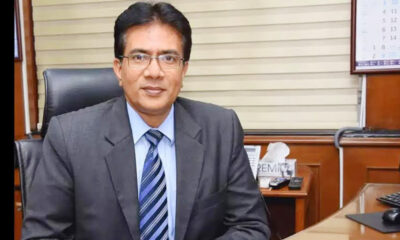
“Inflation in India increased on account of higher food costs in March, breaking a three-month easing trend, this would give RBI little scope to support the economy amid fresh signs of slowdown,” said Mick Gordon, CEO, Ipsos in India.
“However Indians are hopeful that the new central government which will come to power with fresh mandate in May will bring in stability, push economic growth and build investor confidence,” added Gordon.
The online Ipsos Economic Pulse of the world survey was conducted in March 2014 among 18,675 people in 25 countries.
Holding steady for a second month in a row, the average global economic assessment of national economies surveyed in 24 countries remains unchanged this month as 38 per cent of global citizens rate their national economies to be ‘good.’
Saudi Arabia (86 per cent) remains the top-ranked country on this measure, but runner-up countries are not far behind: Sweden (80 per cent), Germany (76 per cent), China (69 per cent), Canada (66 per cent) and India (58 per cent). Those least likely to rate their national economies as ‘good’ are in Spain (6 per cent) and Italy (6 per cent) followed by France (10 per cent), South Korea (16 per cent), Hungary (17 per cent) and Argentina (18 per cent).
Countries with the greatest improvements in this wave: Sweden (80 per cent, 11pts), Russia (39 per cent, 7pts), South Africa (21 per cent, 4pts), Canada (66 per cent, 3pts), Hungary (17 per cent, 3pts) Germany (76 per cent, 2pts) and France (10 per cent, 2pts).
Countries with the greatest declines: Egypt (36 per cent, -20pts), South Korea (16 per cent, -7pts), Japan (25 per cent, -4pts), Argentina (18 per cent, -3pts), Poland (22 per cent, -3pts), Australia (54 per cent, -3pts) and India (58 per cent, -3pts).
Six in ten Brazilians (58 per cent) indicate they predict their local economies will be stronger in the next six months. The rest of the highest-ranking countries are: India (50 per cent), Saudi Arabia (49 per cent), Indonesia (42 per cent), China (36 per cent), Argentina (33 per cent) and Egypt (33 per cent).
Only one in twenty (5 per cent) of those in France expect their future local economies will be “stronger” in the next half year, followed by Belgium (8 per cent), Hungary (12 per cent), Poland (14 per cent), and South Korea (14 per cent).







MUMBAI: Lights, camera… connection because this time, the game isn’t just about winning, it’s about who’s with you. Sony Pictures Networks India is gearing up to launch a new reality game show, Tum Ho Naa, expanding its unscripted slate with a format that promises both emotion and engagement.
The show will premiere soon on Sony Entertainment Television and stream on Sony LIV, with Rajeev Khandelwal stepping in as host. Known for his measured screen presence and selective choices, Khandelwal’s return to television adds a layer of familiarity and credibility to the upcoming format.
While specific details of the gameplay remain under wraps, the positioning suggests a reality format that leans as much on emotional resonance as it does on competition, an increasingly popular blend in Indian television, where audiences are gravitating towards content that offers both stakes and storytelling.
Khandelwal, reflecting on his return, noted that his choices have often been guided by instinct rather than convention, describing Tum Ho Naa as a project that feels “close to the heart”. His association also signals Sony’s continued focus on anchoring new formats with recognisable faces who bring both relatability and depth.
The launch comes at a time when broadcasters are doubling down on original non-fiction formats to drive appointment viewing, even as digital platforms expand parallel reach. By placing the show across both linear television and OTT, Sony appears to be aiming for a dual-audience strategy capturing traditional viewers while engaging digital-first consumers.
As the countdown to premiere begins, Tum Ho Naa positions itself not just as another game show, but as a reminder that sometimes, the biggest prize on screen isn’t the jackpot, it’s the journey shared along the way.







