Executive Dossier
‘Challenge is to scale up the production slate’ : Ravi Gupta – Mukta Arts CEO


Subhash Ghai-promoted Mukta Arts has churned out several blockbusters in the past. But it has had to wait till 2006-07 to cross Rs 1 billion in turnover, dwarfing its earlier best performance of Rs 511.63 million in 2004-05.
The plan now is to increase its production bandwidth and quickly build a large library. As part of this script, Mukta Arts has acquired a 50.01 per cent stake in Manish Goswami’s (who runs a TV content company Siddhant Cinevision) start-up movie company Red Carpet Films. A three-movie distribution deal has also been stitched with Eros for Rs 730 million.
In an interview with Indiantelevision.com’s Sibabrata Das, Mukta Arts CEO says the company is set to produce 10 films a year by 2010 and create a talent pool from its film institute Whistling Woods International before it starts playing the real big game.

Excerpts:
|
How has Mukta Arts been able to hit record revenues in 2006-07? |
||
|
Mukta Arts has a basket of 26 movies. Will we see the revenue rub-off from the remaining 14 movies even in 2007-08? |
||
|
Which is why Mukta Arts acquired a 50.01 per cent stake in start-up company Red Carpet Films? Manish Goswami already runs a successful TV content company. We expect Red Carpet Films to produce at least four movies a year. We will have another source to ramp up our production. We hope to have a film project every quarter through Red Carpet Films. We are also talking to other potential filmmakers for projects. |
||
|
Are you creating divisions inside Mukta Arts to produce movies for different segments? |
||
|
But 2007-08 doesn’t look like a scale up year for Mukta Arts? The acceleration in producing more movies will be possible once we build an infrastructure for it. Our long term vision is to create a backward integration into education which will drive up talent pool. We expect to benefit from the talent that will get created at Whistling Woods International. |
||
|
||
|
Are you widening the base of Whistling Woods International? |
||
|
Exhibition contributes to 34 per cent of the company’s revenues. Will this go up this year? |
||
|
Why did you then get into a deal with Eros for distributing three of Mukta Arts’ films? |
||
|
Many film production houses have gone in for long term deals with stars and directors. Why has Mukta Arts stayed out of it? |
||
|
Why did Mukta Arts sell out to Adlabs and exit from the digital cinema joint venture? |
||
|
Does Mukta Arts have a digital plan? |
||
|
Mukta Arts had floated a subsidiary for TV production. Is there any move to energise this company?
Mukta Telemedia is developing concepts. We are open to TV but the hurdle is that the IPR stays with broadcasters. We want to retain IPR. |
||
|
Why did Mukta Arts not pick up equity in Dubai-based Arab Venture Corporation?
We had the option in the Dubai-based company which was launching a channel but decided against it. We took it up as a turnkey project. |
||
|
Mukta Arts had a movie production deal with Zee. Is it being extended?
It was a single project deal. We have released Khanna and Iyer (featuring talent from Zee’s Cinestar Ki Khoj) and there is no plan yet to do more movies for Zee. |
||
|
Do you see movie producers holding on to rights rather than selling them for a longer period as other forms of exploitation like direct-to-home (DTH) open up?
The number of DTH subscribers are too limited now. It will take a few more years to grow. We don’t want to deny ourselves the revenues by holding on to the rights. We lock ourselves into five-year deals like we recently did with Zee. |






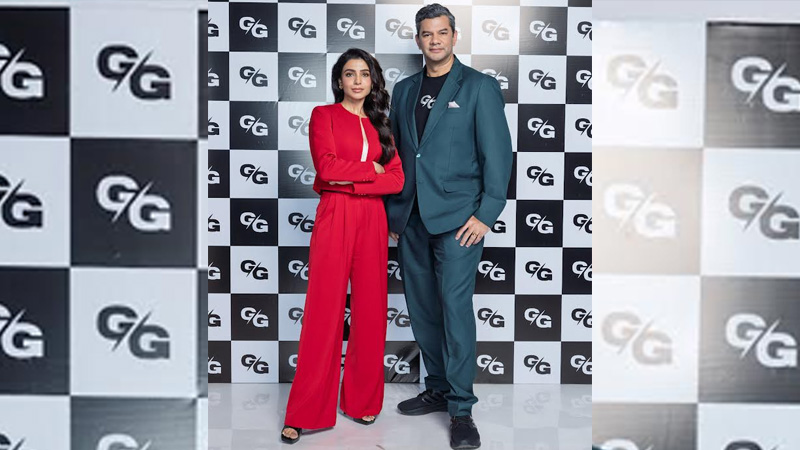
MUMBAI: Game faces on, pressure high India’s gaming ambitions are levelling up. Good Game, billed as the world’s first as-live global gaming reality show, has officially launched in India with a bold mission: to crown the country’s first Global Gaming Superstar.
Blending esports with mainstream entertainment, the show brings together competitive gaming, creativity and on-camera performance in a format that tests more than just joystick skills. Contestants will be judged on gameplay, screen presence and their ability to perform under pressure, reflecting how gaming has evolved from pastime to profession and pop culture currency.
Fronting the show are three high-profile ambassadors: actor and entrepreneur Samantha Ruth Prabhu, Indian cricket star Rishabh Pant, and gaming creator Ujjwal Chaurasia. The winner will take home Rs 1 crore ($100,000) among the largest prize pools for any Indian reality show along with the chance to represent India on a global stage.
Backed by a planned annual investment of up to Rs 100 crore, Good Game is also courting brand partners, promising a minimum reach of 500 million among India’s core youth audience. The creators position the show as a bridge between entertainment and interactive culture, offering long-format content, community engagement and commercial scale.
Auditions are now open to Indian citizens aged 18 and above, inviting amateur and professional gamers, creators and performers alike. Shortlisted candidates will be called for in-person auditions in Mumbai on 14 and 15 February, and in Delhi on 28 February and 1 March 2026.
With big money, big names and even bigger ambition, Good Game signals a shift in how India views gaming not just as play, but as performance, profession and prime-time spectacle.






