Applications
WWIL: Trai order defies revenue projection, obsolescence of carriage fees

NEW DELHI: WWIL is all set to file its rejoinder, to TDSAT, over the Trai decision to keep MSOs out of sharing the basic tier (FTA) revenue. The Zee Group cable franchise has drawn up a three-year revenue model which shows that after investing of Rs 713.4 million, MSOs would earn Rs 55.3 million, whereas LCOs, making nil investments, would walk away with Rs 500 million (Click here for details). The case will come up for hearing on 30 April, and WWIL is determined to get the order reversed. A WWIL official told indiantelevision.com that if TDSAT had once sent back the original regulation for review by Trai, it must have felt that it was inadequate or something was wrong with it. Meanwhile, Roop Sharma, president of the Cable Operators Federation of India told indiantelevision.com: “If needed we shall take the issue up with the court giving our version, but if Trai has sent back the original model intact, it has made up its mind that that model was correct.” The MSO has also said, in a document made available to indiantelevision.com, that Trai itself had said that “carriage fee” is a temporary and nebulous feature and may vanish under a digital, addressable regime such as exists in Cas. |
Interestingly, Hinduja Group cable company InCableNet has also filed a three-year projection of revenue with Trai. InCable, in its response to the Trai consultation paper on revenue sharing, had supported WWIL and demanded a 40 per cent share from the basic tier. While issuing its order last week, Trai had said that under its original revenue sharing formula, MSOs have the benefit of 100 per cent of the money coming from ‘carriage fees‘, but WWIL had in its response to the consultation paper on revenue sharing held that carriage fee is a temporary issue. |
WWIL has said: “It is submitted that against an apparent Zero investment by cable operators, they will take approx. 80 per cent of the revenue share (approx. 50.16 crore out of approximately 62.61 crore). “Broadcasters with Zero investments will get approx. 11.5 per cent of the revenue share (approximately Rs 7 crore) and MSOs with an investment of Rs 71 crore i.e. Rs 6-7 crore more than the total revenue, are to get only aproximately 8.5 per cent of the revenue share.” WWIL‘s revenue model assumptions have been made on the premise that a subscriber on an average would opt for about 15 pay channels in the CAS notified areas. The assumption, in fact, is in conformity with the actual choice made by the consumers in CAS notified areas of Delhi, Mumbai and Kolkata, where the average subscriber is choosing only about 15-16 pay channels. Accordingly, it says, the revenue projections submitted by the company reflect the actual potential earning from pay channels revenue stream as well as the basic tier revenue stream by the multi system operators / cable operators. The MSOs has sought to do away with the misgiving, as it put to indiantelevision.com, that it would be getting additional revenue from carriage fees. In fact, it has shown that Trai itself has said it is a temporary phenomenon. The presentation by WWIL has quoted the Trai amendments effected by TRAI to the Interconnect Regulation on 4th September 2006: “Regulation of carriage fee in the present circumstances is very difficult as it also implies regulation of positioning. In different parts of the country, there are different viewership patterns. The capacities of cable networks also vary a great deal. Thus, the levels of carriage fee are different in different parts of the country depending upon demand and supply gap. “Presently, there are more than 6000 multi system operators, which follow different systems of accounting. Payment of carriage fee is very often done in cash or in kind. Thus, it is not possible to find out the actual payments being made towards carriage fees. The carriage fee is a temporary phenomenon and is likely to disappear with the advent of digital cable systems.” Reiterating that carriage fees were a phenomenon of the analogue mode, as there was limited carrying capacity (roughly 60 to 70 channels) Hence, it says “It is very well known in this industry that it is only when a new channel is launched that its broadcaster makes efforts for the carriage / placement of the channels on the analogue non-addressable system by making certain payments to the networks which carry those channels.” Besides, it echoes Trai‘s own statement that There is no standard or yardstick for the charges which are paid by the broadcasters for carriage of their new channels by the cable networks. WWIL holds that at any given point of time, say if there are more than 150 channels to be carried on analogue technology in a non-addressable system, it may only be for 15 per cent to 20 per cent of the new channels that make efforts for carriage of their channels by payment of ad hoc amounts. It says that under Cas addressable digital system, when a typical MSO headend can easily carry up to 600 channels, if not more, “no one would be fool enough to even consider paying a carriage fee, even if an MSOs is fool enough to ask for it,” a senior WWIL official told indiantelevision.com. |

Applications
With 57 per cent single new users, Ashley Madison rebrands as discreet dating platform
Platform says majority of new members now identify as single
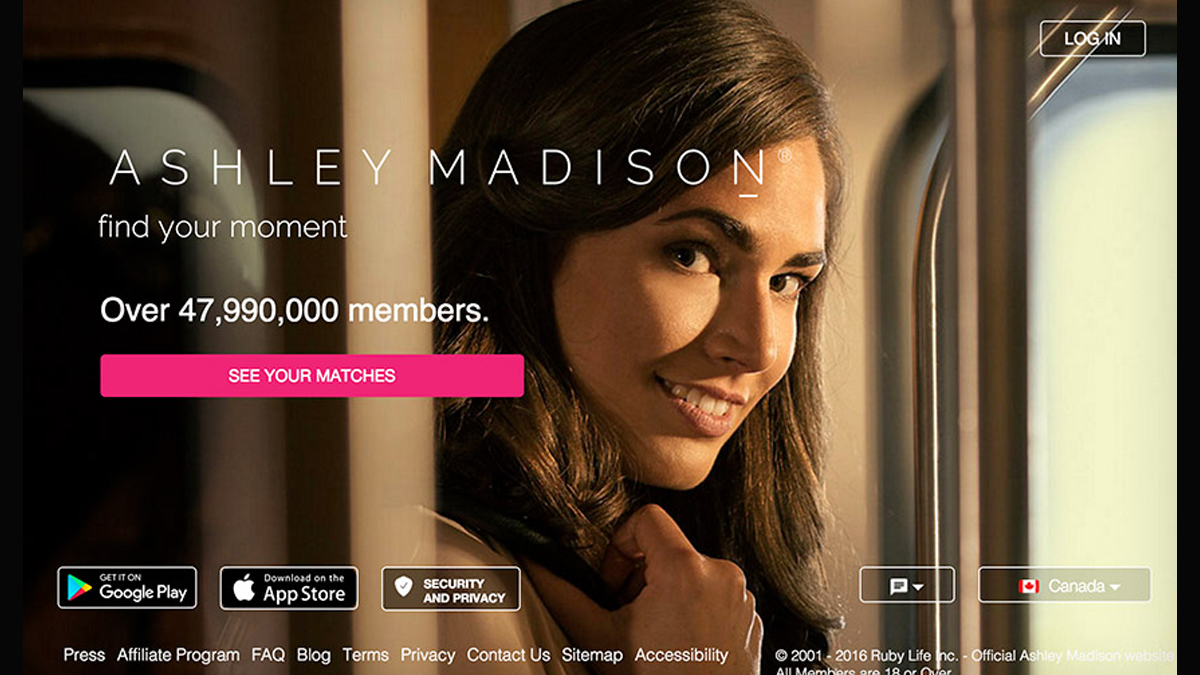
INDIA: Ashley Madison is shedding the “married-dating” label that defined it for two decades, repositioning itself as a platform for discreet dating in what it calls the post-social media age.
The rebrand, unveiled in India on 27 February, 2026, marks a structural shift in business model and identity. Once synonymous with married dating, the company now describes itself as the “premier destination for discreet dating” under a new tagline: Where Desire Meets Discretion.
The pivot is data-driven. Internal figures show that 57 per cent of global sign-ups between 1 January and 31 December, 2025 identified as single: a notable departure from the platform’s married core. The company argues that its community has already evolved beyond its original positioning.

“In an age where our lives have been constantly put on public display, privacy has become the new luxury,” said Ashley Madison chief strategy officer Paul Keable. He framed the platform’s offering as “ethical discretion” for singles, separated, divorced and non-monogamous users seeking private connections.
The shift also taps into wider digital fatigue. A global survey conducted by YouGov for Ashley Madison, covering 13,071 adults across Australia, Brazil, Canada, Germany, India, Italy, Mexico, Spain, Switzerland, the UK and the US, found mounting discomfort with hyper-public online lives.
Among dating app users, 30 per cent cited constant swiping and messaging as a source of fatigue, while 24 per cent pointed to pressure to curate public-facing profiles and early personal disclosure. Some 27 per cent said fears of screenshots or information being shared contributed to exhaustion; an equal share cited unwanted attention.
The retreat from oversharing appears broader. According to the survey, 46 per cent of adults actively try to keep most aspects of their life private online. Only 8 per cent feel comfortable sharing most aspects publicly, while 35 per cent say they are becoming more selective about what they disclose.
Ashley Madison is betting that this cultural recalibration towards controlled visibility can be monetised. By doubling down on privacy infrastructure and reframing itself around discretion rather than infidelity, the company is attempting to convert reputational baggage into a premium proposition.








