Applications
Trai Tariff Order not based on any study or rationale: Counsel

NEW DELHI: The Telecom Regulatory Authority of India (Trai) has neither conducted any study nor been able to justify the share of multi-system operators (MSOs) and local cable operators (LCOs) under the digital addressable system, according to counsel for stakeholders challenging the sector regulator‘s Tariff order.
Counsel Rajan Bakshi on behalf of United Cable Operators Welfare Association, and C S Vaidyanathan on behalf of MSO Indusind Media & Communications Ltd (IMCL) told the Telecom Disputes Settlement and Arbitration Tribunal (Tdsat) that the decision of fixing the revenue shares of MSOs and LCOs appeared to be an ad hoc decision.
According to the Trai tariff order, charges collected from the subscription in the basic service tier of 100 free to air channels for Rs 100 will be in the ratio of 55:45 and that of paid channels or bouquet of paid channels will be a maximum of Rs 150 and shall be shared in the ratio of 65:35 between MSO and the local cable operator respectively.
Bakshi pointed out that the argument given by Trai in its reply was that LCOs could download channels under the conditional access system (CAS) but the entire work of downloading had gone to MSOs under the digital addressable system. But this was erroneous for two reasons: the LCOs never downloaded these channels even earlier, and the work of seeding set-top boxes (STBs), maintaining these boxes and the service to the subscribers, collecting bills etc. still remained with the LCO and therefore his share of work had not come down.
He said under the Tariff order of 2006, the share of the LCO had been Rs 77 which had later been raised to Rs 82. Against this, the LCO will earn Rs 45 in the basic service tier (BST) and Rs 52.50 in the bouquet of paid and FTA channels.
In addition, he said that the MSO will also get to keep the carriage fee and that will not be shared with the LCO.
He said while he had no problem with the MSO keeping the carriage fee, his revenue could not be reduced to half or even less arbitrarily. He said this amounted to Trai trying to help the MSOs and the broadcasters.
During his arguments, Vaidyanathan said that a deep reading of the Tariff Order will show that while the “right hand has given the carriage fee to the MSO, the left hand has taken it away”. He said this showed “total lack of application of mind”.
While stressing that the MSOs were not for delaying DAS, he said tariff should have been fixed after proper research and study.
He said MSOs had been asked to initially give 200 television channels and later expand this to 500, without making a study of what the viewer wanted to see. Most viewers did not see more than ten channels. He described this as “micro-management without study”.
He also wanted to know why there was a regulation for 100 channels in the BST when no such stipulation had been placed on the direct-to-home (DTH) players.
Furthermore, there was no clarity on placement fee, and the revenue share between the broadcaster and the MSO.
Justifying the 65:35 share in the bouquet of FTA and paid channels, Trai had said that the extra ten per cent was meant to help the MSO pay the broadcaster.
Stressing that the regulator should be a facilitator, Vaidyanathan said at one stage in response to a remark from the bench that Trai appeared to be working to eliminate the LCOs.
Arguments on both the matters will continue tomorrow.
Tdsat will also hear petitions by MSOs Digicable Networks (India) Pvt. Ltd., Mumbai, and Delhi Distribution Company, New Delhi.
Chaiperson Justice S B Sinha and member P K Rastogi had listed the matter for 24 August but it could not be taken up for pressure of work. However, Tdsat decided to hear the matter today when it was mentioned by counsel late last week.
Tdsat has permitted news broadcasters NDTV, Time Global (holding company of Times Now), India TV, TV Today, Total TV, News Broadcaster‘s Association (NBA), Indian Broadcasting Foundation (IBF), and other broadcasters to be a party to it.
Meanwhile, the deadline for the first phase of digitisation in the four metros has been postponed by four months to 1 November.

Applications
With 57 per cent single new users, Ashley Madison rebrands as discreet dating platform
Platform says majority of new members now identify as single
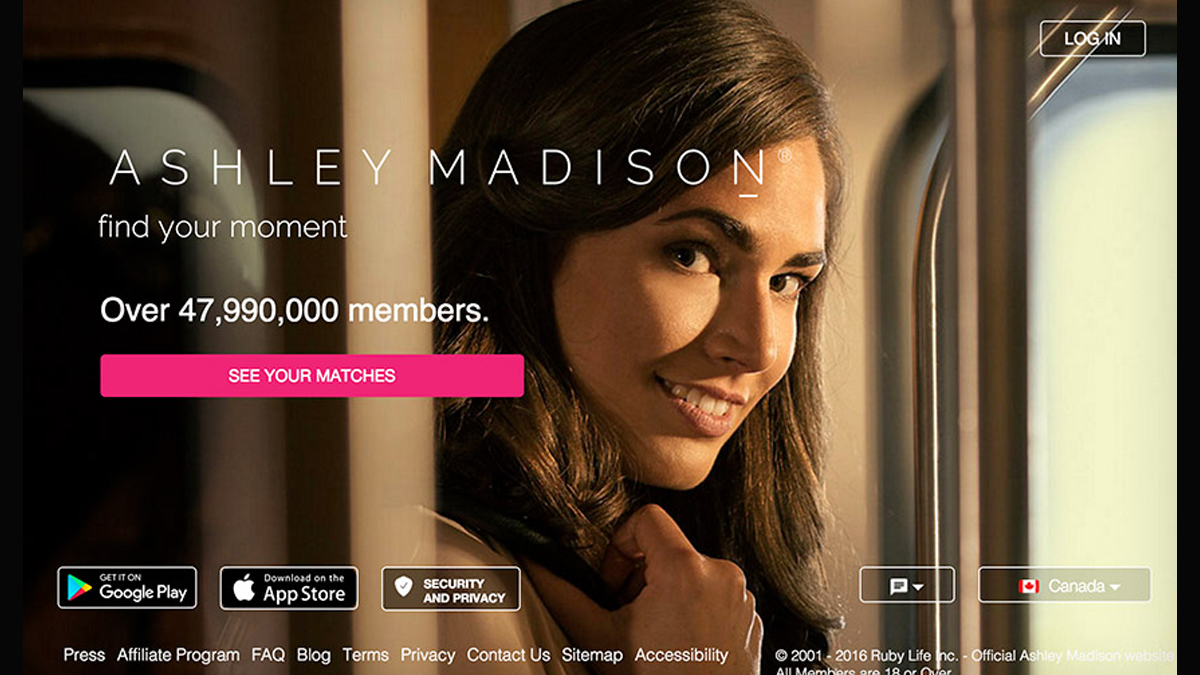
INDIA: Ashley Madison is shedding the “married-dating” label that defined it for two decades, repositioning itself as a platform for discreet dating in what it calls the post-social media age.
The rebrand, unveiled in India on 27 February, 2026, marks a structural shift in business model and identity. Once synonymous with married dating, the company now describes itself as the “premier destination for discreet dating” under a new tagline: Where Desire Meets Discretion.
The pivot is data-driven. Internal figures show that 57 per cent of global sign-ups between 1 January and 31 December, 2025 identified as single: a notable departure from the platform’s married core. The company argues that its community has already evolved beyond its original positioning.

“In an age where our lives have been constantly put on public display, privacy has become the new luxury,” said Ashley Madison chief strategy officer Paul Keable. He framed the platform’s offering as “ethical discretion” for singles, separated, divorced and non-monogamous users seeking private connections.
The shift also taps into wider digital fatigue. A global survey conducted by YouGov for Ashley Madison, covering 13,071 adults across Australia, Brazil, Canada, Germany, India, Italy, Mexico, Spain, Switzerland, the UK and the US, found mounting discomfort with hyper-public online lives.
Among dating app users, 30 per cent cited constant swiping and messaging as a source of fatigue, while 24 per cent pointed to pressure to curate public-facing profiles and early personal disclosure. Some 27 per cent said fears of screenshots or information being shared contributed to exhaustion; an equal share cited unwanted attention.
The retreat from oversharing appears broader. According to the survey, 46 per cent of adults actively try to keep most aspects of their life private online. Only 8 per cent feel comfortable sharing most aspects publicly, while 35 per cent say they are becoming more selective about what they disclose.
Ashley Madison is betting that this cultural recalibration towards controlled visibility can be monetised. By doubling down on privacy infrastructure and reframing itself around discretion rather than infidelity, the company is attempting to convert reputational baggage into a premium proposition.