Applications
Trai initiates Cas tariff regime relook

NEW DELHI: Broadcasters are already beaming with the Telecom Regulatory Authority of India issuing a consultation paper on revisiting the tariff regime in non-Cas areas, stating that the previous order is already two years old and there have been several developments, including the coming of DTH, IPTV and other platforms. One area where the broadcasters would surely look to benefit is the upward revision of 4 per cent additional increase in price that was to come into effect from 1 January last year, with the basic objective of evolving a methodology to compensate for the increase in costs, but which had been stayed by TDSAT, the sector tribunal. |
The paper says that TDSAT has now allowed Trai to take this issue up and if necessary fix new upward scaling of prices, as the previous order had remained under stay for almost one year, and even if TDSAT now vacates the stay, it would be impossible for the broadcasters to recover their dues. Trai has said that the paper, which was issued today, also takes into consideration of the experiences of all the stakeholders during the past two years of control regime, which had been imposed because the market place had not matured for competition to settle the pricing by itself. Broadcasters said this is a welcome state as the issue had been relegated to the backburners for too long. However, they did not envisage a common front of broadcasters emerging to give a unified presentation, though there would be obvious similarities of views on issues of common concern. “The costing of content is admittedly a very complex exercise and if it had been possible to work out a standard representative cost of a channel the annual review could have been possible on the basis of such cost itself,” the paper says. |
It adds: “In this manner the objective of preventing whimsical price increases in cable TV, which was at that time largely monopolistic in the absence of DTH, was facilitated. “In regard to the increase allowed on account of inflation, there can be arguments that the ceiling charges fixed by TRAI were not based on cost but on historical prices. Therefore, the increase on account of inflation to cable bills, which is not based on cost, is incorrect.” Trai has outlined the basic issue for consultation as follow: In view of the facts that there are questions of effectiveness of the existing tariff regime, and because that there have been developments over the last two years leading to increased competition from other alternative platforms, should there be a total forbearance of tariff in regard to non-CAS areas? In the event that answer to (I) is ‘yes‘, is there a need for providing checks and balances and if so what specific measures would you suggest from the point of view of providing protection to the subscribers? In case forbearance as an option is not advisable, a) Should the existing ceiling on cable charges payable by the cablesubscriber to Cable Operator, Cable Operator to MSO and MSO to broadcasters as prevailing on 26.12.2003 be allowed to continue for non-CAS areas with adjustments on an annual basis for inflation based on wholesale price indices as done presently?
|

Applications
With 57 per cent single new users, Ashley Madison rebrands as discreet dating platform
Platform says majority of new members now identify as single
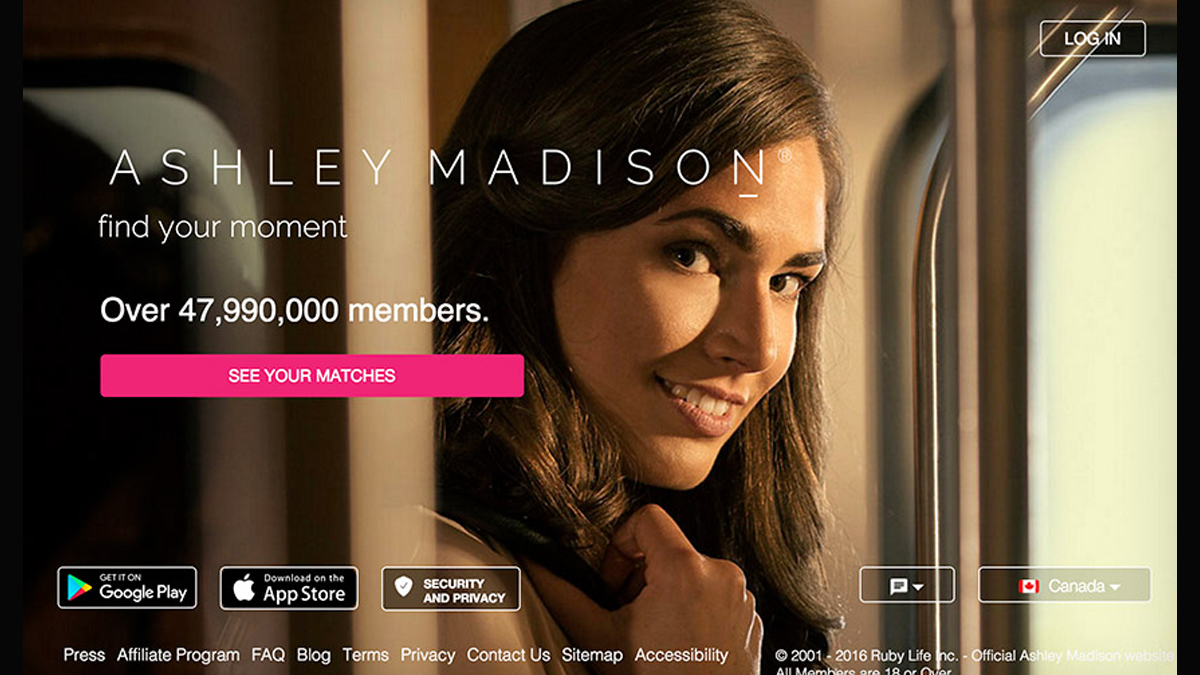
INDIA: Ashley Madison is shedding the “married-dating” label that defined it for two decades, repositioning itself as a platform for discreet dating in what it calls the post-social media age.
The rebrand, unveiled in India on 27 February, 2026, marks a structural shift in business model and identity. Once synonymous with married dating, the company now describes itself as the “premier destination for discreet dating” under a new tagline: Where Desire Meets Discretion.
The pivot is data-driven. Internal figures show that 57 per cent of global sign-ups between 1 January and 31 December, 2025 identified as single: a notable departure from the platform’s married core. The company argues that its community has already evolved beyond its original positioning.

“In an age where our lives have been constantly put on public display, privacy has become the new luxury,” said Ashley Madison chief strategy officer Paul Keable. He framed the platform’s offering as “ethical discretion” for singles, separated, divorced and non-monogamous users seeking private connections.
The shift also taps into wider digital fatigue. A global survey conducted by YouGov for Ashley Madison, covering 13,071 adults across Australia, Brazil, Canada, Germany, India, Italy, Mexico, Spain, Switzerland, the UK and the US, found mounting discomfort with hyper-public online lives.
Among dating app users, 30 per cent cited constant swiping and messaging as a source of fatigue, while 24 per cent pointed to pressure to curate public-facing profiles and early personal disclosure. Some 27 per cent said fears of screenshots or information being shared contributed to exhaustion; an equal share cited unwanted attention.
The retreat from oversharing appears broader. According to the survey, 46 per cent of adults actively try to keep most aspects of their life private online. Only 8 per cent feel comfortable sharing most aspects publicly, while 35 per cent say they are becoming more selective about what they disclose.
Ashley Madison is betting that this cultural recalibration towards controlled visibility can be monetised. By doubling down on privacy infrastructure and reframing itself around discretion rather than infidelity, the company is attempting to convert reputational baggage into a premium proposition.








