Applications
Time Broadband achieves Asian landmark in IPTV

NEW DELHI: The Mumbai-headquartered Time Broadband Services Pvt Ltd might not ring a bell immediately, but this media technology company has achieved an Asian landmark. Commissioning of a fully integrated content delivery network over H.264 AVC Revision 10 of MPEG4 format as an end-to-end solution on Mahanagar Telecom Nigam Ltd (MTNL) MPLS core and ADSL 2+ access system is the first of its kind in Asia. |
This hi-tech implementation was first recorded on 4 July 2006 at Cavalier Telecom in the USA by Kasenna, which also happens to be Time Broadband’s technology provider. “Considering the few weeks gap, the achievement of having a total integrated solution on an emerging technology is certainly a landmark in Indian broadband domain where more than 100 TV channels are to be delivered via digital multi-cast to PC and TV sets by our technology partners,” said Time Broadband MD and CEO Sujata Dev. |
What this means in layman’s language and where does the MTNL, providing services in Delhi and Mumbai, has associated with Time Broadband to provide IPTV at affordable rates to the telco’s consumers. The services are slated to be commercially flagged off later this year. According to Dev, apart from the telephony and internet services, a MTNL subscriber can also subscribe to TV channels, which can be seen either on the consumer’s PC or television set. The charges for subscribing to over 100 channels and internet services are likely to be in the region of Rs 400 per month (exclusive of charges for telephone usage). Time Broadband, which in no way is connected to the Times of India group, did a trial simulation of the technology in Mumbai on 14 January 2005, the day on which a nation-wide launch of broadband was held by MTNL and its sibling Bharat Sanchar Nigam Ltd (BSNL). On 21 November 2005, Time Broadband signed up formally with MTNL for providing the content delivery network (CDN) and do content aggregation for MTNL to enable rich-media content delivery. MTNL, set up on 1 April 1986 by the government, has a customer base of approximately 5.92 million as on March 2006. The government presently holds 56.25 per cent stake in the company. Time Broadband, where Sujata Dev’s husband Amit works as the chief tech mentor, has been initially funded by promoters and has received $12 million mix of equity and debt from global investors to move into full-scale rollout plan to 600 tri-band customers shortly in Delhi. Next stage of integration would cover uni-cast or the interactive on-demand media delivery, which is to be completed shortly. “In IPTV domain, a major challenge faced by a operator is the integration of the CDN components like middleware, content protection, video-on-demand services and head-end encoding components with set-top box. We could successfully integrate the whole system in past six months along with inputs from our technology partners,” said Dev. A unique aspect of the whole venture involving MTNL is the content protection or guarding against piracy. The content protection technology used by Time Broadband for MTNL’s IPTV service is being provided by Verimatrix and is a mix of session-based water marking and clone-detection capabilities. “Broadcasters like Star, Sony and Zee have approved the content protection system of Verimatrix as also major studios of Hollywood as a key defense against the vandalism of piracy due to the forensic tracking, which is invisible but un-destructible,” Dev explained. The video-marking added to 128 bit PKI as per AES norms would offer threshold level of protection to all content. The achievement of technical solution is one hurdle crossed but the issues of Regulation and availability of volume based H.264 STB with ‘session-based water-marking’ is still a challenge to be overcome before commercial launch, Dev adds. However, a major hurdle in rollout of IPTV services in India is the regulatory body Trai’s present ambivalence on the status of such service. Telecom Regulatgory Auhtority of India (Trai) is yet to decide whether to classify IPTV as a television service or make it part of telecom. Both MTNL and Bharat Sanchar Nigam Ltd (the biggest telecom service provider in India in terms of reach) control over 95 per cent of last mile The remaining miniscule is with some private players, which are finding themselves handicapped to introduce large scale broadband services in the country in the absence of last mile connectivity. Though the set-top box needed to access the MTNL Tri-band service is being imported by Time Broadband for approximately $ 160, in the initial stages the boxes are being subsidised to catch consumers. Time Broadband would build and own all the elements of this massive city-wide content delivery network with service delivery platform to operate uni-cast and multi-cast services of rich-media, apart from critical sub-system and peripheral devices. |

Applications
With 57 per cent single new users, Ashley Madison rebrands as discreet dating platform
Platform says majority of new members now identify as single
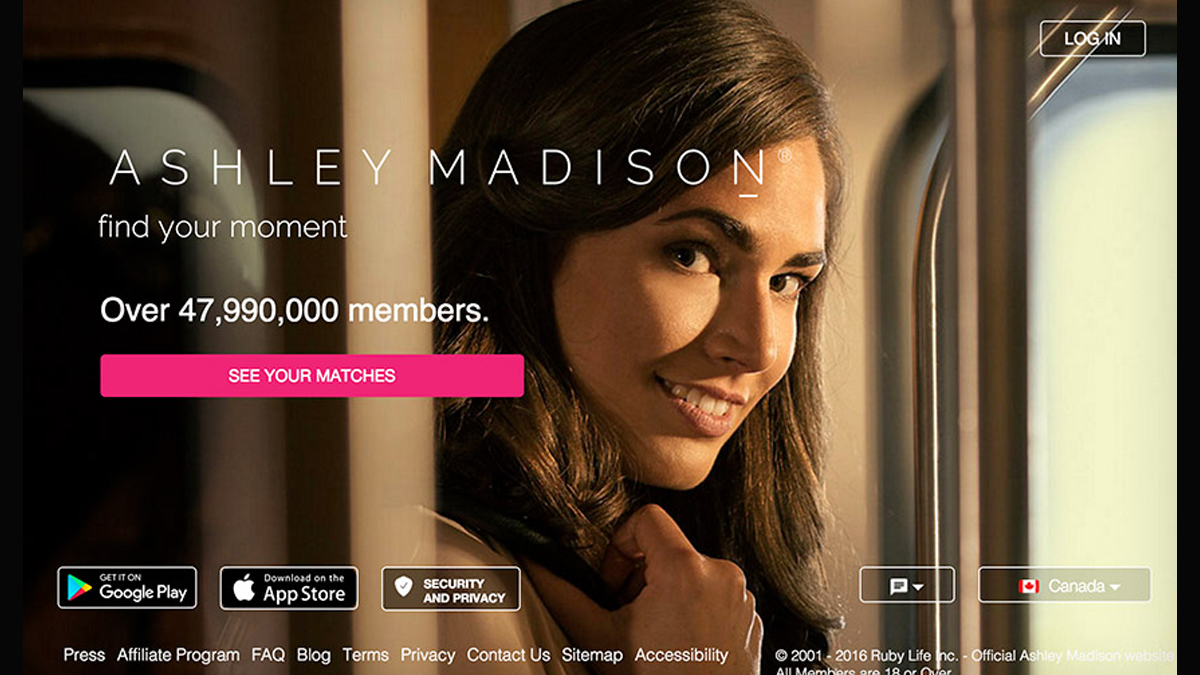
INDIA: Ashley Madison is shedding the “married-dating” label that defined it for two decades, repositioning itself as a platform for discreet dating in what it calls the post-social media age.
The rebrand, unveiled in India on 27 February, 2026, marks a structural shift in business model and identity. Once synonymous with married dating, the company now describes itself as the “premier destination for discreet dating” under a new tagline: Where Desire Meets Discretion.
The pivot is data-driven. Internal figures show that 57 per cent of global sign-ups between 1 January and 31 December, 2025 identified as single: a notable departure from the platform’s married core. The company argues that its community has already evolved beyond its original positioning.

“In an age where our lives have been constantly put on public display, privacy has become the new luxury,” said Ashley Madison chief strategy officer Paul Keable. He framed the platform’s offering as “ethical discretion” for singles, separated, divorced and non-monogamous users seeking private connections.
The shift also taps into wider digital fatigue. A global survey conducted by YouGov for Ashley Madison, covering 13,071 adults across Australia, Brazil, Canada, Germany, India, Italy, Mexico, Spain, Switzerland, the UK and the US, found mounting discomfort with hyper-public online lives.
Among dating app users, 30 per cent cited constant swiping and messaging as a source of fatigue, while 24 per cent pointed to pressure to curate public-facing profiles and early personal disclosure. Some 27 per cent said fears of screenshots or information being shared contributed to exhaustion; an equal share cited unwanted attention.
The retreat from oversharing appears broader. According to the survey, 46 per cent of adults actively try to keep most aspects of their life private online. Only 8 per cent feel comfortable sharing most aspects publicly, while 35 per cent say they are becoming more selective about what they disclose.
Ashley Madison is betting that this cultural recalibration towards controlled visibility can be monetised. By doubling down on privacy infrastructure and reframing itself around discretion rather than infidelity, the company is attempting to convert reputational baggage into a premium proposition.