Executive Dossier
“The country cannot afford to have tens of millions of bad STBs deployed”

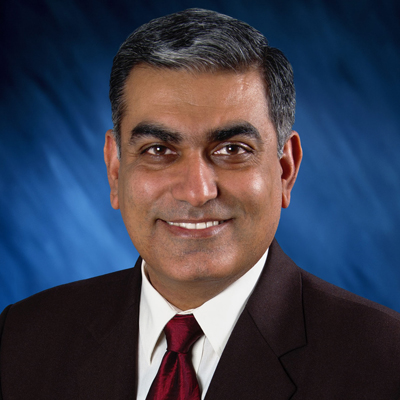
For a company that was founded just about 23 years ago, Broadcom Corp has indeed come a long way. Founded by a student-professor combo, it is expected to announce financial toplines in excess of $8.5 billion this year. But more than that it is a market leader in providing chips for technologies such as enterprise networking, set-top boxes, and mobile connectivity functions.
Earlier this year Broadcom president & CEO Scott McGregor had announced that both China and India are critical markets for the company at a conference in Shanghai. He had highlighted that Broadcom’s investments in research and development in India are probably the highest outside of the US.

Broadcom executive vice-president & general manager of broadband communications group Daniel Marotta had stated at the same conference that the company sees huge opportunities in the digitisation of the Indian cable TV business and that it had developed a special chip for the market as the ARPUs in the country are low.
Indiantelevision.com’s Sandhya Sutodia got in touch with Broadcom India managing director Rajiv Kapur to get further insights into how he views the progress of India’s government mandated digitisation and the opportunities available to his firm.
Excerpts:
What is the current state of digitisation in the country and Broadcom’s role in it?
Digitisation has just about begun with phase III and IV still ahead of us. The new government seems to be putting its focus on various forward looking initiatives. We expect digitisation to continue with a high momentum.
As Broadcom, we have prepared a variety of STB platforms providing a range of solutions for operators to offer to their subscribers. These range from the very basic cost sensitive SD zappers to entry HD platforms to higher end PVR and server class solutions. We offer several unique market differentiating features in each of these platforms, allowing subscribers and operators to enjoy the best of digital TV.
Broadcom also invests heavily in hybrid solutions enhancing live TV with interactivity and over the top content and applications. Our lowest end SD solution offers USB and Ethernet interfaces at market competitive prices.
We have a host of suppliers ready with STBs designed, both in the country and abroad, ready to ship as operators place future orders for the next wave of digitisation they are preparing for.
How do you see the growth in the next two years?
We expect the high growth in STB sales to continue beyond the digitisation deadlines. First reason is that subscribers may stagger their purchases of STBs for their second and third TVs in some homes. Then, continued sales of TVs drives a healthy demand for more STBs in a market where TVs are always recycled to another room or home. Third, and most importantly, operators will continue to catch up with additional technologies and applications we invent on a continuous basis to drive improved user experiences and in turn higher retention and ARPUs for themselves.
How are the dynamics of the business changing since the past couple of years in the Indian market?
One visible change is a rising interest in local design and manufacturing. We are finally seeing supplies for the national optical fiber network (NOFN) which demanded a large percentage of made in India products. Small entrepreneurs are stepping up to design and manufacture electronics products locally. Operators are showing more acceptance of locally manufactured products.
What are Broadcom’s recent innovations and solutions for the cable industry?
We have implemented an almost complete turnkey solution for the low end cable TV market which includes a ready hardware and software stack to go along. This is so optimised that the memory footprint is very small, thus reducing costs. Additionally, market differentiating features like fast channel change have been added to enhance the user experiences in a digital world.
We also invested in a range of STB solutions that have a unique technology that allows operators to manage their networks with high quality of service. The end-users benefit with better video and service at lower costs and faster response times.
We have also invented new architectures for broadband on coax that are designed for deep finer, low density networks. This lowers costs of installation for operators so more customers can enjoy high speed broadband despite lack of subscriber density.
Please share some of the latest developments at Broadcom for the STB space?
We keep innovating on market differentiating features. With a large R&D team in India, we take advantage of the local resources to invent new features for the country. We named a few above. There are many others. For example, we automatically can adjust the volume of programs to levelize them across ads or channels. Or we can automatically reformat video received on live TV for viewing on a mobile screen in the same room or for take away. Many more examples exist.
What concerns you about digitisation in India over the recent past?
Rapid paced digitisation is always risky. Additionally, quality of hardware and services are critical, not just for now but for a long life of hardware ahead. I am particularly concerned about some of the suppliers that are shipping into India.
For example, most STBs in India face a high risk of lightning or surge burn out. Operators have been experiencing this. We strongly recommend all STBs imported into the country be specified to meet a high protection standard to reduce risks and damage commonly seen here.
Additionally, the harsh conditions in India make it important that performance of each STB is predictable and consistent for years to come despite physical damage, moisture etc. Legacy CAN tuners in TVs are known to have a varying performance from STB to STB, and over the years.
The country cannot afford to have tens of millions of bad quality STBs deployed. We cannot waste energy and resources to replace STBs in a few years. The quality of every STB is critical.



MUMBAI: Game faces on, pressure high India’s gaming ambitions are levelling up. Good Game, billed as the world’s first as-live global gaming reality show, has officially launched in India with a bold mission: to crown the country’s first Global Gaming Superstar.
Blending esports with mainstream entertainment, the show brings together competitive gaming, creativity and on-camera performance in a format that tests more than just joystick skills. Contestants will be judged on gameplay, screen presence and their ability to perform under pressure, reflecting how gaming has evolved from pastime to profession and pop culture currency.
Fronting the show are three high-profile ambassadors: actor and entrepreneur Samantha Ruth Prabhu, Indian cricket star Rishabh Pant, and gaming creator Ujjwal Chaurasia. The winner will take home Rs 1 crore ($100,000) among the largest prize pools for any Indian reality show along with the chance to represent India on a global stage.
Backed by a planned annual investment of up to Rs 100 crore, Good Game is also courting brand partners, promising a minimum reach of 500 million among India’s core youth audience. The creators position the show as a bridge between entertainment and interactive culture, offering long-format content, community engagement and commercial scale.
Auditions are now open to Indian citizens aged 18 and above, inviting amateur and professional gamers, creators and performers alike. Shortlisted candidates will be called for in-person auditions in Mumbai on 14 and 15 February, and in Delhi on 28 February and 1 March 2026.
With big money, big names and even bigger ambition, Good Game signals a shift in how India views gaming not just as play, but as performance, profession and prime-time spectacle.