Applications
Tata Sky begins publicity, trade activities

MUMBAI: Aasman se seedhe aapke ghar (straight to your home from the sky). This could well be the tag line for Tata Sky‘s proposed DTH service, slated to be launched June-July 2006. So what‘s new? Well, Tata, “India‘s most trusted company”, and Star, “India‘s No. 1 entertainment company,” feel the people of India should be told that the two entities have “come together to change the way in which television is watched in India.” And, Tata Sky has started the process of telling the tale of world‘s “most advanced” DTH service — one must admit quite engagingly so. |
The 40-slide presentation being made by Tata Sky to the trade affiliates, on the other hand, has upset the cable fraternity. At one place, to hammer home the point that cable operators get eliminated in a DTH service, some funny lines have been used (cablewallah to consumer: I don‘t have electricity, you can‘t watch TV or I fight with the channel for non-payment, you pay the price — here goes the cricket match) that presumably have not gone down well with cable ops of Mumbai. |
The text points out that a consumer need not “suffer a poor quality cable service” as he has the right to choose channels he wants to watch and pay only for those. “Could you ever imagine a choice like?” the text eggs on a consumer, who‘s then told after sales service means “problems are no problems.” Apart from the high quality programming and DVD-type visual experience, free onsite installation of the hardware and maintenance under warranty are thrown in as added sops. For the gaming freaks, Tata Sky promises a personal games parlour where new games will be made available periodically for the whole family at no extra cost. The presentation also goes to list step-by-step the installation process and how the digicomp is compatible with most varieties of TV sets. Unstated however, are the costs involved for a consumer, which is also an indication that the various packages, probably, are still being worked out. |

Applications
With 57 per cent single new users, Ashley Madison rebrands as discreet dating platform
Platform says majority of new members now identify as single
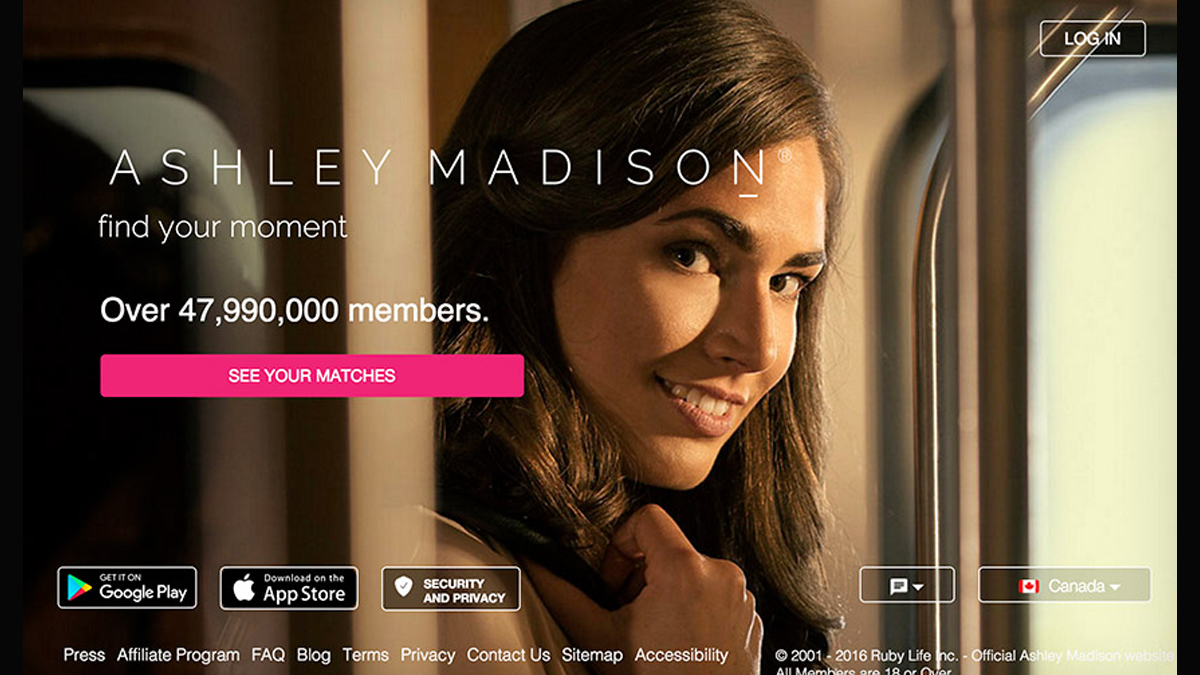
INDIA: Ashley Madison is shedding the “married-dating” label that defined it for two decades, repositioning itself as a platform for discreet dating in what it calls the post-social media age.
The rebrand, unveiled in India on 27 February, 2026, marks a structural shift in business model and identity. Once synonymous with married dating, the company now describes itself as the “premier destination for discreet dating” under a new tagline: Where Desire Meets Discretion.
The pivot is data-driven. Internal figures show that 57 per cent of global sign-ups between 1 January and 31 December, 2025 identified as single: a notable departure from the platform’s married core. The company argues that its community has already evolved beyond its original positioning.

“In an age where our lives have been constantly put on public display, privacy has become the new luxury,” said Ashley Madison chief strategy officer Paul Keable. He framed the platform’s offering as “ethical discretion” for singles, separated, divorced and non-monogamous users seeking private connections.
The shift also taps into wider digital fatigue. A global survey conducted by YouGov for Ashley Madison, covering 13,071 adults across Australia, Brazil, Canada, Germany, India, Italy, Mexico, Spain, Switzerland, the UK and the US, found mounting discomfort with hyper-public online lives.
Among dating app users, 30 per cent cited constant swiping and messaging as a source of fatigue, while 24 per cent pointed to pressure to curate public-facing profiles and early personal disclosure. Some 27 per cent said fears of screenshots or information being shared contributed to exhaustion; an equal share cited unwanted attention.
The retreat from oversharing appears broader. According to the survey, 46 per cent of adults actively try to keep most aspects of their life private online. Only 8 per cent feel comfortable sharing most aspects publicly, while 35 per cent say they are becoming more selective about what they disclose.
Ashley Madison is betting that this cultural recalibration towards controlled visibility can be monetised. By doubling down on privacy infrastructure and reframing itself around discretion rather than infidelity, the company is attempting to convert reputational baggage into a premium proposition.







