Components
ScaT 2001: Cable exhibitors dominate

Cable & satellite TV professionals and entrepreneurs made their annual pilgrimage to Indian cable TV hardware and software trade show ScaT India 2001, held at the World Trade Centre in Mumbai from 6 to 8 November. ScaT India 2001, organised by the founder of trade magazine Satellite & Cable TV and in its tenth year, had more than 100 Indian and foreign exhibitors – ranging from manufacturers, to traders and retailers – strutting their wares.
According to SCaT Media Consultancy director Dinyar Contractor the trade show did better than was expected considering the gloomy economic mood prevailing currently.
Says Contractor: “There were around 11,000 visitors this year. Despite the ongoing war in Afghanistan that has led to a general global slowdown, only two participants pulled out and the throngs crowding the stalls indicate the success of the show.”

The highlight of the show was the number of fibre and cable exhibitors at the trade show. An observer pointed out that cable companies had taken up almost 60 per cent of the exhibition space. Cable -both coaxial and optical fibre from leading foreign cable companies like Texas Cable, LG com, CommScope, Leader, Strongcom, Triscope, Scientific, Tascom, Beldon, Reinsicomm, Henrich, U-Jin, Worldsat Atlas, Hitachi, Harmony CommStar, Winnercom and a few Indian cable manufacturers like Finolex Cables, Ratansiri Communications, NG Technologies Ltd and Aksh Optifibres – was on display and these stalls were the most packed with trade visitors. One of the cable exhibitors was heard saying: “This trade show has been like a gold mine for us. The offtake for cable – both optical and coaxial is going up – as cable TV penetration rises in India and cable TV networks upgrade their networks.” Another highlight of the trade show, according to some visitors, were the addressable set top boxes (some say these have been developed using Chinese kits) at the Catvision (the Dalvi brand) which are priced aggressively at Rs 3,500. There were some first timers too. Canadian company Lindsay Electronics that offers complete broadband and communication solutions and China headquartered Sichuan Jiuzhou Electronic Technology that manufactures a complete range of digital satellite receivers, handhold level meters, antennas, optical transmitters, workstations and allied gadgets, displayed their products for the first time in India. Both said they were looking for tie-ups with Indian distributors and dealers. According to Lindsay Electronics marketing director worldwide Dave Atman: “There are changes taking place in telephony, a transition towards digital on the television front in India. It is a very attractive proposition. I am happy to mark my presence at Scat 2001 because by 2003 India will be The Market.” Philips Broadband Networks, a leading manufacturer of broadband communication transport solutions capable of delivering video, voice and interactive data services too had a number of products on display. Modern Communication & Broadcast Systems and Space Link were the two dish antenna manufacturers at the show.
Other stalls that drew crowds were those dedicated to passives such as connectors, adapters, drop fittings, amplifiers, splitters, couplers; instrumentation products such as optical power meters, field strength meters; headend and distribution equipment such as power supplies, extenders, receivers, and channel modulators. The exhibition was dotted with a handful of Chinese and Korean manufacturers displaying a variety of cost effective equipment for the satellite and cable industry. Considering the number of visitors they drew, it would not be surprising if they offer stiff competition to established European and American manufacturers with their cheaper models. Print media related to the cable and satellite industry was also represented by Convergence Digest, Satellite @ Internet India, Satellite and Cable TV and Television Asia. Among new products on display were software accounting packages and programs for cable operators, which enable maintenance of cable TV operators‘ subscriber bases.
Videonics represented by Lachmi Enterprise showcased an entire line of video editing equipment and ASK Infosys displayed its Telemagic, Cinemagic, Gamemagic and Moneymagic range of software aimed at the cable TV operators. Several broadcast companies also marked their presence at the show with large display pavilions. Prominent among them were: Zee Telefilms, ARY TV, B4U Movies, Deutsche Welle and BBC World. Most broadcasters said that their presence at the show was mainly to create awareness among multi system operators (MSOs) and cable operators about the bouquets they had on offer. |




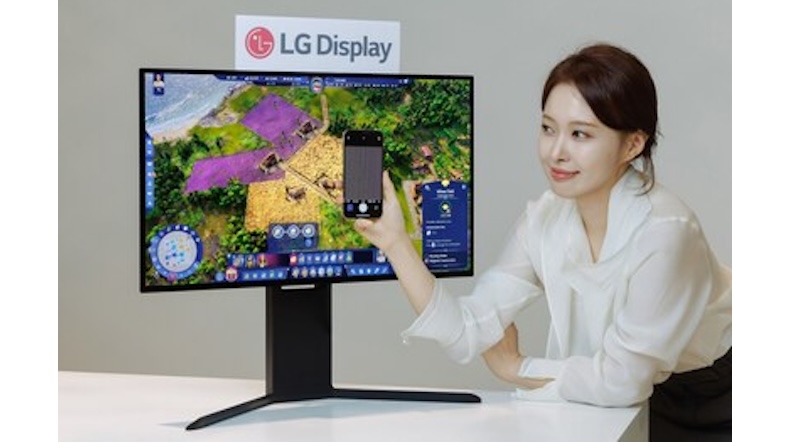
SEOUL: In the eternal battle between gamers demanding lightning-fast refresh rates and professionals craving pixel-perfect clarity, LG Display reckons it has found détente. The South Korean display titan is unveiling the world’s first 27-inch 4K OLED monitor panel that marries an RGB stripe structure with a blistering 240Hz refresh rate—a combination previously thought incompatible, like oil and water or fashion and function.
The breakthrough lies in how the pixels are arranged. RGB stripe structure lines up red, green and blue subpixels in neat rows, banishing the colour bleeding and fringing that plague lesser screens when you park your nose close to the display. It is the difference between reading crisp text and squinting at a rainbow-tinged mess. OLED panels using this method existed before, but they topped out at a sluggish 60Hz—fine for spreadsheets, useless for fragging opponents in first-person shooters.
LG Display’s engineering wizardry changes the game. By cranking the refresh rate to 240Hz whilst maintaining that pristine RGB stripe layout, the company has produced a panel that works equally well for colour-critical design work and twitchy gaming sessions. Better still, the panel incorporates Dynamic Frequency & Resolution technology, letting users toggle between ultra-high-definition at 240Hz and full-HD at a frankly ludicrous 480Hz. That is fast enough to make your eyeballs sweat.
The specs are suitably impressive: 160 pixels per inch for exceptional detail, optimised performance for Windows and font-rendering engines, and colour accuracy that should please the Photoshop brigade. LG Display achieved this by boosting the aperture ratio—the percentage of each pixel that actually emits light—and applying what it coyly describes as “various new technologies.” Translation: years of R&D and probably some sleepless nights.
Existing high-end gaming OLED monitors have relied on RGWB structures (which add a white subpixel) or triangular RGB arrangements. Both work, but neither delivers the sharpness that professionals demand. LG Display’s new stripe pattern is tailored specifically for monitor use, a recognition that staring at a screen from two feet away demands different engineering than watching telly from across the room.
The company is betting big on this technology, targeting the high-end monitor market where it already commands roughly 30 per cent of global OLED panel production. Among gaming OLED panels in mass production, LG Display claims world-leading specs across refresh rate, response time and resolution—a trifecta that sounds like marketing bluster until you check the numbers.
“Technology is the foundation of leadership in the rapidly growing OLED monitor market,” says LG Display head of the large display business unit Lee Hyun-woo. He promises to keep pushing “differentiated technologies compared to competitors”—corporate-speak for staying ahead of Chinese rivals snapping at LG’s heels.
The new panel will debut at CES 2026 in Las Vegas, where LG Display plans to woo customers and expand its lineup. Initial rollout targets high-end gaming and professional monitors, the sweet spot where people actually pay premiums for superior screens rather than settling for whatever came with their laptop.
Whether this technology reshapes the monitor market or remains a niche luxury depends on two things: pricing and production scale. But for now, LG Display has pulled off something rare—a genuine technical leap that solves a real problem. Gamers get their speed, designers get their clarity, and LG gets bragging rights. In the cutthroat world of display tech, that counts as a win.






