Applications
Revenue generation key for making 3G services impactful: Frost & Sullivan

MUMBAI: After having paid close to $16 billion in license fees, the telecom industry in India needs to invest a further $6-8 billion in capital expenditure to launch 3G.
Frost and Sullivan expects the Indian 3G market to have the potential for 80 million subscribers within three years of launch.
The key to make 3G services impactful and adopted by 80 million subscribers would be to generate revenues from advanced services like mobile data, video, and other transformative services.
Conventional solutions are prohibitively expensive and do not scale well because they require building a separate infrastructure for each new service. The challenges exist in two key areas for mobile network operators. First is to support both increased subscriber numbers and the explosion in new services, which will need an upgrade in their core infrastructure to the industry’s new architectural framework for delivering Internet Protocol (IP) multimedia services over mobile networks – IMS. Secondly, mobile network operators need to respond to the demand for rich multimedia content and exploit emerging business opportunities associated with it.
Frost and Sullivan director, ICT Practice APac Jayesh Easwaramony says, “Worldwide, we are in phase 2 of 3G, where the technology is mature, cost per bit has come down, and the smartphone revolution has increased the data revenues of operators globally. India is entering phase 2 of its 3G market evolution, where it is moving from the subscriber acquisition to subscriber retention mode. The combination of these two phases means that Indian operators would do in the next 10 months what the world did over 10 years. They have to make the data strategy work by combining operational best practices and India-specific innovation to justify the business case.”
Frost Sullivan and F5 Networks, which is an application delivery solution provider, presented a two-city Executive MindXchange titled Innovation and Transformation – The Road Ahead for Next-Generation Mobile Operators in India in Delhi and Mumbai. This MindXchange aimed to create a platform to discover how one can protect their existing infrastructure investments, enjoy sustainable cost savings, and while at the same time optimise the delivery of profitable new services.
F5 networks director of systems engineering, Asean and India Lim Chin Keng says, “Overcoming challenges from increasing multimedia services and on-demand content, mobile operators require intelligence in managing context and services. The aim of F5’s Intelligent Service Controller is to empower operators with the needed capabilities and versatility to rapidly create, adapt, scale, and manage new services to enforce more effective policies and satisfy changing subscriber demands. The revenue opportunities from speed and flexibility of delivering new services to groups of subscribers; their improved service quality and experience are certainly worth pondering.”

Applications
With 57 per cent single new users, Ashley Madison rebrands as discreet dating platform
Platform says majority of new members now identify as single
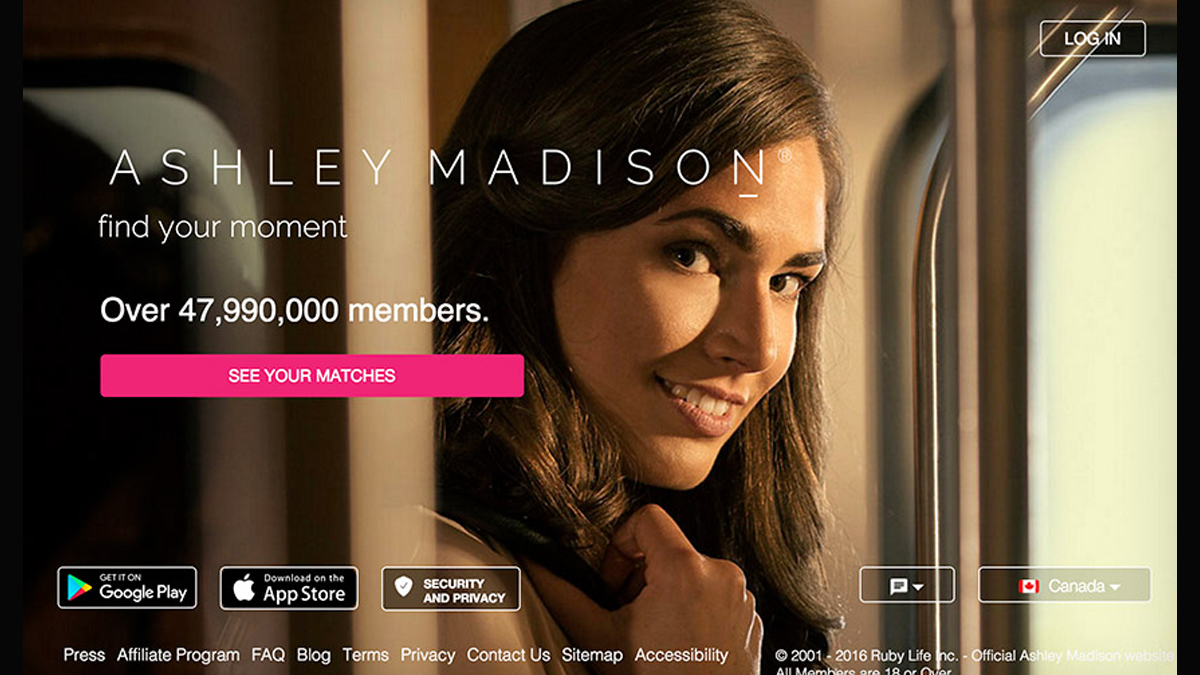
INDIA: Ashley Madison is shedding the “married-dating” label that defined it for two decades, repositioning itself as a platform for discreet dating in what it calls the post-social media age.
The rebrand, unveiled in India on 27 February, 2026, marks a structural shift in business model and identity. Once synonymous with married dating, the company now describes itself as the “premier destination for discreet dating” under a new tagline: Where Desire Meets Discretion.
The pivot is data-driven. Internal figures show that 57 per cent of global sign-ups between 1 January and 31 December, 2025 identified as single: a notable departure from the platform’s married core. The company argues that its community has already evolved beyond its original positioning.

“In an age where our lives have been constantly put on public display, privacy has become the new luxury,” said Ashley Madison chief strategy officer Paul Keable. He framed the platform’s offering as “ethical discretion” for singles, separated, divorced and non-monogamous users seeking private connections.
The shift also taps into wider digital fatigue. A global survey conducted by YouGov for Ashley Madison, covering 13,071 adults across Australia, Brazil, Canada, Germany, India, Italy, Mexico, Spain, Switzerland, the UK and the US, found mounting discomfort with hyper-public online lives.
Among dating app users, 30 per cent cited constant swiping and messaging as a source of fatigue, while 24 per cent pointed to pressure to curate public-facing profiles and early personal disclosure. Some 27 per cent said fears of screenshots or information being shared contributed to exhaustion; an equal share cited unwanted attention.
The retreat from oversharing appears broader. According to the survey, 46 per cent of adults actively try to keep most aspects of their life private online. Only 8 per cent feel comfortable sharing most aspects publicly, while 35 per cent say they are becoming more selective about what they disclose.
Ashley Madison is betting that this cultural recalibration towards controlled visibility can be monetised. By doubling down on privacy infrastructure and reframing itself around discretion rather than infidelity, the company is attempting to convert reputational baggage into a premium proposition.







