Applications
Reliance pre-empts Nokia, Vodafone, launches handsets at Rs 777 and above

NEW DELHI: Just days ahead of Nokia launching its low-cost handset and within a week of Vodafone getting clearance to pitchfork itself into the Indian market, Indian telephony major Reliance Communications announce the launch of its cheapest ever handset at just Rs 777 a set, with no fine-print and on hidden costs. However, this is not the launch of the Classic range, but re-pricing of the existing sets already selling, as became clear. Decidedly a major thrust at penetrating deep the rural market and also picking up the low-end subscribers in urban areas, SP Shukla, president, Personal Business, Reliance Communications said through a countrywide videoconference that this would truly revolutionise the Indian wireless telephony sector. |
“Never before and never again,” Shukla said would such an unbelievably priced handset be made available. “This is for the moment the lowest price anyone can afford, even Reliance,” Shukla said in response to a question from scribes in Delhi. The videoconference had wired in scribes from Kolkata, Bhubaneshwar, Lucknow, Bhopal and Delhi, while the Mumbai press was told this earlier in a press conference this afternoon. Expectedly, Shukla would not budge on issues of investment levels, but said that there would be three in a range of Classic brand handset, the lowest of which would be priced at Rs 777, and the highest at Rs 888. Shukla said that subscribers are free to choose the tariff plan they wanted and accordingly, the initial price offer would fetch benefits as a catch-fast measure by reliance. The benefits could be in terms of free minutes or length of validity, he added. “Reliance has been the first with its new business initiatives in most things related to mobile telephony, whether it be the One India plan, Capital City offer, lowest tariff rates and so forth, and competitors have copied our innovations, Shukla said. |
“So the obvious question was: where could we score higher, and taking cues from journalist friends, who know the market pulse best, we felt that we ought to give a handset at a price which makes people decide on the spot to go for it,” he explained. The additional cost a subscriber would need to make was the SIM card, which could be as low as just Rs 99, with a talk time of Rs 100, Sajiv Kanwar, CEO, Dlhi and Haryana explained to scribes in Delhi. One question from Kolkata seemed to have upset Shukla, and that was of his claim that it is the second largest handset marketer in the country and its sales bettered the next three sellers put together. Asked who they were and what was Reliance‘s annual and month-on-month sales, Shukla refused to divulge what he called sensitive business details, but held that its sales last year had been 12 million handsets. Asked what the intriguing “never before and never after” price meant, and whether Reliance, as usual, would soon raise the price, Shukla said: “I do not make predictions, all I can say is that if you are planning to buy my set, buy it fast.” Classic is a brand name, he told and company sources said that of the 16 in the Classic range, some were manufactured in China, some in Taiwan and others elsewhere. Reliance officials fought the ‘reliability factor‘ of Chinese goods, saying that even the best brand name in the world is manufactured in China. “The reliability of these sets come with the reliability of Reliance as a brand, I can assure you,” Kanwar told media persons here. Asked why Reliance does not get into the manufacturing of handsets, Kanwar said that it did not make business sense, because then the company would have to manufacture for the entire available space in the Indian market to get the economies of scale to bring down prices further than this. To an query from Bhubaneswar whether many features had been cannibalised to reach this unbelievable price, Shukla held that these phones have all the feature that there are in any mobile and there are no reductions. “We looked at the market and leveraged economies of scale and passed on the benefit to the customer,” Shukla said when asked how Reliance could give handsets at such a price. Asked the obvious questions whether Reliance was pre-empting the targets of Nokia and Vodafone, Shukla said that Reliance has only one target, service to the subscribers, and parried issues of competition from the foreign players. |

Applications
With 57 per cent single new users, Ashley Madison rebrands as discreet dating platform
Platform says majority of new members now identify as single
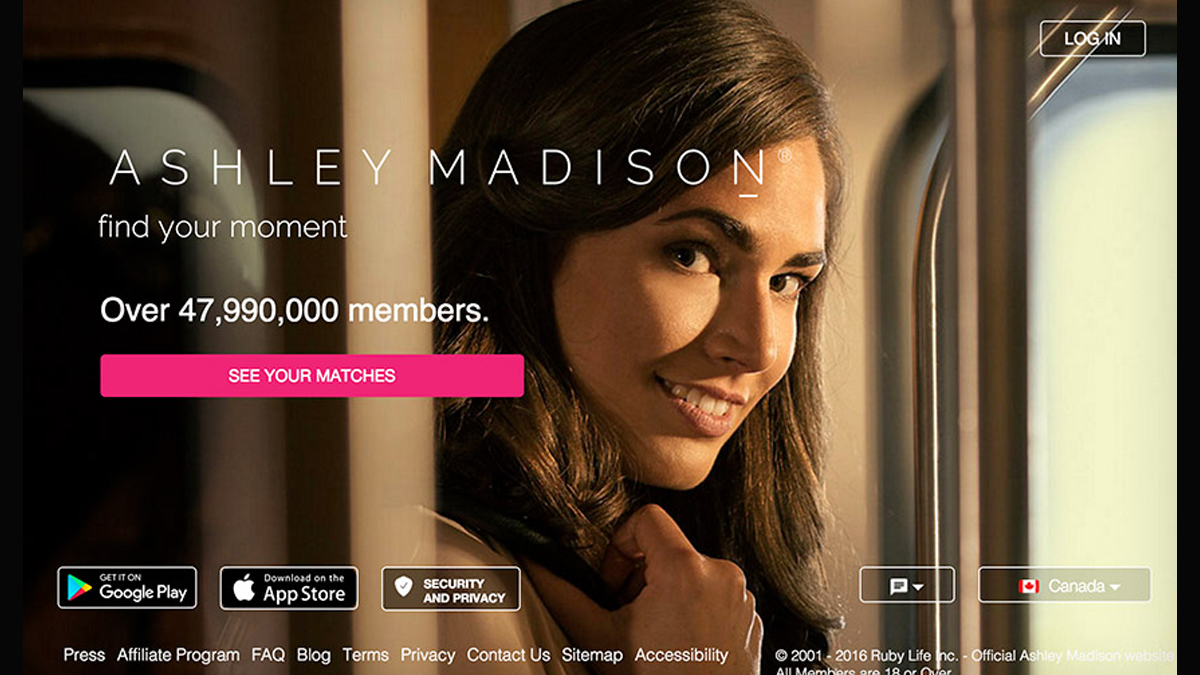
INDIA: Ashley Madison is shedding the “married-dating” label that defined it for two decades, repositioning itself as a platform for discreet dating in what it calls the post-social media age.
The rebrand, unveiled in India on 27 February, 2026, marks a structural shift in business model and identity. Once synonymous with married dating, the company now describes itself as the “premier destination for discreet dating” under a new tagline: Where Desire Meets Discretion.
The pivot is data-driven. Internal figures show that 57 per cent of global sign-ups between 1 January and 31 December, 2025 identified as single: a notable departure from the platform’s married core. The company argues that its community has already evolved beyond its original positioning.

“In an age where our lives have been constantly put on public display, privacy has become the new luxury,” said Ashley Madison chief strategy officer Paul Keable. He framed the platform’s offering as “ethical discretion” for singles, separated, divorced and non-monogamous users seeking private connections.
The shift also taps into wider digital fatigue. A global survey conducted by YouGov for Ashley Madison, covering 13,071 adults across Australia, Brazil, Canada, Germany, India, Italy, Mexico, Spain, Switzerland, the UK and the US, found mounting discomfort with hyper-public online lives.
Among dating app users, 30 per cent cited constant swiping and messaging as a source of fatigue, while 24 per cent pointed to pressure to curate public-facing profiles and early personal disclosure. Some 27 per cent said fears of screenshots or information being shared contributed to exhaustion; an equal share cited unwanted attention.
The retreat from oversharing appears broader. According to the survey, 46 per cent of adults actively try to keep most aspects of their life private online. Only 8 per cent feel comfortable sharing most aspects publicly, while 35 per cent say they are becoming more selective about what they disclose.
Ashley Madison is betting that this cultural recalibration towards controlled visibility can be monetised. By doubling down on privacy infrastructure and reframing itself around discretion rather than infidelity, the company is attempting to convert reputational baggage into a premium proposition.








