Applications
MTNL launches world’s first Convergent Voice SMS from Kirusa

NEW DELHI:MTNL, the Government owned fixed line and mobile operator in India, with operations in Delhi and Mumbai, today launched the world‘s first “Convergent” Voice SMS service for its fixed and mobile subscribers. The Convergent Voice SMS Service is based upon the patented “Voice SMS” technology from Kirusa, a leading mobile value added services provider based in New Jersey, USA. MTNL fixed line and mobile subscribers in Delhi can now send personalized Voice SMS messages to friends, family and colleagues across MTNL‘s mobile and fixed networks within Delhi. This service would also be available to MTNL subscribers in Mumbai shortly. A truly convergent service, the Voice SMS application allows an MTNL fixed or mobile subscriber to send a voice message without having the phone ring (RingFree Messaging SM). |
The recipient is not disturbed, and can pick up the message at his leisure. To send a Voice SMS message, a user simply dials “1*” followed by the recipient‘s phone number, and speaks a short message, in the language of his choice. If the recipient is a mobile user, the recipient gets an SMS message, and can dial 1*0* to retrieve new Voice SMS messages, and 1*1* to retrieve old Voice SMS messages. If the recipient is a fixed line user, he receives a call, and the message is spoken to him. The fixed line user can also retrieve Voice SMS messages at any time by dialing 1*0* to retrieve new Voice SMS messages, or dialing 1*1* to retrieve old Voice SMS messages from his fixed line phone. The recipient can also reply, forward, save, or delete the Voice SMS message. To support the launch, Kirusa has deployed and integrated the Kirusa Voice SMS platform into MTNL‘s fixed line and mobile networks. This is a first ever deployment of Voice SMS across the world by a convergent carrier, wherein fixed line and mobile subscribers have an option of sending Voice SMS messages to other fixed line or mobile subscribers. |
MTNL fixed line and mobile subscribers will pay Rupee 1 per minute to send, forward or reply to a Voice SMS message. They will be able to listen to a message free of charge for the first time, and will pay Rupee 1 per minute for listening to the message again. AK. Arora, Executive Director of MTNL, said, “MTNL believes in offering innovative value add services to all subscribers. The Kirusa Voice SMS is a unique convergent service that works seamlessly for fixed and mobile customers of MTNL. “This is the first time that fixed line subscribers will be able to benefit from a Voice SMS service. We believe that Kirusa‘s Voice SMS will generate heavy usage as it provides value to our entire subscriber base.” K. C. Gupta, Executive Director (Operations), MTNL commented on the occasion, “The scale of customization of Kirusa‘s Voice SMS to our desired configuration showcases the flexibility, scalability, and robustness of the Kirusa Voice SMS solution. “We are confident that the Convergent Voice SMS will be heartily adopted by the MTNL subscribers, and we plan to market this unique service to our customers aggressively.” Dr. Inderpal Singh Mumick, Founder and CEO, Kirusa said, “We are pleased to work with MTNL to bring the Voice SMS service to fixed and mobile users in Delhi and Mumbai and we congratulate MTNL on the launch of the first ever Convergent Voice SMS service in the world.” He continued “We are confident that this service would help MTNL to retain and extend its leadership position in both Delhi and Mumbai.” Taranjit Batra, VP Sales at Kirusa commented, “MTNL is the lifeline of Delhi and Mumbai. We are very confident that the simple and easy to use Convergent Voice SMS will help MTNL subscribers adopt it in a big way.” |

Applications
With 57 per cent single new users, Ashley Madison rebrands as discreet dating platform
Platform says majority of new members now identify as single
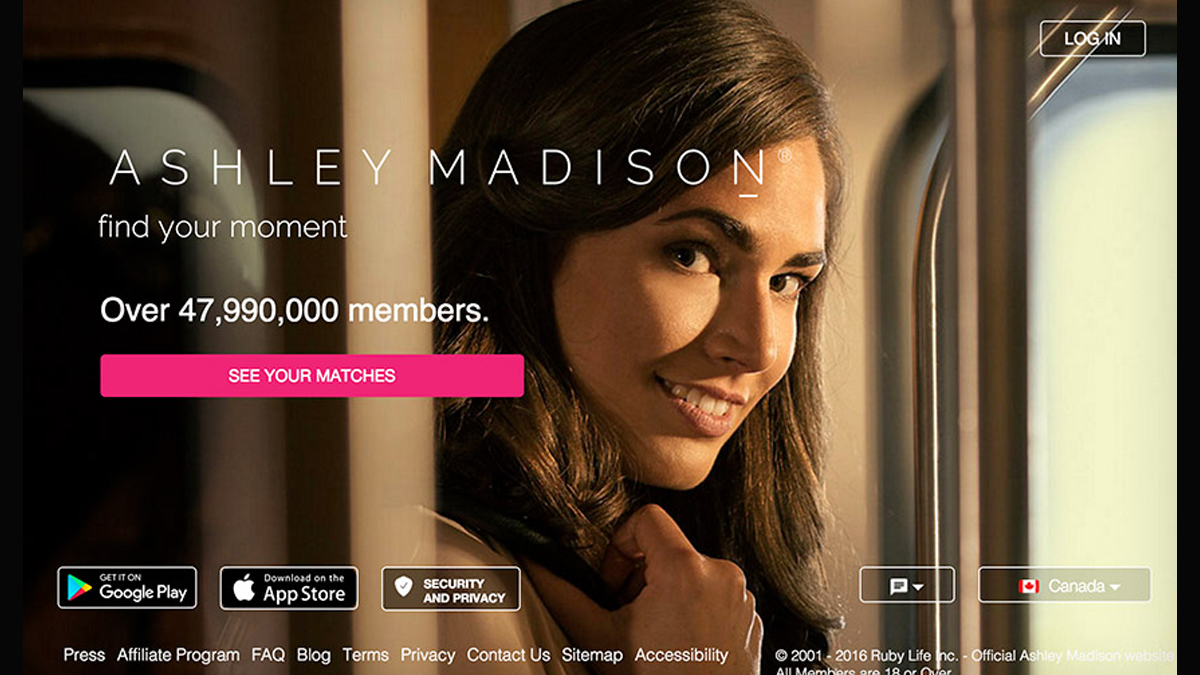
INDIA: Ashley Madison is shedding the “married-dating” label that defined it for two decades, repositioning itself as a platform for discreet dating in what it calls the post-social media age.
The rebrand, unveiled in India on 27 February, 2026, marks a structural shift in business model and identity. Once synonymous with married dating, the company now describes itself as the “premier destination for discreet dating” under a new tagline: Where Desire Meets Discretion.
The pivot is data-driven. Internal figures show that 57 per cent of global sign-ups between 1 January and 31 December, 2025 identified as single: a notable departure from the platform’s married core. The company argues that its community has already evolved beyond its original positioning.

“In an age where our lives have been constantly put on public display, privacy has become the new luxury,” said Ashley Madison chief strategy officer Paul Keable. He framed the platform’s offering as “ethical discretion” for singles, separated, divorced and non-monogamous users seeking private connections.
The shift also taps into wider digital fatigue. A global survey conducted by YouGov for Ashley Madison, covering 13,071 adults across Australia, Brazil, Canada, Germany, India, Italy, Mexico, Spain, Switzerland, the UK and the US, found mounting discomfort with hyper-public online lives.
Among dating app users, 30 per cent cited constant swiping and messaging as a source of fatigue, while 24 per cent pointed to pressure to curate public-facing profiles and early personal disclosure. Some 27 per cent said fears of screenshots or information being shared contributed to exhaustion; an equal share cited unwanted attention.
The retreat from oversharing appears broader. According to the survey, 46 per cent of adults actively try to keep most aspects of their life private online. Only 8 per cent feel comfortable sharing most aspects publicly, while 35 per cent say they are becoming more selective about what they disclose.
Ashley Madison is betting that this cultural recalibration towards controlled visibility can be monetised. By doubling down on privacy infrastructure and reframing itself around discretion rather than infidelity, the company is attempting to convert reputational baggage into a premium proposition.








