Applications
Meridian Mobile flies in India

MUMBAI: Meridian Mobile, which is part of the UK based Meridian Group, has launched its flagship brand for GSM phones, “Fly” in India. The marketing spend in the first year is likely to be $2 million as stated by the company. Malaika Arora has been signed-on as the brand ambassador for the product. She will be part of both, the print as well as the electronic campaign. The campaign aims to reflect the trendy and glamorous styling of the product. |
|
There are many models like Fly SL 500M, Fly SL 300M and Fly MP 330, to name a few, that will be introduced in the tech savvy Indian market. Fly SL 500M has a 1.3 Mega-Pixel camera with expandable memory, video ring tones with MPEG 4 and IRDA, Bluetooth and other features such as video recorder and player, MP3 player and 64 tone polyphonic and MP3 tones. Whereas, Fly SL 300M has features like MP3 player, video player and recorder, 64 tone polyphonic and MP3 ring tones and expandable memory. Whereas, Meridian Mobile adds that Fly MP 330 is the only phone in the market that can enhance equivalent volume of 40 watts. Besides having a video recorder and a player, 64 polyphonic and MP3 tones, it has features like 1.3 Mega-Pixel camera with woofer and speaker console, which is a new feature and is yet to be launched even in the West. Fly 2040 comes laden with features like 1.3 Mega-Pixel camera with Flash, Bluetooth enabled (voice, data and music), MP 3 player, continuous video recording and playback, 262K TFT display, video ringtones, 60 MB Internal Memory ( Nand Flash ), Micro SD Card Slot and IrDA connectivity. |
Meridian Mobile CEO India operations Rajiv Khanna says, “It is important to have fully loaded phones as the replacement market gets stronger. This is likely to result in huge demand for feature rich and stylish phones. Meridian will offer the critical buyer with smart value choices.” “Our marketing strategy is to focus on store branding and forging alliances with retailers. In the 1st phase our focus is on placement. We hope to reach 5000 premium counters by the end of the quarter, which will together account for 70 per cent of the over-all retail sales.” |

Applications
With 57 per cent single new users, Ashley Madison rebrands as discreet dating platform
Platform says majority of new members now identify as single
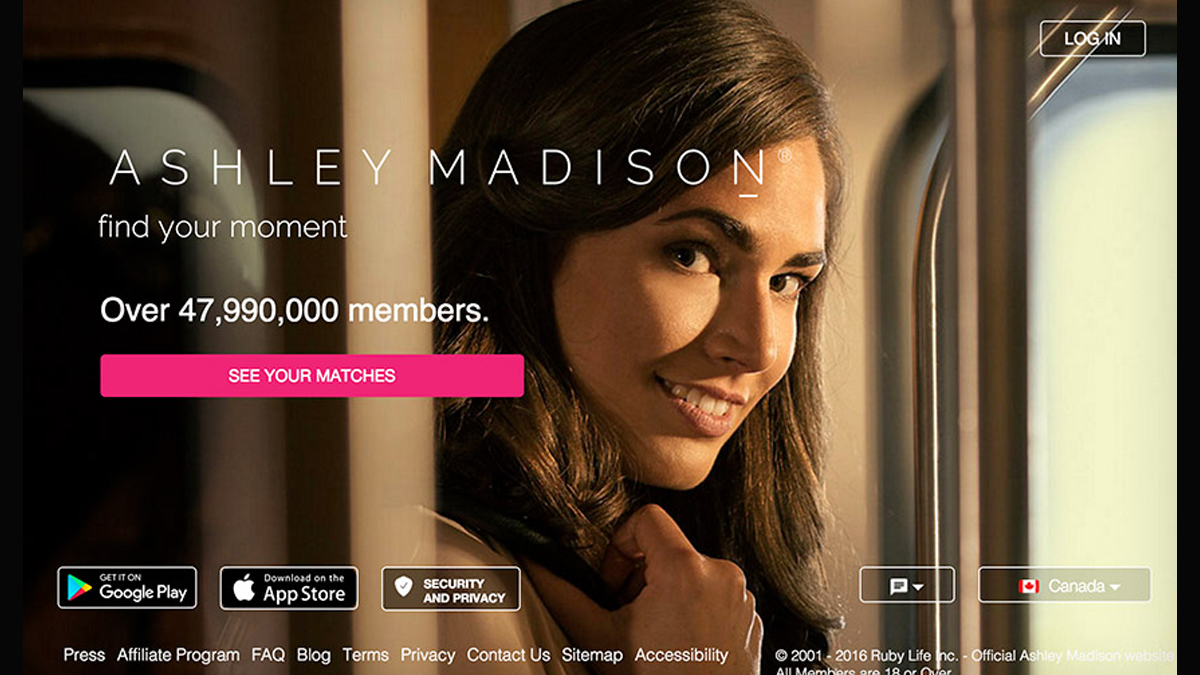
INDIA: Ashley Madison is shedding the “married-dating” label that defined it for two decades, repositioning itself as a platform for discreet dating in what it calls the post-social media age.
The rebrand, unveiled in India on 27 February, 2026, marks a structural shift in business model and identity. Once synonymous with married dating, the company now describes itself as the “premier destination for discreet dating” under a new tagline: Where Desire Meets Discretion.
The pivot is data-driven. Internal figures show that 57 per cent of global sign-ups between 1 January and 31 December, 2025 identified as single: a notable departure from the platform’s married core. The company argues that its community has already evolved beyond its original positioning.

“In an age where our lives have been constantly put on public display, privacy has become the new luxury,” said Ashley Madison chief strategy officer Paul Keable. He framed the platform’s offering as “ethical discretion” for singles, separated, divorced and non-monogamous users seeking private connections.
The shift also taps into wider digital fatigue. A global survey conducted by YouGov for Ashley Madison, covering 13,071 adults across Australia, Brazil, Canada, Germany, India, Italy, Mexico, Spain, Switzerland, the UK and the US, found mounting discomfort with hyper-public online lives.
Among dating app users, 30 per cent cited constant swiping and messaging as a source of fatigue, while 24 per cent pointed to pressure to curate public-facing profiles and early personal disclosure. Some 27 per cent said fears of screenshots or information being shared contributed to exhaustion; an equal share cited unwanted attention.
The retreat from oversharing appears broader. According to the survey, 46 per cent of adults actively try to keep most aspects of their life private online. Only 8 per cent feel comfortable sharing most aspects publicly, while 35 per cent say they are becoming more selective about what they disclose.
Ashley Madison is betting that this cultural recalibration towards controlled visibility can be monetised. By doubling down on privacy infrastructure and reframing itself around discretion rather than infidelity, the company is attempting to convert reputational baggage into a premium proposition.








