Applications
Industry tuned to CAS; pricing still vexed issue

NEW DELHI: From “let there be voluntary CAS” to “if you must mandate CAS stay out of the pricing mechanism”. That could well sum up how the view of the broadcast sector in general to the prospect of the rollout of addressability has changed from the situation that existed back in 2003.
That was a recurring theme during the informed discussions that went on in the post-lunch session of the Indian Broadband Digital Networks Forum organised by Indiantelevision.com and Media Partners Asia in the capital yesterday. The two sessions – The Strategic Imperative: Consolidation & Convergence and Ground Realities: Content Distribution & Technology flowed seamlessly from one to the other taking further the cues that had been provided in the morning‘s keynotes.
Unless pricing was elastic, it was a non-sustainable business model not just for the pay channels but for the cable service providers as well, was the view expressed by Raghav Sahgal, CBO, Converse. Speakiing during the morning keynote, John Malone-controlled Liberty Media board member Shane O‘Neill suggested that a better formula for the government to consider might be that the baseline or lifeline service (basic tier?) be given maximum spread while the rest should be left to the market to determine. |
ADAPT OR PERISH: Speaking on the issue of the shift to digital, HSBC Securities‘ Sandeep Pahwa pointed out that “consolidation and building of scale is important but not a necessary recipe for success.” The ability to innovate according to the dynamics as determined by Indian situation was the critical factor, according to Pahwa. “Adapt or perish. The mantra is continual innovation,” Pahwa said. Another point that came through in the discussions was that in the move towards digital delivery, the real battle in the short to mid term would be between cable and DTH. “IPTV is a real challenge in an emerging market like India,” said Comverse CBO Raghav Sahgal. According to Pahwa, DTH will compete on reach (cable dark areas in particular) and service. However, where cable service providers have got it right, there is a clear advantage in their favour. WWIL‘s JS Kohli said, “CAS is the trigger that will actually facilitate the move towards convergence.” Tata Sky‘s Vikram Kaushik said while in the medium term quality of service would be the key differentiator that DTH offered, going forward, once transponder limitations haad been overcome some element of exclusivity would come into play. 80 per cent of programming will be across platform and 15 per cent will be exclusive, Kaushik said. Speaking on the content provider‘s side Star India‘s Paritosh Joshi said, “Star‘s content for the mass audiences will remain the primary focus. We will look for opportunities – mobile in particular is something we‘re particularly gung ho about. That‘s something we‘re already actively looking at.” “A marginal higher value consumer may exist and these we will address,” Joshi said. Speaking about the impact CAS would have Hathway MSO‘s K Jayaraman said, “CAS is going to be painful in terms of investments required. If the first phase of CAS goes well then the funding is going to be a challenge.” Incable‘s Ashok Mansukhani offered, “We need to put in a lot of money to upgrade ourselves as well as LCOs. We believe in 100 per cent transparency.” On the scope for IPTV, Tandberg Television‘s Alan Delaney said, “There is plenty of space in the market for everybody.” Bharti Televentures‘ Sriram TV was clear that staying out of content creation was the way to go for telcos. Said Sriram, “Focus on what you‘re best at. Bharti has taken its learnings from the experiences of Singtel / Vodafone in the UK as examples of networks that went into too many areas and lived to regret the decision. Network convergence, device convergence and industry convergence is what we are looking at. Bharti has content tie-ups with all the pay channels.” HFCL‘s Surendra Lunia, however, said, “We will evaluate according to opportunity.” Another problem for broadband is that technical skill sets need to be sorted out before value added services can be rolled out, said Jayaraman. This statement coming from the head of a cable MSO who has 100,000 registered users reflects on the difficulties that lie ahead for introduction of IPTV in particular. However, Mansukhani was more optimistic on that front: “It is a dynamic growth oriented business. Broadband adding significantly in the next three years.” |

Applications
With 57 per cent single new users, Ashley Madison rebrands as discreet dating platform
Platform says majority of new members now identify as single
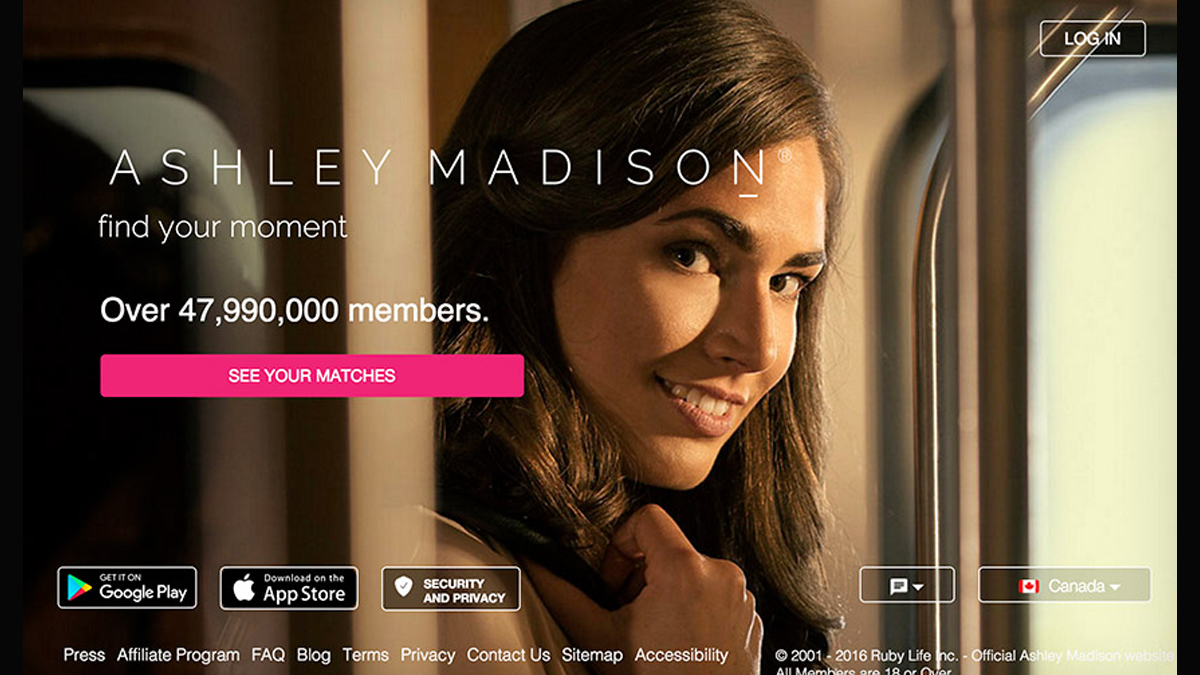
INDIA: Ashley Madison is shedding the “married-dating” label that defined it for two decades, repositioning itself as a platform for discreet dating in what it calls the post-social media age.
The rebrand, unveiled in India on 27 February, 2026, marks a structural shift in business model and identity. Once synonymous with married dating, the company now describes itself as the “premier destination for discreet dating” under a new tagline: Where Desire Meets Discretion.
The pivot is data-driven. Internal figures show that 57 per cent of global sign-ups between 1 January and 31 December, 2025 identified as single: a notable departure from the platform’s married core. The company argues that its community has already evolved beyond its original positioning.

“In an age where our lives have been constantly put on public display, privacy has become the new luxury,” said Ashley Madison chief strategy officer Paul Keable. He framed the platform’s offering as “ethical discretion” for singles, separated, divorced and non-monogamous users seeking private connections.
The shift also taps into wider digital fatigue. A global survey conducted by YouGov for Ashley Madison, covering 13,071 adults across Australia, Brazil, Canada, Germany, India, Italy, Mexico, Spain, Switzerland, the UK and the US, found mounting discomfort with hyper-public online lives.
Among dating app users, 30 per cent cited constant swiping and messaging as a source of fatigue, while 24 per cent pointed to pressure to curate public-facing profiles and early personal disclosure. Some 27 per cent said fears of screenshots or information being shared contributed to exhaustion; an equal share cited unwanted attention.
The retreat from oversharing appears broader. According to the survey, 46 per cent of adults actively try to keep most aspects of their life private online. Only 8 per cent feel comfortable sharing most aspects publicly, while 35 per cent say they are becoming more selective about what they disclose.
Ashley Madison is betting that this cultural recalibration towards controlled visibility can be monetised. By doubling down on privacy infrastructure and reframing itself around discretion rather than infidelity, the company is attempting to convert reputational baggage into a premium proposition.








