Applications
IDM R&D unveils initiatives to support local, international R&D needs

MUMBAI: The Interactive and Digital Media (IDM) Research and Development (R&D) Programme Office has unveiled its comprehensive initiatives to support and develop IDM R&D in Singapore. The move is already garnering local and international industry support.
|
The news follows last year‘s announcement that the National Research Foundation had allocated SGD $500 million (USD$325 million) over the next five years to fund the development of a strategic IDM research programme. The foundation was to set up a multi-agency IDM R&D Programme Office within the Media Development Authority of Singapore (MDA) to spearhead the growth and development of Singapore‘s IDM sector. The following four initiatives have been formulated to create an effective IDM eco-system involving all stakeholders including entertainment companies, institutes of higher learning (IHLs) and consumers: Grow a network of local and international research organisations to augment the capabilities of the local IDM sector: Under this initiative, the IDM R&D Programme Office will call for research proposals from the world‘s top IHLs and Research Institutes (RIs) to address key focus areas and custom-tailor R&D results to the needs of both the local and larger international IDM industries. Encourage the generation of innovative ideas and projects for the IDM R&D landscape: An online virtual jam session for idea sharing, i.Jam will be piloted in late January 2007, encouraging consumers to contribute their ideas and explore R&D projects. Ideas with potential for commercialisation will be further supported by the IDM R&D programme office through mentors from the industry or IHLs. With a full-scale launch slated for July 2007, i.Jam is envisioned to be a platform to capture and nurture ideas into viable projects. Establish Singapore as an international test-bed for IDM-enabling infrastructure and applications: The funding of innovative applications and services generated by the IDM R&D Programme Office will be administered by MDA, the Economic Development Board (EDB) and the Infocomm Development Authority (IDA). This extensive governmental support will help elevate Singapore as a global R&D leader. |
Speaking on the issue , Mica permanent secretary Dr. Tan Chin Nam said, “The economic potential of IDM is tremendous and its impact transformational. Collectively, the implementation of the four initiatives, together with the efforts of the agencies including MDA, EDB, IDA, A*STAR, the Ministry of Education (MOE) and Mica, will help position Singapore as a global media city.” – Animation, games and effects – to strengthen investments in technology R&D, tools and platform development, as well as explore new genres. – Media intermediary services – to invest in technical capabilities in the organisation, distribution and security of digital media. – On-the-move media services – to invest in R&D to identify new ways of reaching and interacting with mobile-connected people who are always on the move. |

Applications
With 57 per cent single new users, Ashley Madison rebrands as discreet dating platform
Platform says majority of new members now identify as single
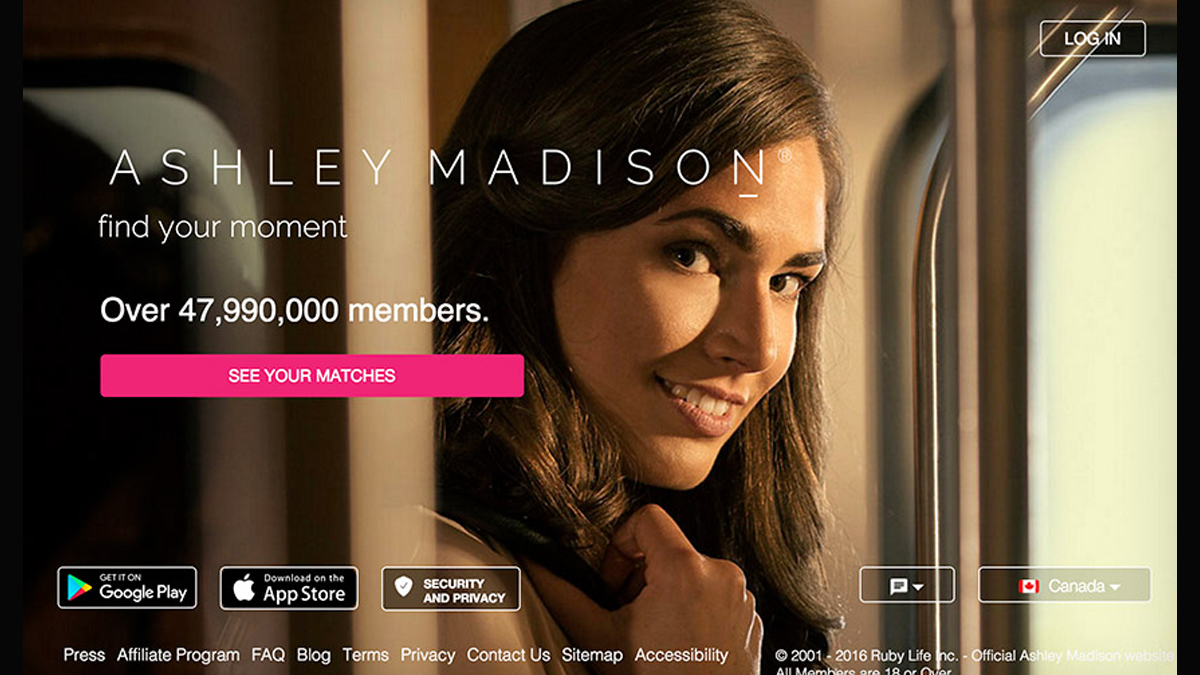
INDIA: Ashley Madison is shedding the “married-dating” label that defined it for two decades, repositioning itself as a platform for discreet dating in what it calls the post-social media age.
The rebrand, unveiled in India on 27 February, 2026, marks a structural shift in business model and identity. Once synonymous with married dating, the company now describes itself as the “premier destination for discreet dating” under a new tagline: Where Desire Meets Discretion.
The pivot is data-driven. Internal figures show that 57 per cent of global sign-ups between 1 January and 31 December, 2025 identified as single: a notable departure from the platform’s married core. The company argues that its community has already evolved beyond its original positioning.

“In an age where our lives have been constantly put on public display, privacy has become the new luxury,” said Ashley Madison chief strategy officer Paul Keable. He framed the platform’s offering as “ethical discretion” for singles, separated, divorced and non-monogamous users seeking private connections.
The shift also taps into wider digital fatigue. A global survey conducted by YouGov for Ashley Madison, covering 13,071 adults across Australia, Brazil, Canada, Germany, India, Italy, Mexico, Spain, Switzerland, the UK and the US, found mounting discomfort with hyper-public online lives.
Among dating app users, 30 per cent cited constant swiping and messaging as a source of fatigue, while 24 per cent pointed to pressure to curate public-facing profiles and early personal disclosure. Some 27 per cent said fears of screenshots or information being shared contributed to exhaustion; an equal share cited unwanted attention.
The retreat from oversharing appears broader. According to the survey, 46 per cent of adults actively try to keep most aspects of their life private online. Only 8 per cent feel comfortable sharing most aspects publicly, while 35 per cent say they are becoming more selective about what they disclose.
Ashley Madison is betting that this cultural recalibration towards controlled visibility can be monetised. By doubling down on privacy infrastructure and reframing itself around discretion rather than infidelity, the company is attempting to convert reputational baggage into a premium proposition.