Applications
Govt issues social media usage norms for its agencies

NEW DELHI: The central government on Thursday notified the social media usage guidelines for its agencies and citizen engagement for e-governance projects.
The guidelines have been developed for all e-Governance projects currently under National e-Governance Plan, whether being implemented at Central or State level. In addition, it will be applicable to all new e-Governance Projects being developed by any department or line ministry of central government.
The motive of these frameworks and guidelines is to enable various agencies to create and implement their own strategy for the use of social media, the government said.
According to the guidelines, persons handling the social media channels must take care “to avoid propagation of unverified facts and frivolous misleading rumours.”
They should not “comment and respond unless authorised to do so especially in the matters that are sub-judice, draft legislations or relating to other individuals.”
“When any information is shared or guidance given online, it is necessary to ensure that all relevant records are captured, trail is generated and records are managed appropriately,” the guidelines stated.
The guidelines says that the official pages of departments “must reflect the official position, some measure of control must be included in the flexible design of communication.”
“Just as rules and regulations exist for interaction with traditional media, similar rules must be created for engaging with social media,” it said.
To avoid a possible conflict, the guidelines states, “it is important to define whether the engagement may be undertaken through official accounts only or the officials may be permitted to use personal accounts also for posting official responses.”
“It determines who says what on behalf of your organisation and in what form it is published. It also outlines how each piece of published information is presented where it is published. The most important aspect is whether the responses are in Official or Personal Capacity. Also, it must be defined whether the responses can be posted through the official and/or persona accounts,” it stated.
To overcome language barrier, the guidelines suggest that “care must be taken so that people can communicate in their own language, and due cognizance of the views expressed in local languages is taken.”
While creating a policy for responses the guidelines state that “not all posts/comments need to be responded to immediately and individually. Also, wherever a response is required all posts should be kept short and to the point.”
“While employees are free to post response in their personal capacity, it is mandatory that while they are doing so, they must clearly identify themselves, confidential information must not be divulged and should not be seen to represent “official view” unless authorised to do so.”
The government has attached some key caveats to the guidelines like all accounts must be created and operated in official capacity; agencies must also have dedicated team that can monitor and respond to queries on a 24-7 basis; there should be congruence between responses on social media and traditional media; and relevant provisions of IT Act 2000 and RTI Act must be adhered to.

Applications
With 57 per cent single new users, Ashley Madison rebrands as discreet dating platform
Platform says majority of new members now identify as single
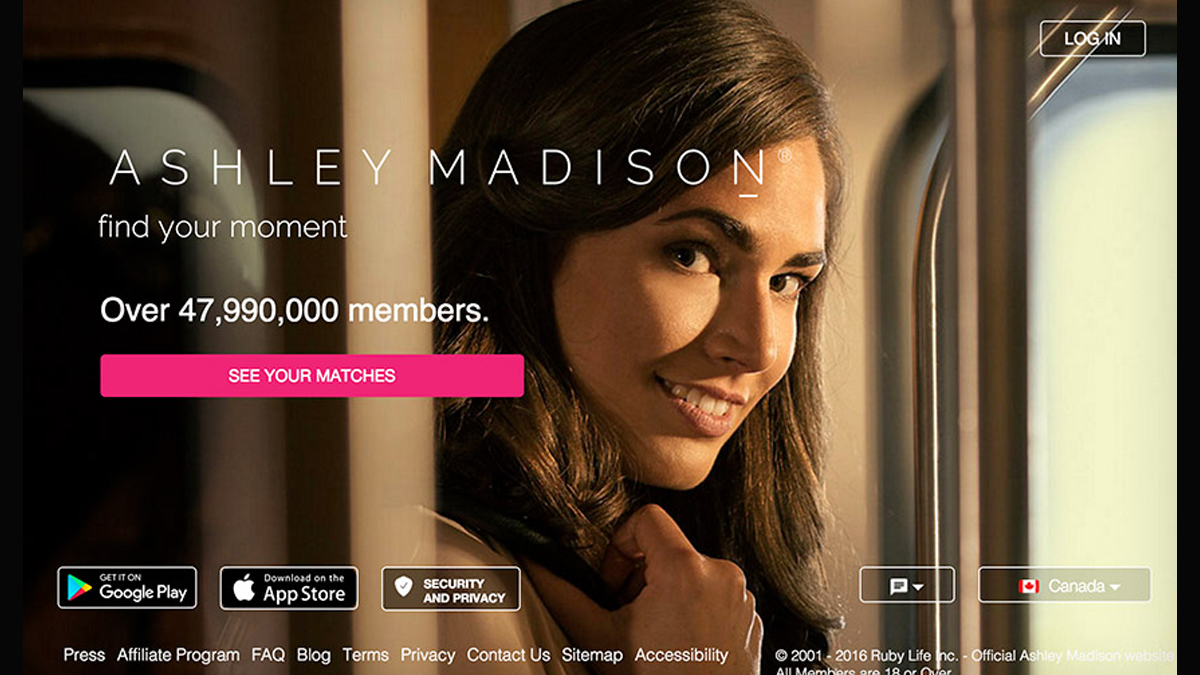
INDIA: Ashley Madison is shedding the “married-dating” label that defined it for two decades, repositioning itself as a platform for discreet dating in what it calls the post-social media age.
The rebrand, unveiled in India on 27 February, 2026, marks a structural shift in business model and identity. Once synonymous with married dating, the company now describes itself as the “premier destination for discreet dating” under a new tagline: Where Desire Meets Discretion.
The pivot is data-driven. Internal figures show that 57 per cent of global sign-ups between 1 January and 31 December, 2025 identified as single: a notable departure from the platform’s married core. The company argues that its community has already evolved beyond its original positioning.

“In an age where our lives have been constantly put on public display, privacy has become the new luxury,” said Ashley Madison chief strategy officer Paul Keable. He framed the platform’s offering as “ethical discretion” for singles, separated, divorced and non-monogamous users seeking private connections.
The shift also taps into wider digital fatigue. A global survey conducted by YouGov for Ashley Madison, covering 13,071 adults across Australia, Brazil, Canada, Germany, India, Italy, Mexico, Spain, Switzerland, the UK and the US, found mounting discomfort with hyper-public online lives.
Among dating app users, 30 per cent cited constant swiping and messaging as a source of fatigue, while 24 per cent pointed to pressure to curate public-facing profiles and early personal disclosure. Some 27 per cent said fears of screenshots or information being shared contributed to exhaustion; an equal share cited unwanted attention.
The retreat from oversharing appears broader. According to the survey, 46 per cent of adults actively try to keep most aspects of their life private online. Only 8 per cent feel comfortable sharing most aspects publicly, while 35 per cent say they are becoming more selective about what they disclose.
Ashley Madison is betting that this cultural recalibration towards controlled visibility can be monetised. By doubling down on privacy infrastructure and reframing itself around discretion rather than infidelity, the company is attempting to convert reputational baggage into a premium proposition.