Applications
Fifa World Cup to give HD a big boost

MUMBAI: An increasing number of TV viewers will be switching on to High Definition (HD) TV for the Fifa World Cup, with sales figures from cable and satellite providers booming.
And for the first time, 50 per cent of UK households will be able to watch the tournament in HD through a standard roof-top aerial, thanks to the early roll-out of HD on Freeview.
It has been 40 years since the last major development in World Cup viewing technology, when in 1970, the Mexico World Cup was broadcast in colour for the first time. Back then England were knocked out by West Germany in the quarter finals. This year, fans will be hoping for a better result from HD, notes UK media watchdog Ofcom.
HD sales figures: Up to five times more detailed than standard definition TV, every flick of the ball, every blade of grass, and every bead of sweat will be more visible than ever before in HD, notes Ofcom. South Africa 2010 is the first time that HD will be available during a World Cup to a mass market.
New Ofcom research reveals that sales of HD ready TVs topped 24 million by the end of March 2010. HD sales figures from cable and satellite providers in the lead up to the World Cup have also been strong.
Sky added 428,000 extra subscribers to its HD service in the first three months of 2010, the second highest quarterly additions to date, following 482,000 in Q4 2009. Total HD subscriptions are now over 2.5 million. Virgin’s V+ HD service added 77,900 subscribers to reach 939,900 by the end of March 2010.
High Definition receivers have accounted for around 80 per cent of BBC/ITV Freesat sales so far, equivalent to more than 800,000 cumulative sales by March 2010
As recently as two years ago some industry experts said it was impossible to ever get HD on digital terrestrial TV (Freeview), without using more radio airwaves – technically known as spectrum.
There are three steps to HD on Freeview
1. Increased compression: The latest compression standard, called MPEG-4 has been used, which is up to twice as efficient as the current MPEG-2 standard. This is a technology that minimizes the data capacity required to transmit video and audio services that are broadcast digitally.
2. Transmission : A new European transmission standard, called DVB-T2, has increased capacity by at least 30 per cent and is now expected to achieve a nearly 50 per cent increase in capacity.
3. Reorganising existing TV services: Terrestrial television is broadcast on six multiplexes. These are distinct blocks of transmission capacity which carry television channels. Directed by Government, Ofcom cleared one of the three multiplexes used for public service broadcasting and moved existing services onto the remaining multiplexes – like a very complicated game of Tetris.
This is a finite natural resource, in high demand. And HD is spectrum hungry, demanding roughly four times as much as standard definition. This meant there was not enough bandwidth available to broadcast HD on digital terrestrial TV (DTT).
Against all the odds, Ofcom’s Spectrum Policy Group worked on a complex plan to create the extra room needed for HD on DTT.
Greg Bensberg, who led the team, said, “Two years ago, the promise of HD on Freeview hung in the balance. HD demanded large amounts of additional spectrum – but there was none to be had.
‘Fortunately we identified a way of achieving what many thought was impossible – by reorganising existing TV services and introducing two new technologies – MPEG-4 and DVB-T2. This created enough capacity for five HD channels on Freeview.”
How to get HD : There are several ways for UK soccer fans to get HD in time for the World Cup. But first of all you’ll need a TV that can show HD pictures. Television sets with the ‘HD Ready’ logo have a screen that can display sharper pictures.
Freeview: To watch HD channels on Freeview a consumer will first need to check whether Freeview HD is available where he/she lives. One can check your address by visiting the Freeview website. Ofcom adds that one will also need a Freeview HD set top box, or an integrated Freeview HD TV.
Freesat: One can also watch free HD programmes via the BBC/ITV and Sky Freesat services.
Pay TV: Paid for HD services are also available from Sky and Virgin Media, through Satellite or cable. However, you will need to subscribe to their HD packages, which involves getting a HD set-top-box.
Who can get HD on Freeview: Freeview HD is being rolled out in line with the existing digital switchover schedule and will eventually be available to 98.5 per cent of UK households by the end of 2012. Around seven per cent of the UK population who switched to digital signals prior to December 2009 will receive the service in a retrofitting programme due to be completed in the coming months.
Today, over 50 per cent or the UK can receive HD broadcasts including Manchester, London, Newcastle, Leeds, Birmingham, Liverpool, and the majority of Wales.
What HD channels are available? Currently there are four HD channels available on Freeview. These include BBC HD, ITV HD, Channel 4 HD and S4C Clirlun. The BBC will also be launching BBC 1 HD later this year. There are already a number of additional HD channels available on Sky and Virgin Media.

Applications
With 57 per cent single new users, Ashley Madison rebrands as discreet dating platform
Platform says majority of new members now identify as single
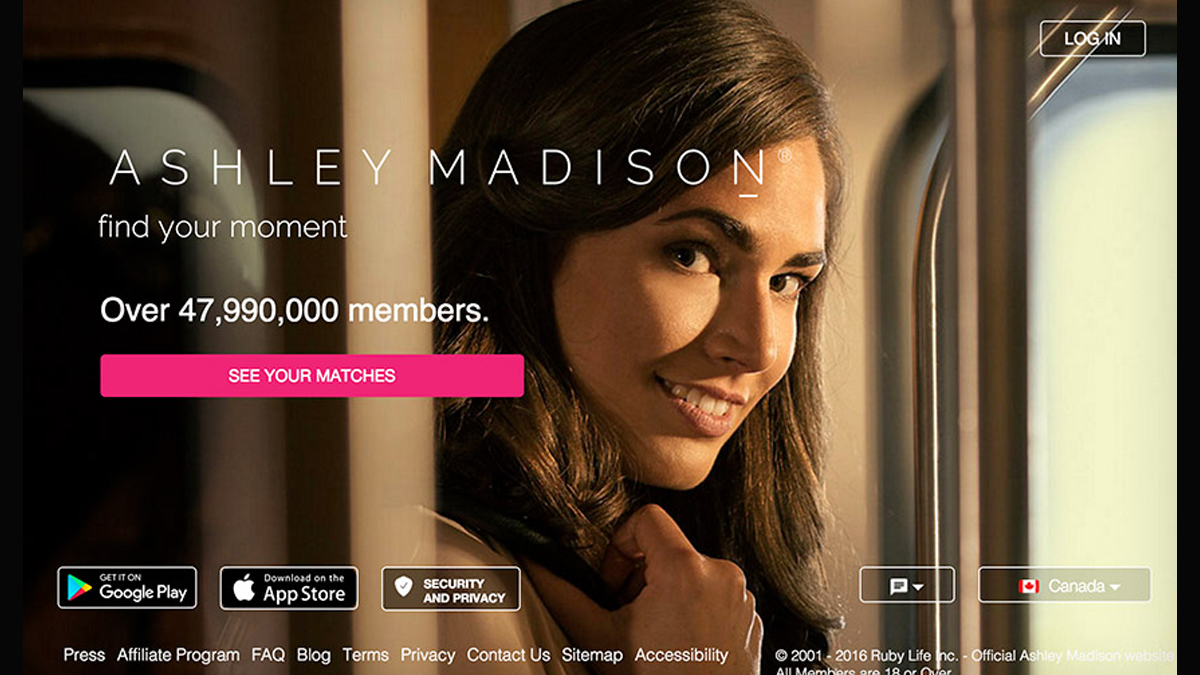
INDIA: Ashley Madison is shedding the “married-dating” label that defined it for two decades, repositioning itself as a platform for discreet dating in what it calls the post-social media age.
The rebrand, unveiled in India on 27 February, 2026, marks a structural shift in business model and identity. Once synonymous with married dating, the company now describes itself as the “premier destination for discreet dating” under a new tagline: Where Desire Meets Discretion.
The pivot is data-driven. Internal figures show that 57 per cent of global sign-ups between 1 January and 31 December, 2025 identified as single: a notable departure from the platform’s married core. The company argues that its community has already evolved beyond its original positioning.

“In an age where our lives have been constantly put on public display, privacy has become the new luxury,” said Ashley Madison chief strategy officer Paul Keable. He framed the platform’s offering as “ethical discretion” for singles, separated, divorced and non-monogamous users seeking private connections.
The shift also taps into wider digital fatigue. A global survey conducted by YouGov for Ashley Madison, covering 13,071 adults across Australia, Brazil, Canada, Germany, India, Italy, Mexico, Spain, Switzerland, the UK and the US, found mounting discomfort with hyper-public online lives.
Among dating app users, 30 per cent cited constant swiping and messaging as a source of fatigue, while 24 per cent pointed to pressure to curate public-facing profiles and early personal disclosure. Some 27 per cent said fears of screenshots or information being shared contributed to exhaustion; an equal share cited unwanted attention.
The retreat from oversharing appears broader. According to the survey, 46 per cent of adults actively try to keep most aspects of their life private online. Only 8 per cent feel comfortable sharing most aspects publicly, while 35 per cent say they are becoming more selective about what they disclose.
Ashley Madison is betting that this cultural recalibration towards controlled visibility can be monetised. By doubling down on privacy infrastructure and reframing itself around discretion rather than infidelity, the company is attempting to convert reputational baggage into a premium proposition.







