Applications
Digitisation: Govt won’t tolerate delay in stakeholder agreements

NEW DELHI: The Government has said broadcasters, multi-system operators (MSOs) and local cable operators should speed up finalisation of agreements if the first phase of digitisation has to be implemented on 1 November.
In the meeting of the Task Force on digitisation on Wednesday, Additional Secretary in the Information and Broadcasting Ministry Rajiv Takru was clear that the government will not tolerate such delay.
The broadcasters informed the Government that talks were still on in about 90 per cent of the cases for signing agreements with multi-system operators (MSOs).
MSOs would need to ink their content agreements so that they can work out channel packages and approach consumers to make the shift to digital cable TV.
On the cable TV front, MSOs and LCOs have to settle their revenue share agreements. The LCOs control the last mile to the consumer homes and form a valuable part of the distribution chain.
Several MSOs are in advanced talks with local cable operators for finalising the revenue-share deals. The LCOs are unhappy with the revenue share mandated by the Telecom Regulatory Authority of India (Trai).
Trai has fixed LCOs‘ revenue share of 45 per cent for free-to-air channels (FTA) and 35 per cent in case of pay channels. The LCOs want their revenue share to be increased as the onset of digital cable will result in their having to disclose the actual number of subscribers. The total subscribers disclosed by the LCOs now is much lower than the actual numbers which helps them in not having to pay to MSOs for all their subscriber connections.
Apart from representatives of the I&B Ministry, ASSOCHAM and Broadcast Engineering Society India Ltd. (BECIL), the meeting was attended by Arun Mohan of Zee on behalf of the broadcasters while Ashok Mansukhani represented the MSO Alliance and Roop Sharma represented the LCOs.
The Task Force comprising all stakeholders was constituted by the Ministry in April 2011 to oversee digitisation.
It was also found that deployment of STBs at cable homes had slowed following the deferment of the sunset date for analogue cable connections. The Ministry wanted STB deployment to be hastened.
The Task Force decided to meet again on 3 September to take stock of the situation with regard to deployment of STBs in the four metros where analogue is scheduled to switch off on 31 October.
The Government – which wants to complete digitisation in the country by December 2014 – had on 20 June postponed the sunset date by four months to 31 October.

Applications
With 57 per cent single new users, Ashley Madison rebrands as discreet dating platform
Platform says majority of new members now identify as single
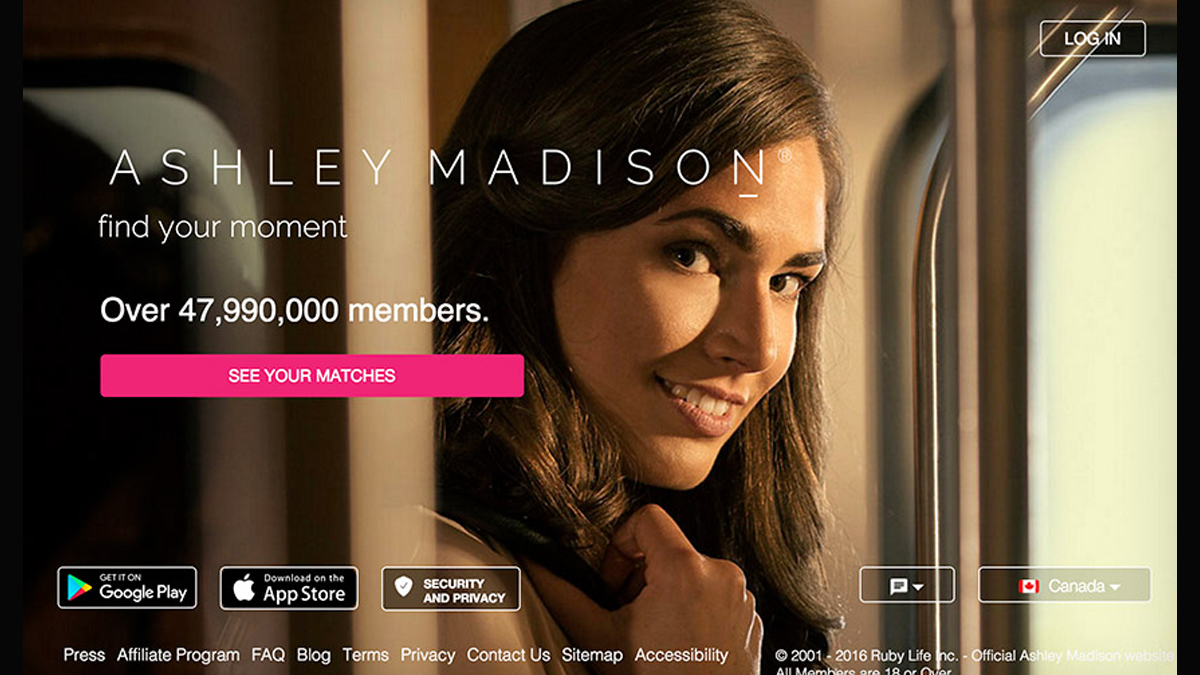
INDIA: Ashley Madison is shedding the “married-dating” label that defined it for two decades, repositioning itself as a platform for discreet dating in what it calls the post-social media age.
The rebrand, unveiled in India on 27 February, 2026, marks a structural shift in business model and identity. Once synonymous with married dating, the company now describes itself as the “premier destination for discreet dating” under a new tagline: Where Desire Meets Discretion.
The pivot is data-driven. Internal figures show that 57 per cent of global sign-ups between 1 January and 31 December, 2025 identified as single: a notable departure from the platform’s married core. The company argues that its community has already evolved beyond its original positioning.

“In an age where our lives have been constantly put on public display, privacy has become the new luxury,” said Ashley Madison chief strategy officer Paul Keable. He framed the platform’s offering as “ethical discretion” for singles, separated, divorced and non-monogamous users seeking private connections.
The shift also taps into wider digital fatigue. A global survey conducted by YouGov for Ashley Madison, covering 13,071 adults across Australia, Brazil, Canada, Germany, India, Italy, Mexico, Spain, Switzerland, the UK and the US, found mounting discomfort with hyper-public online lives.
Among dating app users, 30 per cent cited constant swiping and messaging as a source of fatigue, while 24 per cent pointed to pressure to curate public-facing profiles and early personal disclosure. Some 27 per cent said fears of screenshots or information being shared contributed to exhaustion; an equal share cited unwanted attention.
The retreat from oversharing appears broader. According to the survey, 46 per cent of adults actively try to keep most aspects of their life private online. Only 8 per cent feel comfortable sharing most aspects publicly, while 35 per cent say they are becoming more selective about what they disclose.
Ashley Madison is betting that this cultural recalibration towards controlled visibility can be monetised. By doubling down on privacy infrastructure and reframing itself around discretion rather than infidelity, the company is attempting to convert reputational baggage into a premium proposition.