Applications
CAS REVIEW: MSOs claim adequate STB stocks, admit consumer order slowdown

NEW DELHI: Multi-System Operators have told the sector regulator that there is no shortage of STBs anywhere in the country, but admit that there has been a slow-down of consumer orders, for which the MSOs themselves and broadcasters need to make various changes in their strategies. “None of the players, neither the cable operators, nor the broadcasters, not even us, have been reading the consumers‘ minds, and we better take care of that from now,” a senior official of one MSO told indiantelevision.com today. Meanwhile, although these are “early days”, the trend that has emerged as a result of data analysis of customer choices as expressed in the forms submitted (for those who have opted for Cas in Delhi and Mumbai) “is bound to create major upsets in the market, especially in how the media buyers look at where to put their monies,” the official said. |
This was in the offing since the early days of Cas implementation, and the announcement could cause a mild to heavy temblor in the market. Meanwhile, cable operators here reported also that in some pockets people were not taking STBs because of regional preferences. In the predominantly Bengali neighbourhood of Chittaranjan Park, a fairly posh colony, many have stayed with the Bengali FTAs and decide to hang on to whatever rest they are getting in the FTA basic tier package (Rs 77, plus taxes). Likewise, in the Nepali dominated Vasant Gaon area and for people in RK Puram, where there is a predominance of South Indians from various states, it has been noted that since their most popular regional channels are FTAs, they have stayed away from STBs, Roop Sharma, president of Cable Operators Federation of India told this correspondent. None of the three MSOs approached in Delhi by this correspondent so far have divulged the clear analysis, saying that the Telecom Regulatory Authority of India (Trai) has asked for these and they can reveal the data only after reporting to it. |
But it is known by now that most of those who have taken the STBs have opted for a la carte and not packages or bouquets. “This clearly shows that the Indian customer knows its mind far better than we had anticipated,” sources admitted. CUSTOMERS IGNORED: In the soul searching process, media experts are now saying that the slowdown has been because of various reasons, primarily ignoring the customer. First, the DTH players promised to supply boxes and dishes but could not do so on time. In the first instance, they gave dishes but not the STBs. Then, they gave prepaid boxes, so when the month was over, the streaming was disconnected. Then, people started comparing that this never used to happen with the “cablewallahs”, who would wait till you paid and not disconnect. In fact, the “facelessness” of the DTH players, who operate through the BPOs, have been one reason for people in chunks getting put off by them, though it is a fact that DTH players have scored heavily in the bordering areas of Delhi proper by giving attractive prices to housing colonies. At the same time, MSOs admit that they too had failed to gear up to the search in the first 14 or 20 days of Cas implementation. “The packages that we gave did not meet the needs of the consumer,” said one MSO spokesperson. “We also did not make a clear statement on what package a cable home having two or more TV sets would get as discount, and no clear policy emerged in the beginning, and the packages were arbitrarily decided by us,” he added. Analysis and feedback from ground level fitters from cable operators show that due to this, most families set a budget for themselves as per their pockets, and decided to take channels they wanted, which is why they chose a la carte. This has caused major changes in the viewership patterns, and a lot of “myths” of TRP supremacy claimed by channels could come for a shake up, media experts aver. FENCESITTERS APLENTY: Data analysis shows that a lot of people are sitting on the fence, so far as fresh demand for STBs is concerned. As reported by indiantelevision.com earlier, MSOs say that there could be some kind of pace picking up with the World Cup cricket coming up, but they hold that much more than a global sporting event has to be looked into for the “second phase of Cas rollout” to be successful. MSOs have told broadcasters to tie-up with them to push for boxes. They have made several proposals so far on this with the major broadcasters. Though a recent seminar in Mumbai generally held that availability of STBs would be crucial for success of Cas and would rake in the moolah for all the players, reports emanating suggest that there is no shortage of boxes. All three MSOs, WWIL, Hathway as well as Incablenet have ample number of boxes, “which we have informed Trai about”. “We have told Trai that there is an urgent need for MSOs and broadcasters to tie up and create packages that are of substance to the consumers, which will be in their own best interest,” the official said. As of now, however, there is no such consensus emerging on a market that is there for the taking.
|

Applications
With 57 per cent single new users, Ashley Madison rebrands as discreet dating platform
Platform says majority of new members now identify as single
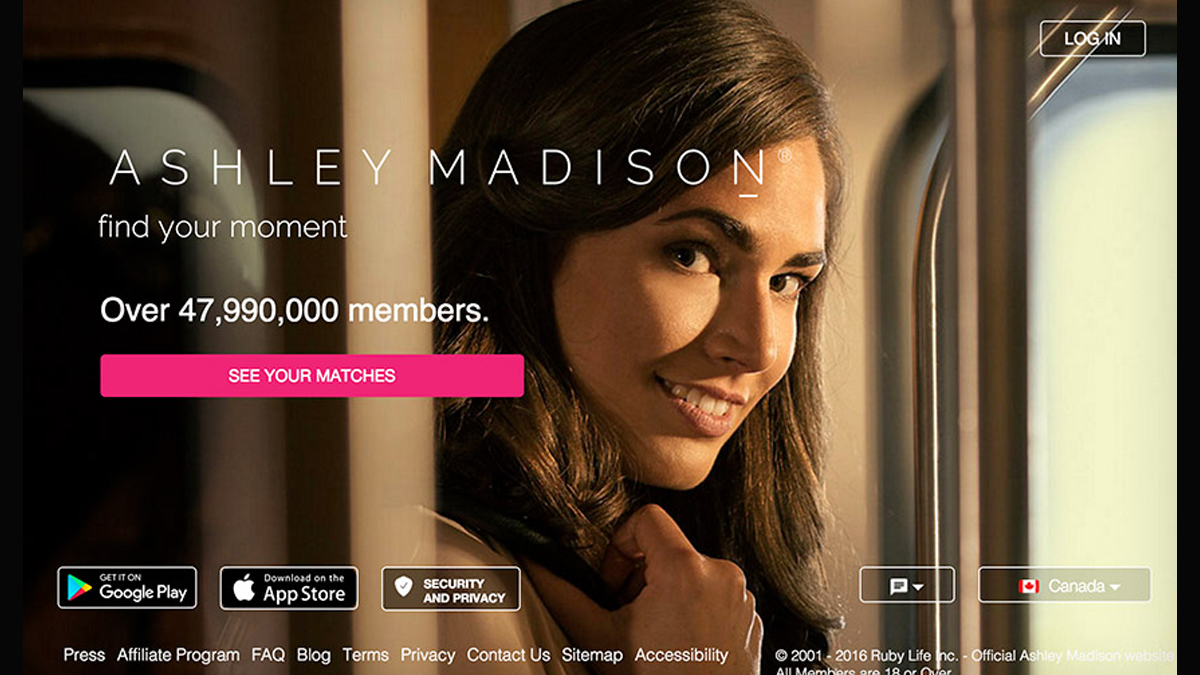
INDIA: Ashley Madison is shedding the “married-dating” label that defined it for two decades, repositioning itself as a platform for discreet dating in what it calls the post-social media age.
The rebrand, unveiled in India on 27 February, 2026, marks a structural shift in business model and identity. Once synonymous with married dating, the company now describes itself as the “premier destination for discreet dating” under a new tagline: Where Desire Meets Discretion.
The pivot is data-driven. Internal figures show that 57 per cent of global sign-ups between 1 January and 31 December, 2025 identified as single: a notable departure from the platform’s married core. The company argues that its community has already evolved beyond its original positioning.

“In an age where our lives have been constantly put on public display, privacy has become the new luxury,” said Ashley Madison chief strategy officer Paul Keable. He framed the platform’s offering as “ethical discretion” for singles, separated, divorced and non-monogamous users seeking private connections.
The shift also taps into wider digital fatigue. A global survey conducted by YouGov for Ashley Madison, covering 13,071 adults across Australia, Brazil, Canada, Germany, India, Italy, Mexico, Spain, Switzerland, the UK and the US, found mounting discomfort with hyper-public online lives.
Among dating app users, 30 per cent cited constant swiping and messaging as a source of fatigue, while 24 per cent pointed to pressure to curate public-facing profiles and early personal disclosure. Some 27 per cent said fears of screenshots or information being shared contributed to exhaustion; an equal share cited unwanted attention.
The retreat from oversharing appears broader. According to the survey, 46 per cent of adults actively try to keep most aspects of their life private online. Only 8 per cent feel comfortable sharing most aspects publicly, while 35 per cent say they are becoming more selective about what they disclose.
Ashley Madison is betting that this cultural recalibration towards controlled visibility can be monetised. By doubling down on privacy infrastructure and reframing itself around discretion rather than infidelity, the company is attempting to convert reputational baggage into a premium proposition.








