Applications
Bharti likely to enter DTH arena

MUMBAI: The direct-to-home (DTH) space is set to get more crowded in India with the telecom majors planning to join the fray in addition to their IPTV gameplan. Bharti Group is the latest player to have shown interest to enter an arena which will be occupied by Kalanithi Maran‘s Sun Direct and Anil Ambani‘s Reliance Group next year along with the existing DTH operators Dish TV, Tata Sky and Doordarshan‘s DD Direct Plus. “We are looking at DTH and are rolling out IPTV,” Bharti Enterprises Ltd chairman Sunil Mittal tells Indiantelevision.com. |
Bharti, it is reliably learnt, had preliminary discussions with Indian Space Research Orgainsation (ISRO) officials. With several players interested to kick off DTH operations, Isro is finding it a challenge to meet the growing demand for Ku-band transponders. Sun, for instance, has had to wait after the unfortunate failure of the GSLV-F02 launch rocket carrying the Insat-4C communication satellite in July this year. Maran had booked seven high-power Ku-band transponders in this satellite, out of which six would have been used for DTH and one for digital satellite news gathering. Bharati, however, has not yet applied for a DTH licence. “We are still evaluating. We haven‘t yet applied for a licence,” says Mittal. Though telecom companies in India have chalked out ambitious triple play plans, they have not yet managed to sort out the technical issues. Last mile access to customer homes has also remained a big hurdle and private telcos, who have built a strong mobile phone business, have even looked at striking alliances with local cable operators. On the content front, there is no regulatory clarity yet for IPTV rights. Bharati, for instance, had conducted test trials with UTStarcom as the digital service provider for IPTV, but later made it open for other vendors as well. A leading mobile service provider, Bharti‘s (like the other private telcos) progress on fixed telephone connections has been slow. With an eye to increase this base and raise ARPUs (average revenue per user) by delivering video content into consumer homes, the company has taken several steps for IPTV rollout including setting up a digital headend in Gurgaon on the outskirts of Delhi. “With IPTV still to kick off, some telcos feel DTH offers good opportunity and synergy,” says a trade analyst. |
Reliance, thus, is launching DTH under the Bluemagic brand and has roped in former Dish TV CEO Sunil Khanna to head the operations. The formula now being worked upon by the telcos is obviously to have a DTH footprint as well as IPTV which would give them access to homes for delivering video content. |

Applications
With 57 per cent single new users, Ashley Madison rebrands as discreet dating platform
Platform says majority of new members now identify as single
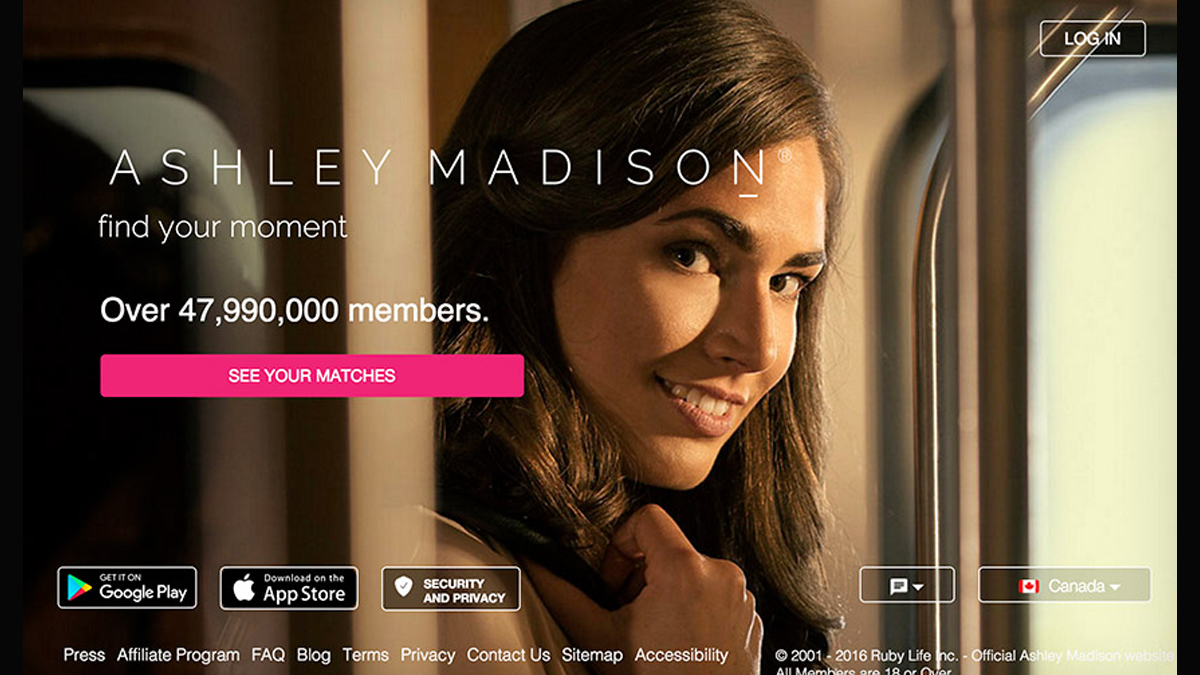
INDIA: Ashley Madison is shedding the “married-dating” label that defined it for two decades, repositioning itself as a platform for discreet dating in what it calls the post-social media age.
The rebrand, unveiled in India on 27 February, 2026, marks a structural shift in business model and identity. Once synonymous with married dating, the company now describes itself as the “premier destination for discreet dating” under a new tagline: Where Desire Meets Discretion.
The pivot is data-driven. Internal figures show that 57 per cent of global sign-ups between 1 January and 31 December, 2025 identified as single: a notable departure from the platform’s married core. The company argues that its community has already evolved beyond its original positioning.

“In an age where our lives have been constantly put on public display, privacy has become the new luxury,” said Ashley Madison chief strategy officer Paul Keable. He framed the platform’s offering as “ethical discretion” for singles, separated, divorced and non-monogamous users seeking private connections.
The shift also taps into wider digital fatigue. A global survey conducted by YouGov for Ashley Madison, covering 13,071 adults across Australia, Brazil, Canada, Germany, India, Italy, Mexico, Spain, Switzerland, the UK and the US, found mounting discomfort with hyper-public online lives.
Among dating app users, 30 per cent cited constant swiping and messaging as a source of fatigue, while 24 per cent pointed to pressure to curate public-facing profiles and early personal disclosure. Some 27 per cent said fears of screenshots or information being shared contributed to exhaustion; an equal share cited unwanted attention.
The retreat from oversharing appears broader. According to the survey, 46 per cent of adults actively try to keep most aspects of their life private online. Only 8 per cent feel comfortable sharing most aspects publicly, while 35 per cent say they are becoming more selective about what they disclose.
Ashley Madison is betting that this cultural recalibration towards controlled visibility can be monetised. By doubling down on privacy infrastructure and reframing itself around discretion rather than infidelity, the company is attempting to convert reputational baggage into a premium proposition.








