Applications
BBC, JV partners set standards for on-demand services

MUMBAI: The BBC Trust has approved the UK pubcaster‘s involvement in Project Canvas, subject to a number of conditions.
Project Canvas is a joint venture between the BBC and six other partners – Arqiva, BT, Channel 4, Five, ITV and Talk Talk – to develop and promote a common standard that will allow viewers with a broadband connection to watch on-demand services and other internet content as well as ordinary TV content, all through their television sets.
The Trust‘s decision follows a period of consultation over the past year, including discussions with a range of industry stakeholders and four formal public consultations.
The proposal has been considered in the context of its likely public value; whether it represents value for money; the interests and perspective of the licence fee payer; the market impact; the risk attached to the BBC‘s participation in Canvas; and whether Canvas is likely to comply with the law and with BBC policies.
The Trust‘s decision includes a number of conditions on the BBC‘s involvement. These include:
Industry engagement: Completed elements of the Canvas core technical specification to be published within 20 working days from this final approval, and the Canvas partners to engage with industry on these and future elements of the technical specification.
The final core technical specification will be published no later than eight months before launch of the first set-top boxes. The Trust will keep this process of engagement under review.
Free-to-air: Users will always be able to access Canvas free-to-air, though they may be charged for additional pay services that third parties might choose to provide via the Canvas platform, for example video on demand services, as well as the broadband subscription fees.
Accessibility and usability: Accessibility and usability features, such as audio description, should be incorporated into the core technical specification and/or user interface as soon as reasonably possible; and appropriate information and signposting should be provided for users to help them make informed choices about the suitability of content wherever possible.
Access to the platform for content providers and ISPs: Entry controls in terms of technical and content standards will be minimal, access will not be bundled with other products or services, listing on the electronic programme guide will be awarded in a fair, reasonable and non-discriminatory manner; and quality standards for ISPs delivering Canvas will be set at a minimum level and applied in a fair, reasonable and non-discriminatory manner.
Legal compliance: Canvas will comply with all applicable laws including competition and state aid law.
Cost: The BBC‘s involvement will not exceed the Executive‘s estimated costs by more than 20 per cent over a five year period.
BBC Trustee and Chair of the Trust‘s Strategic Approvals Committee, Diane Coyle, said: “The Trust has concluded that Project Canvas will deliver significant public value for licence fee payers – people with a broadband connection will be able to access a wide range of on-demand content including BBC iPlayer, free of charge, through their TV sets. We have however applied a number of conditions to the BBC‘s involvement in the venture in recognition of the potential impacts on the market if Canvas is successful.”

Applications
With 57 per cent single new users, Ashley Madison rebrands as discreet dating platform
Platform says majority of new members now identify as single
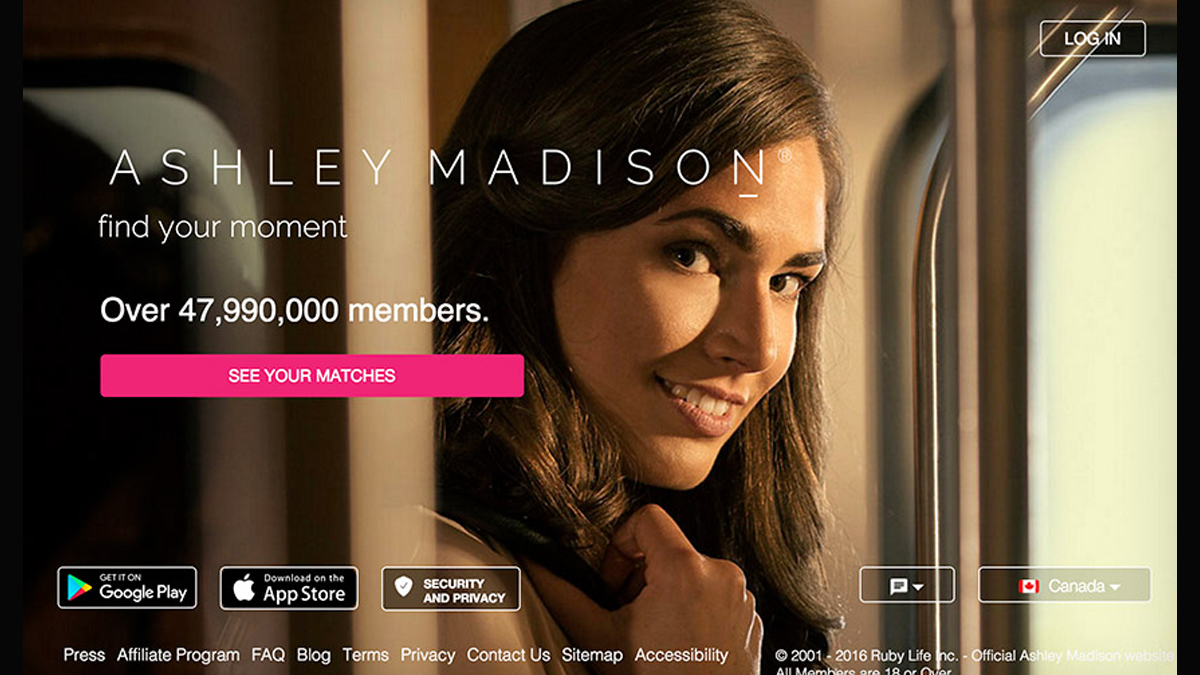
INDIA: Ashley Madison is shedding the “married-dating” label that defined it for two decades, repositioning itself as a platform for discreet dating in what it calls the post-social media age.
The rebrand, unveiled in India on 27 February, 2026, marks a structural shift in business model and identity. Once synonymous with married dating, the company now describes itself as the “premier destination for discreet dating” under a new tagline: Where Desire Meets Discretion.
The pivot is data-driven. Internal figures show that 57 per cent of global sign-ups between 1 January and 31 December, 2025 identified as single: a notable departure from the platform’s married core. The company argues that its community has already evolved beyond its original positioning.

“In an age where our lives have been constantly put on public display, privacy has become the new luxury,” said Ashley Madison chief strategy officer Paul Keable. He framed the platform’s offering as “ethical discretion” for singles, separated, divorced and non-monogamous users seeking private connections.
The shift also taps into wider digital fatigue. A global survey conducted by YouGov for Ashley Madison, covering 13,071 adults across Australia, Brazil, Canada, Germany, India, Italy, Mexico, Spain, Switzerland, the UK and the US, found mounting discomfort with hyper-public online lives.
Among dating app users, 30 per cent cited constant swiping and messaging as a source of fatigue, while 24 per cent pointed to pressure to curate public-facing profiles and early personal disclosure. Some 27 per cent said fears of screenshots or information being shared contributed to exhaustion; an equal share cited unwanted attention.
The retreat from oversharing appears broader. According to the survey, 46 per cent of adults actively try to keep most aspects of their life private online. Only 8 per cent feel comfortable sharing most aspects publicly, while 35 per cent say they are becoming more selective about what they disclose.
Ashley Madison is betting that this cultural recalibration towards controlled visibility can be monetised. By doubling down on privacy infrastructure and reframing itself around discretion rather than infidelity, the company is attempting to convert reputational baggage into a premium proposition.







