Applications
Animation and gaming industry need govt support

NEW DELHI: Software producers feel that the government must step in to help the animation industry with incentives so that India can become the hub of animation and gaming.
Taking part in the concluding session on ‘VFX, Animation and Gaming: Challenges and Opportunities’ at FOCUS 2009, the third Global Summit on Entertainment and Media organized by Assocham, the producers also felt that gaming and animation need not always be blood and gore and can be productive with even educational programmes and games.
Entertainment Devices – Microsoft Regional Director Jaspreet Bindra demonstrated the X Box to show that this could be used not only for gaming but also other work.
Bindra said gaming accounted for $40 billion globally but did not have the necessary infrastructure in India to develop. He wanted the government to help create a conducive eco-system, consumers, capital, and hardware. He complained that the 30 to 33 per cent customs duty on hardware was too high.
Executive Vice President of Yes Bank Karan Ahluwalia said it was unfortunate that the size of the visual effects industry was still not clear, and could be anything between Rs 2-10 billion. In the United States, it was $10 billion.
Ahluwalia said the failure to market effectively was a major problem despite limitless potential. Government support was lacking and the service tax was too high without any subsidies. He also felt that the Telecom Regulatory Authority of India (Trai) was not geared to regulate content for this industry.
He said the country had a huge talent pool and the cost was very low – just around $20 for every hour of animation as compared to $120 in the US.
Toonz Animation chief creative officer Hari Varma said the industry had grown so fast that technology and demand had failed to keep pace with it as no one was prepared to provide content. There was also a shortage of training institutions, with the result that many entrepreneurs jumped in the fray without knowledge of the industry.
Animation is human oriented work and can help the government in educational programmes.
He said that Toonz had created one of India’s earliest animation series, ‘Tenali Rama’ but it had not realized even 15 per cent of the costs involved. Channels did not pay easily for local content.
Dhruva Interactive CEO K Rajesh Rao said parents must understand that games and animation did not always mean blood and gore. He agreed that this can be used effectively for education, but said pricing had to be low. There was also need for more Indian content. The government must come up with support.
Blueriver Capital MD Muneesh Chawla said the animation industry had to mature and so any investments at present could only be speculative. He felt the future was positive but investors must realize that the capital will not flow back instantly.
The gaming industry had a more positive future as it had been found in surveys that all age groups enjoyed this.
Pixion COO Sanjay Yashroy said there is ample material available within the country to tap for content, and one did not have to borrow from the west.
Both Sanjay and Varma said they had set up institutions for training personnel in animation and gaming.

Applications
With 57 per cent single new users, Ashley Madison rebrands as discreet dating platform
Platform says majority of new members now identify as single
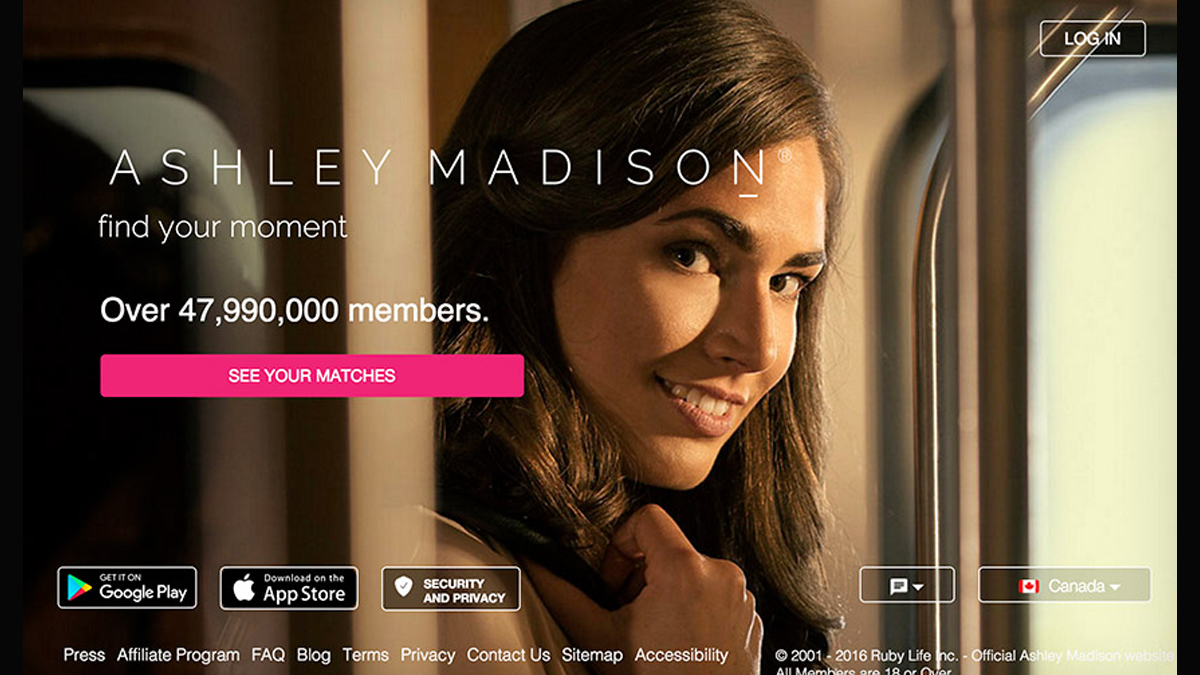
INDIA: Ashley Madison is shedding the “married-dating” label that defined it for two decades, repositioning itself as a platform for discreet dating in what it calls the post-social media age.
The rebrand, unveiled in India on 27 February, 2026, marks a structural shift in business model and identity. Once synonymous with married dating, the company now describes itself as the “premier destination for discreet dating” under a new tagline: Where Desire Meets Discretion.
The pivot is data-driven. Internal figures show that 57 per cent of global sign-ups between 1 January and 31 December, 2025 identified as single: a notable departure from the platform’s married core. The company argues that its community has already evolved beyond its original positioning.

“In an age where our lives have been constantly put on public display, privacy has become the new luxury,” said Ashley Madison chief strategy officer Paul Keable. He framed the platform’s offering as “ethical discretion” for singles, separated, divorced and non-monogamous users seeking private connections.
The shift also taps into wider digital fatigue. A global survey conducted by YouGov for Ashley Madison, covering 13,071 adults across Australia, Brazil, Canada, Germany, India, Italy, Mexico, Spain, Switzerland, the UK and the US, found mounting discomfort with hyper-public online lives.
Among dating app users, 30 per cent cited constant swiping and messaging as a source of fatigue, while 24 per cent pointed to pressure to curate public-facing profiles and early personal disclosure. Some 27 per cent said fears of screenshots or information being shared contributed to exhaustion; an equal share cited unwanted attention.
The retreat from oversharing appears broader. According to the survey, 46 per cent of adults actively try to keep most aspects of their life private online. Only 8 per cent feel comfortable sharing most aspects publicly, while 35 per cent say they are becoming more selective about what they disclose.
Ashley Madison is betting that this cultural recalibration towards controlled visibility can be monetised. By doubling down on privacy infrastructure and reframing itself around discretion rather than infidelity, the company is attempting to convert reputational baggage into a premium proposition.






