Hardware
80% viewers say will wait for CAS to settle before buying STB

A study carried out by Starcom Worldwide and Hansa Research Group to understand the viewer‘s viewpoint on CAS shows that not only is the consumer aware of CAS, he is also quite apprehensive of how it is going to affect his life.
The research team‘s brief was to gauge what is the maximum the consumer is willing to shell out to get conditional access to programming he has intertwined his daily routine around. Besides, the larger issue was to validate any conversion factor of current C&S HHs into CAS HHs.
Some of the findings have thrown out of the window some commonly held assumptions. The most common being that the consumer was not following the CAS issue that closely.

Fact is that 80 per cent of the total consumers are aware of CAS and four out of five people are aware of the deadline before which they have to get a STB. (See chart above and below).
Three out of every four consumers feel CAS is going to increase their monthly cable bill.
Only one out of four upper-end HHs (SEC ABC) willing to buy set-top boxes immediately
A viewer is not willing to pay more than Rs 625 on an average in deposit for a set-top box
Research Methodology: This research was conducted among chief wage earners in SEC ABC HHs across Mumbai, Delhi, Kolkata & Chennai through telephone. A total of 413 respondents participated in this research.
Low willingness to buy set-top boxes immediately:
Majority of Delhi respondents (57 per cent) are still undecided whether they would buy or not (see chart above). 70 per cent of Kolkatans would not buy it immediately. However, in Chennai and Mumbai, one third of respondents would buy immediately
Assessing the price-elasticity:
More importantly, while 56 per cent respondents said they would buy a set-top box if priced at Rs 2,000, this number fell exponentially as we moved to the second price-point. Only 16 per cent people were willing to buy it at Rs 4,000, and only two per cent at Rs 8,000. This indicates the price-elasticity of demand for set-top boxes is very high.
Mumbai viewers would prefer to rent STBs while Delhi would rather buy it outright. Chennai and Kolkata divided.(see chart above).
Delhi and Kolkata want to buy STBs while Mumbai and Chennai would rather rent it. While Delhi and Kolkata respondents are willing to pay as much as Rs 870 and Rs 720 respectively as security deposit for STBs, respondents in Mumbai and Chennai would pay only around Rs 550 in deposit.
Pros and cons of CAS as viewers perceive it:
Cost is the the most important issue. 30 per cent of respondents realize the promise that CAS would help them not pay for the channels they don‘t want to watch. However, 23 per cent of respondents also count it as a problem as CAS is expensive. Rest of the factors is counted by less than 10 per cent of respondents as a significant plus point or a negative.
Except Mumbai, in all other metros the expected post-CAS cable bill is lower than the current cable bill. In Mumbai the respondents believe post-CAS their bill would go up marginally.
This might be largely dictated by the fact that most of the respondents are not planning to buy STBs initially. Therefore the minimum bill for FTA channels would lead the average post-CAS cost.
If one includes both set top box rental and channel subscription, however, monthly outgo increases across the board, is the perception.
Over 75 per cent of the respondents would not buy a set-top box till things settle down around CAS. While 1/3rd of respondents have no idea about what STB quality might be like, over half of respondents expressed concern that it might not be of good quality and they might have to buy it again. Also, while one third of respondents are still unclear, 43 per cent of the respondents feel they might have to buy a new STB every time they have to move to a new locality/cable operator.
In sum, an extremely value-conscious viewer
While family soaps are really close to his heart, the consumer is quite willing to wait and watch till the time the mist clears around CAS. Besides, he is quite clear about the kind of money he is willing to pay as deposit/rent for the STBs. Again, over three-fourths of viewers have given their mandate that they refuse to be pushed into accepting a given situation. He would take his time in working out the best price-value equation, even if it means losing out on his favorite programmes for a while.
However, if government and associated players are able to present to him a way in which he can select and pay for only the channels that he wants to view, thus bringing down his monthly cable bill, he would be really happy (over 75 per cent of respondents).
Since the price-elasticity for STBs is very high, penetration of STBs during the initial months would be driven by the price-value equation the government and industry players can offer.
For detailed information see the presentation – Consumer Awareness and Attitude Research on Conditional Access System
The first-ever agency research on “the impact of CAS on viewers”, conducted by Starcom Worldwide and Hansa Research Group
Ashok Das, Managing Director, Hansa Research Group
“Obviously the industry has not got its act together. The uncertainties of what the viewer will get and what he will need to pay is driving most of them into a state of indecision. I feel the acceptance at the consumer level will be slower than what most players seem to expect”
Puneet Arora, Media Director, Strategy and Research, Starcom Worldwide
“It‘s amazing to see that the stated intention of the Government in bringing in CAS and what people themselves perceive are at opposite extremes. Viewers are convinced their expenses will go up both as a result of the spend on the set top box and increased monthly outgo.”







Hardware
Specs Inc. partners with Qualcomm for next-generation smart glasses
Snap subsidiary to power future Specs with Snapdragon XR platforms.
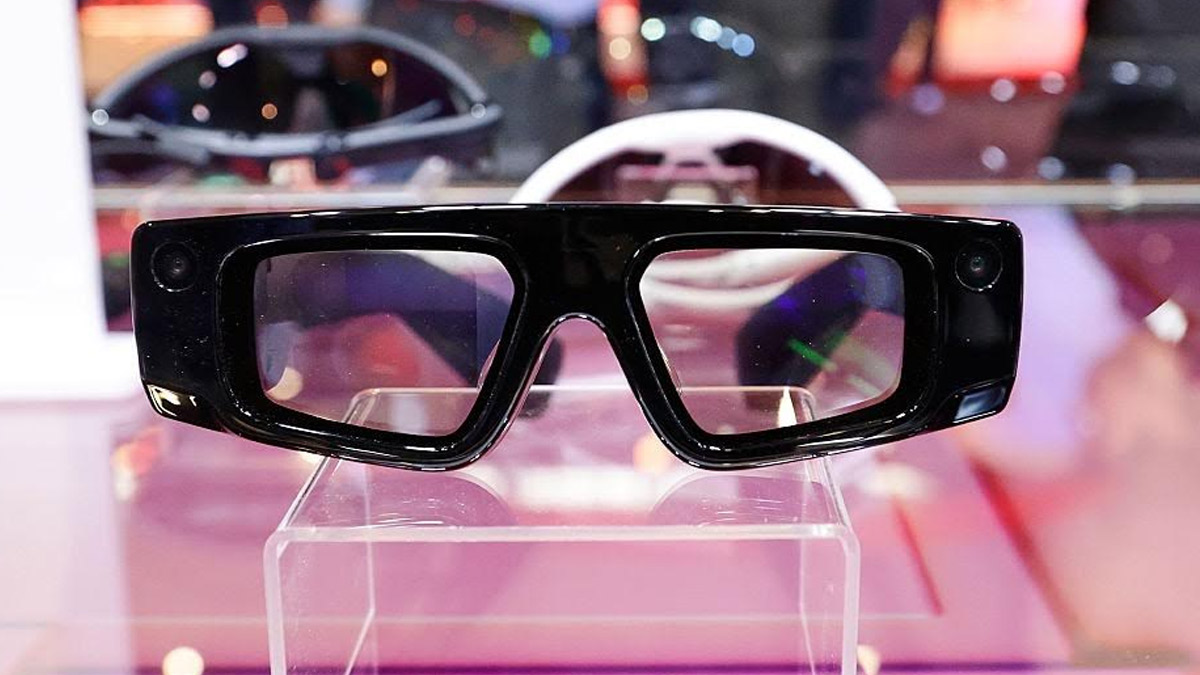
MUMBAI: Snap’s Specs are about to get a serious upgrade and this time, they’re teaming up with Qualcomm to make sure the future looks crystal clear. Specs Inc., a Snap subsidiary, has announced a multi-year strategic agreement with Qualcomm Technologies to power future generations of its advanced smart eyewear with Snapdragon system-on-a-chip (SoC) technology.
This marks the first flagship engagement for Specs Inc., which is preparing to launch its standalone, see-through smart glasses for consumers later this year. The Specs are designed to seamlessly blend digital experiences into the physical world, allowing users to see, hear, and interact with digital content as if it were part of their real surroundings.
By integrating Snapdragon XR platforms, the glasses will benefit from edge AI and high-performance, low-power computing. This combination enables intelligent, context-aware experiences to run directly on the device, delivering faster and more private interactions.
The partnership builds on more than five years of collaboration between Snap and Qualcomm, during which Snapdragon platforms have powered multiple generations of Snap’s Spectacles.
Snap Inc., co-founder and CEO Evan Spiegel said, “We believe the future of computing will be more human and grounded in the real world. Our work with Qualcomm provides a strong foundation for the future of Specs, bringing advanced technology and performance that pushes the boundaries of what’s possible.”
Qualcomm Incorporated president and CEO Cristiano Amon added, “The next era of computing will be defined by devices that understand what you see, hear and say, and respond instantly to the world around you. Our collaboration on Specs will enable power-efficient interactive AR devices that feel natural and intuitive.”
The agreement establishes a scalable foundation for developers and partners building experiences for Specs, supporting a predictable product roadmap and increasingly sophisticated digital interactions over time.
In a world racing toward augmented reality, Specs Inc. and Qualcomm are ensuring that the next pair of smart glasses doesn’t just look good on paper, they perform brilliantly in real life. The future of wearable computing just got a powerful new lens.







