Applications
100 million mobile TV broadcast subscribers by 2010: In-Stat study

MUMBAI: Research recently conducted by In-Stat suggest that by 2010 end, mobile TV broadcast subscribers worldwide will reach 102 million, a giant leap from 3.4 million in 2006.
The market research firm stated that for cellular networks to deliver content that millions want to watch simultaneously requires much greater bandwidth than is currently available, thus, carriers are turning to mobile TV broadcast networks, which have a much lower cost per bit for video delivery.
According to an official release, recent research by In-Stat found the following:
– There are positives and negatives to each standard, but each has a vendor eco-system behind it to enable deployment today.
– 2005 was the year of the first deployments, with ongoing trials in many parts of the world.
– Mobile carriers, mobile TV network operators, and content providers will soon be testing business models to determine what mobile phone subscribers are willing to pay to watch and what advertisers are willing to pay to reach them.
In-Stat analyst Michelle Abraham says, “The greatest challenge for mobile TV broadcast operators is to acquire the spectrum necessary to offer services. Spectrum availability may determine which of four standards is chosen, and also impacts the business case for the deployment of a network.”
The research, “Mobile TV Broadcasting Now Out of the Gate” covers the worldwide market for mobile TV services. It includes forecasts for mobile broadcast TV subscribers, average revenue by subscriber and revenues by region through 2010. It also contains analysis of competing mobile broadcast technologies and current deployments and trials, adds the release.
In related research, In-Stat‘s January 2005 consumer survey found that over one in eight respondents expressed an interest in purchasing mobile video services even though those services were not yet available. Interest in mobile video outpaced all other applications such as gaming, downloadable music and broadcast music.
This research is part of In-Stat‘s Multimedia Broadband Service, which provides a worldwide, comprehensive perspective of multimedia broadband markets, analyzing cable, video-over-DSL, DBS, and IPTV services, and digital terrestrial broadcast. It examines subscribers, business models, industry agendas and key cross-market combatants, the release adds.

Applications
With 57 per cent single new users, Ashley Madison rebrands as discreet dating platform
Platform says majority of new members now identify as single
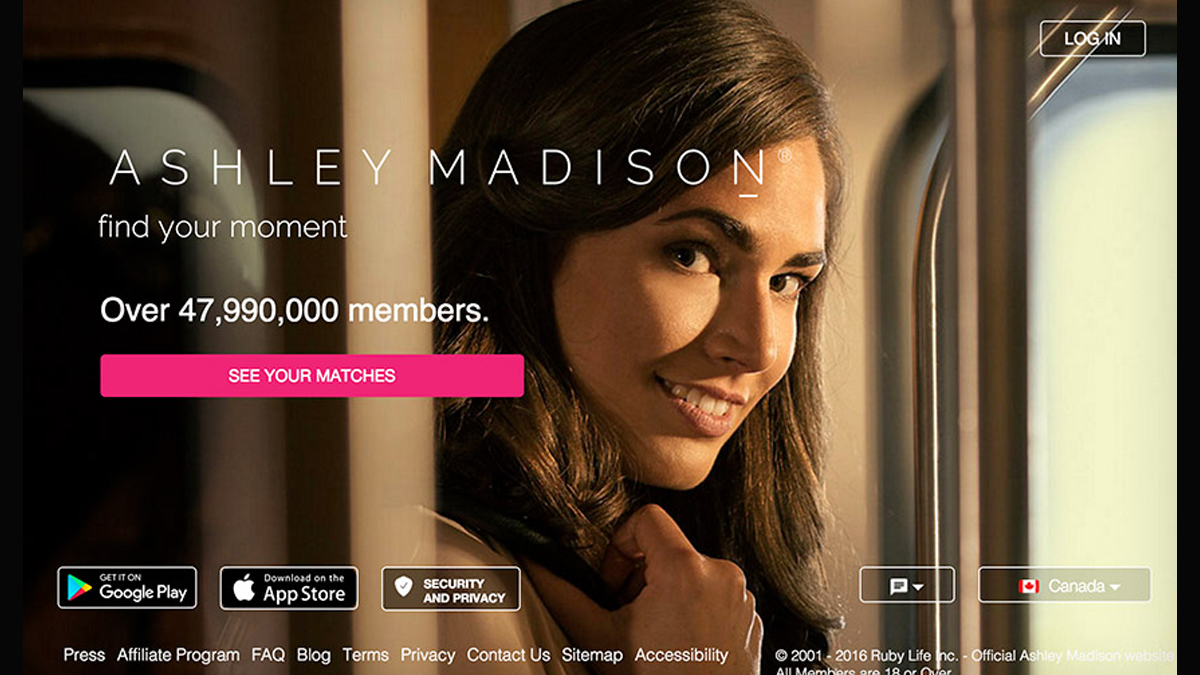
INDIA: Ashley Madison is shedding the “married-dating” label that defined it for two decades, repositioning itself as a platform for discreet dating in what it calls the post-social media age.
The rebrand, unveiled in India on 27 February, 2026, marks a structural shift in business model and identity. Once synonymous with married dating, the company now describes itself as the “premier destination for discreet dating” under a new tagline: Where Desire Meets Discretion.
The pivot is data-driven. Internal figures show that 57 per cent of global sign-ups between 1 January and 31 December, 2025 identified as single: a notable departure from the platform’s married core. The company argues that its community has already evolved beyond its original positioning.

“In an age where our lives have been constantly put on public display, privacy has become the new luxury,” said Ashley Madison chief strategy officer Paul Keable. He framed the platform’s offering as “ethical discretion” for singles, separated, divorced and non-monogamous users seeking private connections.
The shift also taps into wider digital fatigue. A global survey conducted by YouGov for Ashley Madison, covering 13,071 adults across Australia, Brazil, Canada, Germany, India, Italy, Mexico, Spain, Switzerland, the UK and the US, found mounting discomfort with hyper-public online lives.
Among dating app users, 30 per cent cited constant swiping and messaging as a source of fatigue, while 24 per cent pointed to pressure to curate public-facing profiles and early personal disclosure. Some 27 per cent said fears of screenshots or information being shared contributed to exhaustion; an equal share cited unwanted attention.
The retreat from oversharing appears broader. According to the survey, 46 per cent of adults actively try to keep most aspects of their life private online. Only 8 per cent feel comfortable sharing most aspects publicly, while 35 per cent say they are becoming more selective about what they disclose.
Ashley Madison is betting that this cultural recalibration towards controlled visibility can be monetised. By doubling down on privacy infrastructure and reframing itself around discretion rather than infidelity, the company is attempting to convert reputational baggage into a premium proposition.