Event Coverage
Digital businesses should focus on profitability


MUMBAI: For all the hype surrounding new media, few companies have figured out how to profit from their initial forays into the arena. From running a social media website to publishing a traditional print newspaper online, every company needs to turn the corner from investing in digital businesses to profiting from them. Companies can monetise their offerings through advertising and subscription-based models.
The realisation has sunk in that while content and distribution are important aspects of the digital business model, companies can provide value in many ways – by providing context, coverage or convenience to the target audience.
The Ficci KPMG report notes that in the second digital decade, the proliferation of devices created new channels of communication for personalized and localised.
On the other hand in the first digital decade, “content is king” was believed to be the key to success. As telecom operators and cable companies aggressively entered the digital value chain, the debate shifted to whether controlling distribution channels mattered more than owning content.
In the next five years, more Internet users are expected to connect to the Internet via mobile devices than desktop PCs. Consumers in Bric countries have leapfrogged to newer devices like tablets, as compared to consumers in more mature markets.
In July 2010, news of India developing the world‘s cheapest tablet hit headlines. Initially, expected to cost $35, the device is another way to provide cheap computing power to the masses.
The entry of affordable tablets for the price sensitive Indian consumer in time for the launch of 3G services is expected to boost growth in this segment. Tablets are expected to attract consumers looking to replace secondary PCs. 10 per cent of 16 Indians plan to purchase a tablet PC in 2011. In India, some forecasts suggest that there will be 1 million tablet devices in the 17 market by 2011.
Faster broadband speeds and high user demand in India will drive content to be presented and consumed in different ways such as social media, videos and streaming of music and movies. For instance, last year, YouTube streamed live telecasts of IPL matches on its website – the first time the company showed a 18 major sporting event live .
The IPL channel received viewers from over 200 countries and territories, and grew from 2 million channel views on the first day of the IPL to 54 million at the end of the season. IPL was the number one YouTube sports channel and the number one channel on YouTube India.
The ad market: The advertising ecosystem has undergone a dramatic shift. The historical boundaries of traditional print and broadcast advertising disappear in the online medium. Digitisation has not only opened up new ways of reaching out to target audiences but can also effectively measure this outreach. The traditional advertising concept of right advertisement, right time and right place is enhanced with the ability to target the right consumer online through rigorous data analytics, measurement and tracking.
While new media has created new opportunities, it also requires a shift in thinking – moving from advertising based marketing towards building a dialogue with customers. Harnessing this potential of interactivity and measurability is key to the success of digital advertising campaigns.
The Indian online advertising market was estimated to be Rs 10 billion in 2010. Of the total online advertising market, paid searches constitute approximately 50 per cent. Sponsored advertisements in search engines (paid searches) are the most cost effective and results driven form for the advertiser, with the highest click-to-seen conversion ratios, whereas, viral marketing ads result in far fewer click conversions. Sponsored ads are more successful as users clicking on these ads are more likely to have an intention to buy the advertised product. Ironically, search is the ultimate form of behavioral targeting because people target themselves. Consequently, paid search is an effective way for small and medium sized enterprises to accomplish their marketing objectives.
Online display advertising: Online display advertising is a sizeable portion of the overall online advertisement market in India. Online display advertising consists of banner ads, sponsorship links, rich media and digital video. Social media advertising also has a huge potential for growth.
Successful social media strategies should effectively monitor trends, research new product ideas via social networks, have an online user group for customers, and collect and track customer reviews on their website.
Categories using online: The biggest online ad spenders are the travel, BFSI, auto and telecom sectors. The FMCG sector, a large advertiser on traditional media platforms, is only now increasing spending on 23 online advertising.
With low Internet penetration and poor understanding of the return on investment of online advertisements, there is an initial reluctance by companies and advertisement agencies to spend heavily on the online medium. However, not only can online advertising be used to publish advertising content quickly, but the content can also be customized by viewer location. Consequently, online advertising in India is expected to grow significantly.
Mobile advertising: The Indian mobile advertising market is estimated to be Rs 0.4 30 billion in 2010.
India is the second largest mobile Internet market in the world and now the single largest mobile ad impression market in the Asia Pacific Region.
The Indian mobile advertising market has grown rapidly over the past year. This is primarily due to the increased penetration and also acceptability of mobile phones in India, which makes mobile phones an attractive medium for targeted and interactive ad campaigns.
However one of the challenges is technology. In the US, the iPhone and Android are the predominant mobile operating systems with Nokia‘s symbian and Windows mobile also having prominent shares.
Consequently, advertisers are able to develop highly focused ad campaigns targeting users of these platforms. In India, multiple OEMs and the proliferation of cheap devices used by a large segment of the population, make it difficult to reach consumers using the kind of rich media capabilities available on smartphones. Currently, only 4-5 per cent 33 of mobile phones in India are categoried as smart phones .
3G is yet to take off: Although telecom operators in India have launched 3G services, the number of 3G-ready devices in India is still a small fraction of the total number mobile phones. With the time required to upgrade these devices to make them 3G compatible, extensive 3G usage may not happen immediately. Data plan pricing will also determine how broad 3G adoption will really be. Therefore, players should be cautiously optimistic of the growth potential of 3G in the near future.
New media companies face challenges with concept selling of the ad-funded model to advertisers who are used to traditional ways of advertising. Even as larger companies are seriously developing broader multi-channel advertising strategies, mobile Internet advertising remains an afterthought. This is primarily due to the low levels of understanding of the wide variety of options available in mobile and Internet marketing, ranging from SMS based advertising to Bluetooth advertising.

Event Coverage
Anime India announces Amazon MX Player as co-presenting partner for Anime India Kolkata 2026
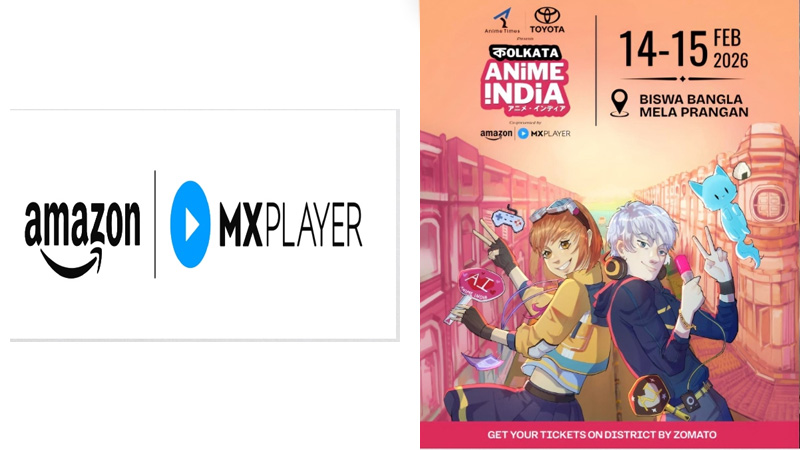
MUMBAI: Riding high on the success of its blockbuster Mumbai debut, Anime India is accelerating its nationwide expansion with the announcement of Amazon MX Player as the co-presenting partner for Anime India Kolkata. The partnership marks a significant step forward in the festival’s mission to deliver large-scale, accessible, and fan-first anime experiences across the country.
Scheduled for 14 and 15 February 2026 at the iconic Biswa Bangla Mela Prangan, Anime India Kolkata will launch the first regional chapter of what is set to be a year-long, multi-city tour. As the curtain-raiser for the 2026 circuit, the Kolkata edition aims to fuse the energy of global Japanese pop culture with India’s fast-growing community of anime, manga, and pop-culture fans.
A household name in digital entertainment, Amazon MX Player brings unmatched reach and cultural relevance to the Anime India platform. With its expanding focus on anime and youth-driven content, Amazon MX Player’s involvement as co-presenting partner reinforces Anime India’s vision of making anime culture more inclusive breaking barriers of language, geography, and accessibility to connect with fans nationwide.

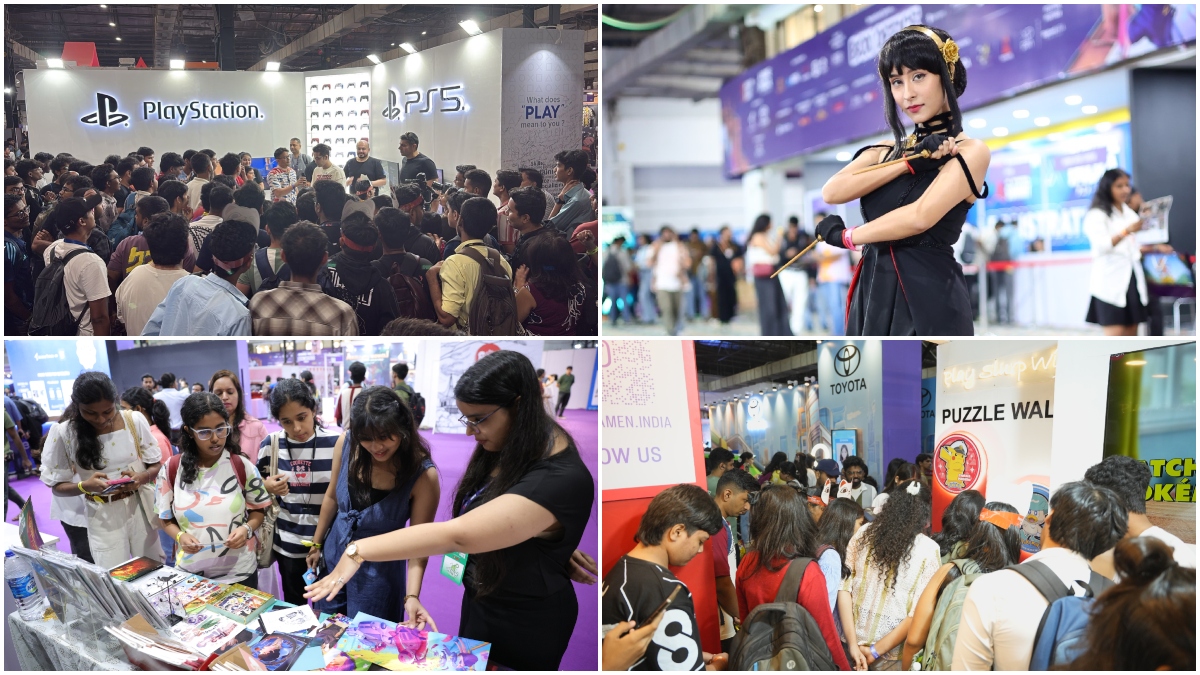
Anime India Kolkata 2026 will showcase cosplay competitions, interactive zones led by the Indian Gunpla Community, India-39 Vocaloid Community, The Japan Curry, and Adda-o-Otaku by The Otaku Guild. Fans can join tournaments across fighting games, Pokémon VGC, and more. Acclaimed Japanese director Susumu Mitsunaka (Haikyu!!) will attend as guest of honour, appearing in panels and live sessions. Positioned as an immersive celebration of fan culture and industry collaboration, the Kolkata edition marks the beginning of Anime India’s nationwide expansion.
Sharing their perspective on the partnership, Amazon MX Player director Aruna Daryanani expressed, “Anime in India has evolved from a niche interest into a mainstream cultural movement, driven by an increasingly engaged and passionate fanbase. At Amazon MX Player, our focus is on expanding access by bringing anime to audiences across the country for free and in multiple local languages. Our association with Anime India reflects our commitment to supporting the growth of anime in India and deepening connections with fans, while continuing to build Amazon MX Player as a trusted destination for free, high-quality entertainment.”
“Anime India Kolkata is a celebration of how anime has grown beyond entertainment into a powerful cultural and creative force. By bringing fans, creators, and industry leaders onto one shared platform, the festival is helping define the future of pop culture in India,” said Anime India co-founder and director Neha Mehta.
The debut edition of Anime India 2025 in Mumbai attracted over 29,000 fans, quickly cementing its status as a landmark celebration of anime and Japanese pop culture. Riding on this overwhelming response, the Kolkata chapter is projected to draw more than 40,000 visitors across two days, positioning it as one of the biggest anime conventions ever held in eastern India.
Anime India is focused on bringing together fans from across the country to create a truly pan-India celebration of anime, manga, cosplay, gaming, and Japanese culture. With plans to expand into four key metropolitan hubs in 2026—east (Kolkata), north (Delhi), west (Mumbai), and south (Hyderabad)—the festival seeks to deliver globally benchmarked experiences while supporting and uplifting creators, artists, and fan communities throughout India.







