Special Report
Fair Weather Reporting?


“Is it going to rain today? Let me check the news.” How many of us in India say that? Not too many, is the guess. But that doesn’t deter channels from assiduously continuing with the weather reporting segment and pumping in money to keep up to date with the latest technologies.
Though still in a nascent stage, weather coverage is a growing segment. And news channels are seriously eyeing at it as a revenue source.
None too reliable one stop source
News channels in India rely heavily on the Indian Meteorological Department (IMD) as their only source of information on the latest updates on weather conditions around the country. More often than not, however, the IMD is not quick in giving instant updates or for that matter even credible information.

 |
|
The buck stops at highs and lows
|
As a result, weather reporting basically comprises information on sunrise and sunset, humidity along with maximum and minimum temperatures.
 |
Most news channel heads admit that weather reporting in India has a long way to go before it can match world class standards. “Weather reporting in India has not evolved yet and is limited only to temperature reporting. Moreover, weather forecasting as a scientific exercise is largely unscientific,” says Star News CEO Uday Shankar.
 A poll conducted on Digital Spy website asking if there should be a weather channel on Sky revealed the following results, which speaks for itself: A poll conducted on Digital Spy website asking if there should be a weather channel on Sky revealed the following results, which speaks for itself: |
 |
This is not so in the matured countries which have dedicated weather channels, grown on more sophisticated state-run weather forecast systems. UK’s Sky platform, for instance, has The Weather Channel beaming weather conditions and reports that go far beyond simple forecasts: On how the weather affects everything, from industry and agriculture to the environment and everyday lives of people.
Move over to America and you have the US Weather Channel that grabs attention of over 87 million US households. Its website – www.weather.com – attracts 20 million unique users per month.
India is nowhere in comparison. But weather reporting can certainly be made into a winning proposition, if thoroughly thought through. India TV chairman Rajat Sharma is of the opinion that in two or three year’s time, India too will have its weather focused channels which are feasible in a direct-to-home (DTH) environment. “When the cost of uplinking and infrastructure will go down, a weather channel can certainly beam in India too,” he says.
That, though, is for the future. Aaj Tak news director QW Naqvi says that the IMD works like any other governmental department, has its own rigid rules, and channels have no choice but to comply. The common grouse among broadcasters is that weather is not really taken seriously in India. But if worked upon, it can definitely become “news you can use.”
 |
Backend infrastructure
Let’s now take a look at the kind of backend infrastructure that is required for weather reporting. As far as the BBC is concerned, their weather centre is based in London’s BBC Television Centre and produces around 100 forecasts every weekday. This is equivalent to over 22 hours each week for the BBC’s national and international channels, including BBC World.
 |
| BBC weather reporter Jo Farrow |
“The MET office, based in Exeter, provides us up-to-date meteorological data and we have highly skilled and experienced presenters, who present the weather reports for television and radio. As far as the BBC World hourly weather bulletins are concerned, the MET office receives observations on weather conditions from around the globe from the World Meteorological Organisation through satellite and radar imagery. It then uses one of the most powerful computers in the world to run a model of how the Earth’s atmosphere is likely to behave. The BBC has a state-of-the-art graphics system which allows forecasters to put together forecast bulletins using all kinds of different charts, stills, animations, video clips, live weather cameras and basic text,” explains BBC Weather Centre manager Andrew Lane.
In India, on the other hand, news channels’ regular correspondents and reporters across the country don the garb of a weather man in case there is a need to report on some drastic change in weather. A case in point is the recent snow blitz in North India, especially Jammu and Kashmir’s capital Srinagar and the surrounding areas. Most news channels had their Srinagar correspondents reporting on the weather conditions there. Reportage was mostly on the current situations of the highways, how people were stranded and about trade and commerce coming to a complete halt. What was missing, though, were the details on the reasons as to why this sudden snow explosion, the heaviest in the last 30 years or so, came in the first place. That is the information that should have been forthcoming from the IMD, broadcasters opine.
 |
|
Zee News editor Alka Saxena
|
Says Zee News editor Alka Saxena, “The IMD has a typical government attitude and is very rigid when it comes to providing us with satellite pictures and other critical information. Our reporters can only tell what they see around them but how can they know the exact causes of the weather change and the technicalities involved in the same? These issues are also important as people need to be informed about these things.”
Minister of state for science, technology and oceanography Kapil Sibal recently admitted that the IMD was like the police in Bollywood movies – they always arrive after the crime has been committed or when things are under control!
Commenting on the kind of infrastructure required for weather reporting, CNN World Weather Center international weather anchor Femi Oke says, “Computers, computers, computers! They have completely changed and improved the way we forecast. It’s now possible to get weather data and forecasts from around the world at the click of a mouse. It never fails to amaze me, how much better forecasters are now with all the technology we have access to.”
 |
India too diverse
Keeping aside the obvious lack of cooperation from the IMD, there are other problems that news channels face in this area. Oke says, “The reality is that with global weather forecasts we’re always pushed for time. We have the same time often allowed for a national forecast, to try and cover weather for several continents. A regular request in our Email box is for us to cover specific cities and regions. If we were able to please everybody, the weather forecast would be over an hour long!”
India has specific problems, being a large country with diverse climatic conditions. Says Sharma, “A common grouse that we receive from a lot of people is that weather information is not provided for all the regions of the country. But it is really not possible to do that. It gets too cumbersome.”
 |
| Star News CEO Uday Shankar |
Shankar, on the other hand, says, “The IMD is not able to predict accurately if there will be rain in any region of the country and hence their predictions are not credible. It has to be kept in mind that India has a very long coastline and a large section of the population reside there. The lives of these people largely depend on the information provided by the IMD.”
Adds Naqvi, “We rely on the IMD completely for any kind of information on the weather. If they spruce up their resources and upgrade the technology, then it will be better for news channels and also for people who look at the weather segment on a regular basis. Accurate forecasts would also help in avoiding crisis situations.”
So what hinders accurate weather forecasting? BBC’s Lane feels there are issues over accuracy of data, performance of equipment and cost of services.
Apart from the infrastructure, there are also problems that reporters face. Says Oke, “We’re a very small team. When a major weather story also becomes a major news story, we are in great demand. Creating graphics, finding fresh video, making animations and providing fresh information and insight is tough, especially when there’s only one weather anchor on duty.”
Equipment problems or failure of data to arrive on time are also some of the main challenges that channels face.
 |
Monies involved
News channels refused to divulge exact details on the kind of investments made in infrastructure and equipment for weather reporting, passing it off as “a considerable amount.” Says Oke, “CNN makes a considerable investment to ensure that viewers are provided with the most accurate and latest information.”
|
Innovations
BBC claims to have done a lot of innovat-ions in weather reporting. Since George Cowling of the Met office became the first person to present a weather bulletin on British television on 11 January 1954, the BBC’s Weather Centre has been constantly developing and improving both its broadcasting and computer technology and also received the Royal Television Society’s award for Technical Innovation in operational systems in 1993. As far as CNN is concerned, it launched the World Weather Center in September 1999. Prior to that the weather forecasts were recorded by US forecasters from CNN USA. Over the years, the network has developed a distinct style and their team includes anchors from the UK, Nicaragua, Spain, Argentina and Canada. Incorporation of videos, live events, interviews and even guests are brought on to the weather segment. This creates a live vibrant international weather service that is unique and innovative. |

Indian news channels have a deal with the IMD for providing them with regular updates on weather information. But no financial details could be obtained. Shankar did not want to reveal the amount that Star News was paying to the IMD.
But what infrastructure do channels need to invest in? Says Saxena, “There are different kinds of software available in the market for weather forecast and it gets upgraded too. Three months ago, Zee News made considerable investment in new software, which provides visual relief to the viewers. Earlier there were two-dimensional maps on which anchors reported. But now we have three-dimensional maps wherein the camera travels through the areas in the map that are being spoken about. Packaging has also been changed, through which we show floating clouds and three-dimensional snow flakes. All this requires us to update our technology so as to stay ahead in the game.”
BBC and the Met office have a long-standing relationship that goes back to over 60 years. Says Lane, “The BBC pays the Met office for its staff and for weather data, but that is a commercially sensitive figure. The BBC also provides the broadcasting infrastructure. The way the BBC makes weather forecasts is probably the most cost-effective example in the world, as a tiny team make a large amount of material thanks to a great deal of well-tried automation.”
Branding Weather
Weather reporting offers branding opportunities, particularly from tourism boards. But there are no advertising breaks during the weather reports on all the news channels.
BBC World, for instance, has opened up the weather bulletins to sponsors, including the Maldives Tourist Board. And a promotional team from the broadcasters is in close touch with the sponsors. Says Oke, “However, advertisers are able to sponsor the weather. Our promotions department works with the weather department on this wherein we create a special forecast, which is slotted into the ad break, and is branded with the sponsors name on it.”
Zee News recently got on board Idea Cellular to sponsor their weather forecast segment. Says Saxena, “Weather is sponsored on most news channels. On our channel, sponsors’ visibility has increased lately as we now have a more visually appealing weather segment.” Star News, Aaj Tak and the likes too have their weather segment sponsored.
 |
Weather brings in viewers
Interest among viewers on weather news is high, as it affects their lives in some shape or form. Says Oke, “Weather is very important, although sometimes hardened news folks don’t like to admit it! In the US there’s research that proves that many viewers tune in just for the weather. The weather anchor is one of the most important and high profile members of the on-air news team.”
In India, however, weather reporting is still in its embryonic stage. The way forward as far as this segment is concerned, is better support from the IMD for frequent and detailed information on weather, which should also be more region specific. “A move has to be made in providing the viewers with more than just temperature and rainfall forecasts. It has to focus on seasonal changes, has to be more people oriented and have a human touch to it. That really is the way forward for weather reporting in India,” says Shankar.




MUMBAI: Some friendships are made in heaven; others are coded in Mumbai. Hamara Vinayak, the first-ever digital original from Siddharth Kumar Tewary’s Swastik Stories, turns the divine into the delightful, serving up a story that’s equal parts start-up hustle and spiritual hustle.
Some tech start-ups chase unicorns. This one already has a god on board. Hamara Vinayak takes the leap from temple bells to notification pings and it does so with heart, humour and a healthy dose of the divine.
At its core, the show asks a simple but audacious question: what if God wasn’t up there, but right beside you, maybe even debugging your life over a cup of chai?
The show’s tagline, “God isn’t distant… He’s your closest friend” perfectly captures its quirky soul. Across its first two episodes, screened exclusively for media in Mumbai, the series proves that enlightenment can come with a good punchline.
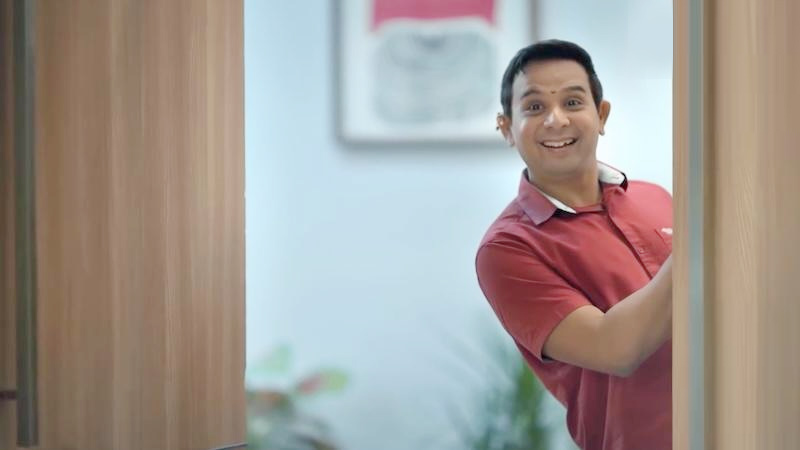
The series follows a group of ambitious young entrepreneurs running a Mumbai-based tech start-up that lets people around the world book exclusive virtual poojas at India’s most revered shrines. But as their app grows, so do their ethical grey zones. Into this chaos walks Vinayak, played with soulful serenity and sly wit by the charming Namit Das, a young man whose calm smile hides something celestial.

He’s got the peaceful look of a saint but the wit of someone who could out-think your favourite stand-up comic. Around him spins a crew of dream-driven youngsters – Luv Vispute, Arnav Bhasin, Vaidehi Nair and Saloni Daini who run a Mumbai-based tech start-up offering devotees across the world the chance to book “exclusive” poojas at India’s most sacred shrines. It’s a business plan that blends belief and broadband – and, as the story unfolds, also tests the moral compass of its ambitious founders.
“The first time I read the script, I found the character very pretty,” Namit joked at the post-screening interaction. “It’s a beautiful thought that God isn’t distant, he’s your closest friend. And playing Vinayak, you feel that calm but also his cleverness. He’s the friend who makes you think.”
The reactions to the series ranged from smiles to sighs of wonder. Viewers were charmed by the show’s sincerity and sparkle, a quality that stems from its creator’s belief that faith can be funny without being frivolous.
Among the cast, Luv Vispute shines brightest, his comic timing adding sparkle to the show’s more reflective beats. But what keeps Hamara Vinayak engaging is the easy rhythm of its writing – one moment touching, the next teasing, always gently reminding us that spirituality doesn’t have to be solemn.
Luv spoke fondly of his long association with Swastik. “Since my first show was with Swastik, this feels like home,” he said. “Every project with them is positive, feel-good, and this one just had such a different vibe. I truly feel blessed.”
Saloni Daini, who brings infectious warmth to her role, added that she signed up the moment she heard the show was about “Bappa.”
“We shot during the Ganpati festival,” she recalled. “The energy on set was incredible festive, faithful, and full of laughter. It’s such a relatable story for our generation: chaos, friendship, love, kindness, and faith all mixed together.”

Vaidehi Nair and Arnav Bhasin complete the ensemble, each representing different shades of ambition and morality in the start-up’s journey. Their camaraderie is easy and believable, a testament to how much the cast connected off-screen as well.
This clever fusion of mythology and modernity plays to India’s two enduring loves, entertainment and faith. Mythology has long been the comfort zone of Indian storytellers, from the televised epics of the 1980s to the glossy remakes that still command prime-time TRPs. For decades, gods have been our most bankable heroes. But Hamara Vinayak tweaks the formula not by preaching, but by laughing with its characters, and sometimes, at their confusion about where divinity ends and data begins.
Creator Siddharth Kumar Tewary, long hailed as Indian television’s myth-maker for shows like Mahabharat, Radha Krishn and Porus, explained the show’s intent with characteristic clarity, “This is our first story where we are talking directly to the audience, not through a platform,” he said. “We wanted to connect young people with our culture to say that God isn’t someone you only worship; He’s your friend, walking beside you, even when you take the wrong path. The story may be simple, but the thought is big.”
That blend of philosophy and playfulness runs through the show. “We had to keep asking ourselves why we’re doing this,” Tewary added. “It’s tricky to make something positive and spiritual for the OTT audience, they’ve changed, they want nuance, not sermons. But when the purpose is clear, everything else aligns.”
For the creator of some of Indian TV’s most lavish spectacles, Hamara Vinayak marks a refreshing tonal shift. Here, Tewary trades celestial kingdoms for co-working spaces and cosmic battles for office banter. Yet his signature remains: an eye for allegory, a love for faith-infused storytelling, and an understanding that belief is most powerful when it feels personal.
Hamara Vinayak, after all, feels less like a sermon and more like a conversation over chai about what success means, what faith costs, and why even the gods might be rooting for a start-up’s Series A round.
As Namit Das reflected during the Q&A, “Life gives us many magical, divine moments we just forget to notice them. Sometimes even through a phone screen, you see something that redirects you. That’s a Vinayak moment.”
The series also mirrors a larger cultural pivot. As audiences migrate from television to OTT, myth-inspired tales are finding new form and flexibility online. The digital screen lets creators like Tewary reinvent the genre, giving ancient ideas a modern interface, without losing the emotional charge that’s made mythology India’s storytelling backbone for decades.
In a country where faith trends faster than any hashtag, Hamara Vinayak feels both familiar and refreshingly new, a comedy that’s blessed with heart, humour and just enough philosophy to keep the binge holy.
For a country where mythology remains the oldest streaming service, Tewary’s move from TV to OTT feels both natural and necessary. Indian storytellers have always turned to gods for drama, guidance and TRPs from Ramayan and Mahabharat on Doordarshan to glossy mytho-dramas on prime time. But digital platforms allow creators to remix reverence with realism, and in Hamara Vinayak, faith gets an interface upgrade.
The result is a show that feels like a warm chat with destiny, part comedy, part contemplation. And in an age of cynicism, that’s no small miracle.
As Tewary put it, smiling at his cast, “The message had to be positive. We just wanted to remind people that even in chaos, God hasn’t unfriended you.”
With 5 episodes planned, Hamara Vinayak promises to keep walking that fine line between laughter and light. It’s mythology with memes, devotion with dialogue, and a digital-age reminder that even the cloud has a silver lining or perhaps, a divine one.
If the first two episodes are any sign, the show doesn’t just bridge heaven and earth, it gives both a Wi-Fi connection.